
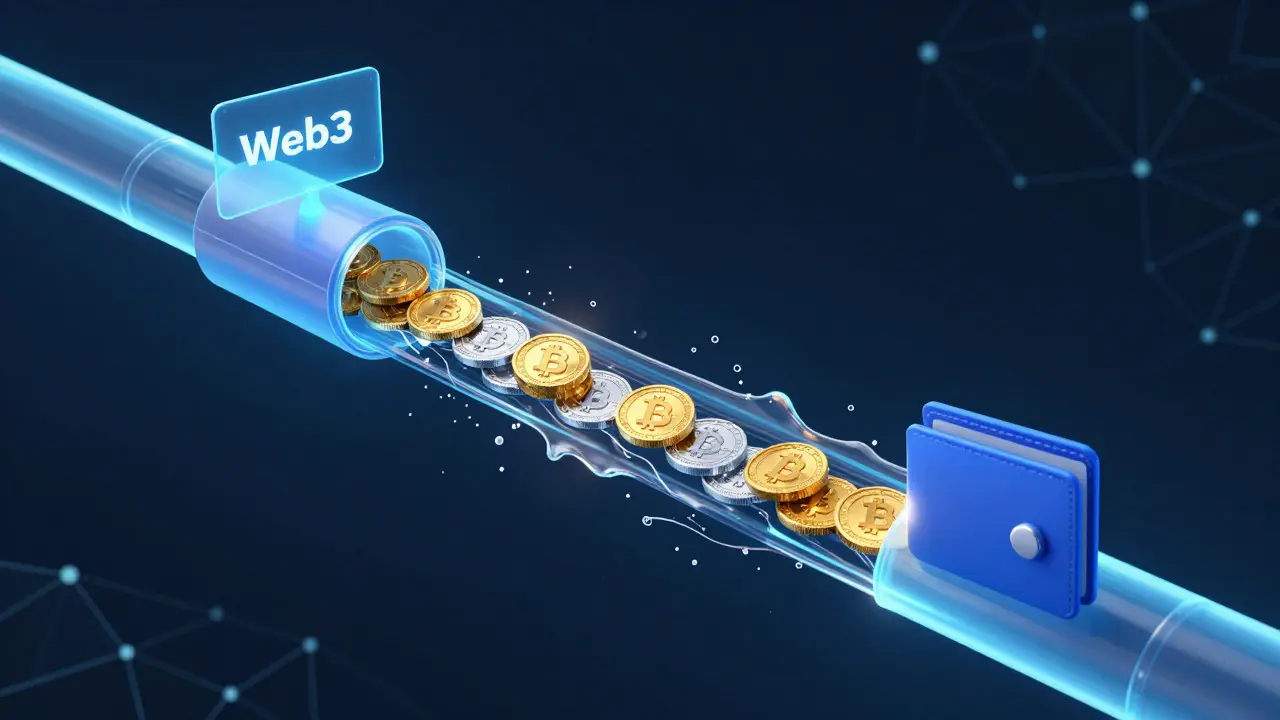
Imagine getting paid every second instead of waiting for the end of the month. That is exactly what streaming payments are a method of transferring funds continuously over time rather than as discrete lump sums offer in the world of Web3 is the decentralized internet built on blockchain technology. If you are running a DAO, paying developers, or managing grants, sending one big batch of tokens feels outdated and risky. What if your employee quits after day two? Or worse, what if they need cash urgently on day three but payday isn't until day thirty? Two protocols have emerged to solve this problem: Superfluid is a money streaming protocol enabling real-time per-second cash flows and Sablier is a token streaming protocol used for vesting and payouts. Both let you stream ERC-20 tokens like USDC or DAI, but they work very differently under the hood. Choosing between them depends on whether you care more about capital efficiency or guaranteed funding.
How Streaming Payments Work
In traditional finance, money moves from point A to point B in chunks. In Web3 streaming, money flows like water through a pipe. The concept is simple: you set a rate (for example, 0.01 USDC per second), a start time, and a stop time. As time passes, the recipient's balance grows linearly. The math behind this is straightforward. For any given moment $t$, the balance is calculated using a formula like:
balance(t) = initialBalance + flowRate × (t - startTime)This means the recipient doesn't have to wait for a transaction to "receive" their pay. They can see their growing balance instantly. Think of it like Netflix or Spotify; you don't download the whole movie at once. You access value as time passes. This model reduces risk because the sender doesn't have to lock up months of salary upfront, and the recipient gets immediate access to earned funds.
Superfluid: The Real-Time Money Machine
Superfluid positions itself as the infrastructure for real-time cash flows. It was designed to make recurring payments-like salaries, subscriptions, and rewards-as easy as sending an email. Here is how it works:
- Token Wrapping: You cannot stream standard ERC-20 tokens directly. You must wrap them into Super Tokens are wrapped versions of standard ERC-20 tokens with streaming capabilities (e.g., USDC becomes USDCx). This wrapping is 1:1, so no value is lost.
- Constant Flow Agreement (CFA): This is the core engine. When you open a stream, you define a
flowRate. The system calculates balances on-the-fly. There are no intermediate transactions needed for the recipient to accrue value. - Gas Efficiency: The recipient pays zero gas to receive tokens. Their balance updates automatically. Only the sender pays gas when opening, updating, or closing the stream.
The biggest advantage here is capital efficiency. You do not need to deposit six months of salary into a contract today. You just need enough in your wallet to cover the current flow plus a small buffer. However, this introduces a unique risk: liquidation is the process where underfunded streams are closed by third parties. If your wallet runs dry, a liquidator bot can step in and close your streams to prevent negative balances. This protects the network but means your payment could be interrupted if you forget to top up.
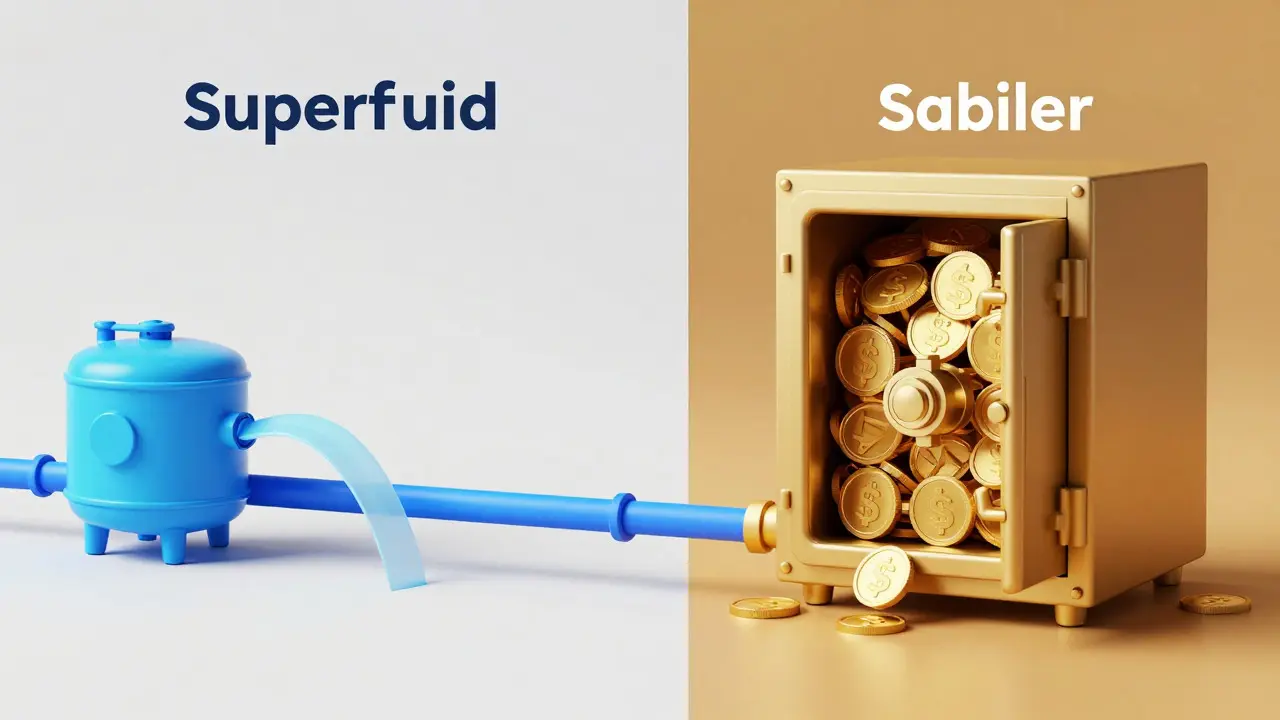
Sablier: The Vault for Vesting and Grants
Sablier has been around since 2019 and focuses heavily on trustless vesting and grant distribution. Its approach is more rigid but offers stronger guarantees for the recipient. Sablier v2 introduced two main modes:
- Lockup: The sender deposits the entire amount upfront. The tokens are locked in the contract and released linearly over time. This is perfect for vesting schedules where you want to guarantee the funds are there.
- Flow: Similar to Lockup but allows the sender to top up later. Any shortfall is tracked as debt per stream, keeping each payment isolated from others.
Unlike Superfluid, Sablier does not require token wrapping. You can stream native ERC-20 tokens directly. This makes it simpler to integrate if you already hold standard tokens. However, the recipient experience is different. To get their tokens out of the Sablier contract and into their personal wallet, the recipient must perform a withdrawal transaction. This costs gas and, in Sablier v2, incurs a small protocol fee (around $0.99 per withdrawal).
A key feature of Sablier is that streams can be represented as NFTs. This means a vesting schedule can be traded or transferred on secondary markets, adding a layer of composability that Superfluid lacks natively.
Head-to-Head Comparison
To help you decide which protocol fits your needs, let's look at the critical differences side-by-side.
| Feature | Superfluid | Sablier v2 |
|---|---|---|
| Token Requirement | Must wrap to Super Token | Native ERC-20 supported |
| Upfront Capital | Low (buffer only) | High (full amount for Lockup) |
| Recipient Gas Cost | $0 (Real-time balance) | Gas + ~$0.99 fee per withdrawal |
| Liquidation Risk | Yes (if buffer empty) | No (funds are escrowed) |
| NFT Representation | No | Yes |
| Best Use Case | Payroll, Subscriptions, DCA | Vesting, Grants, One-off Payouts |

Which One Should You Choose?
Your choice depends entirely on your specific job-to-be-done. Choose Superfluid if:
- You are paying ongoing salaries or recurring subscriptions.
- You want to maximize capital efficiency and avoid locking up large amounts of treasury funds.
- You want recipients to access funds without paying gas fees for withdrawals.
- You are comfortable monitoring your buffer levels to prevent liquidation.
- You are distributing token vesting schedules for team members or advisors.
- You are issuing grants where the recipient needs a guaranteed, tamper-proof source of funds.
- You prefer working with native ERC-20 tokens without wrapping steps.
- You want the ability to represent streams as tradable NFTs.
Getting Started: Practical Steps
If you are ready to implement streaming payments, here is a quick checklist to ensure a smooth launch. For Superfluid:
- Connect your MetaMask wallet to a supported chain like Polygon or Arbitrum.
- Wrap your ERC-20 tokens (e.g., convert DAI to DAIx) via the Superfluid app.
- Create a Constant Flow Agreement by entering the recipient address and desired flow rate.
- Monitor your Super Token balance regularly to maintain a healthy buffer.
- Select your chain; Sablier supports over 24 networks including Ethereum and Solana.
- Choose between Lockup (full deposit) or Flow (incremental top-up).
- Deposit the required tokens into the Sablier smart contract.
- Share the stream details with the recipient; remind them they will need gas to withdraw.
Do I need to wrap tokens for Sablier?
No, Sablier supports native ERC-20 tokens directly. You do not need to wrap them into a special format like Super Tokens.
What happens if my Superfluid balance runs out?
If your buffer falls below a certain threshold, a liquidator bot may close your active streams to prevent negative balances. This stops the payment flow until you reopen it with sufficient funds.
Can recipients withdraw partial amounts on Sablier?
Yes, recipients can withdraw any accrued amount at any time during the stream duration. However, each withdrawal incurs a gas fee and a small protocol fee.
Is streaming payments secure?
Both Superfluid and Sablier are audited smart contracts. Security risks mainly stem from user error (losing private keys) or protocol-level bugs, but neither has suffered major exploits recently. Always verify contract addresses before interacting.
Which chains support these protocols?
Superfluid supports major EVM chains like Ethereum, Polygon, Arbitrum, Optimism, Base, and Avalanche. Sablier supports over 24 chains including EVM networks and Solana, making it more versatile for multi-chain strategies.

Comments (11)
Zach Loescher August 6 2026
I've been reading up on this stuff for a bit and the whole concept of streaming payments feels like it's trying to solve a problem that doesn't really exist for most people. The idea of getting paid every second sounds cool in theory but in practice it just adds another layer of complexity to something as simple as payroll. I mean who actually cares if they get their money at 8am or 8:01am? It seems like we are over-engineering basic financial transactions again.
Quintin Franzese August 7 2026
Oh look, another article pretending that Web3 is the savior of HR departments. Because what we really needed was more smart contracts to handle our bi-weekly direct deposits instead of just using ACH transfers which have worked fine for decades. Superfluid vs Sablier? More like Gas Fee Hell vs Gas Fee Purgatory. At least with traditional banking you don't have to worry about your salary being liquidated because you forgot to top up your buffer wallet while sleeping.
The irony is thick here. We spent years building decentralized finance to escape banks only to recreate the exact same rigid structures with worse UX and higher costs. But sure, let's wrap our tokens into 'Super Tokens' because nothing says freedom like having to convert your DAI before you can even think about sending it to someone else.
Susan Cole August 8 2026
I appreciate the detailed breakdown of the differences between the two protocols. It is helpful to see the trade-offs laid out clearly especially regarding the capital efficiency aspect. For smaller teams or DAOs that might not have large treasuries locked up the ability to use Superfluid without depositing months of salary upfront does seem appealing. However I do worry about the user experience for non-technical recipients who might find the wrapping process confusing or intimidating. It would be nice if there were more seamless integration options so users don't have to manually convert tokens every time they want to receive payment.
Savara Gunn August 9 2026
This is such a great overview! I was always confused about why we needed different protocols for essentially the same thing. Seeing the table comparing the features really helps clarify when to use which one. I think for my freelance work I might prefer Sablier since I like having the guarantee that the funds are there and I don't mind paying the small withdrawal fee for the peace of mind. It feels safer knowing the money is escrowed rather than relying on the client to keep their wallet topped up. Thanks for sharing this info!
Anthony Miller August 10 2026
You are all missing the point entirely. This isn't about convenience it is about control. Superfluid is dangerous because it relies on trust in the sender's liquidity management which is a failure of design. If you cannot guarantee the flow you should not be using it. Sablier is the only logical choice for any serious entity because it enforces discipline through upfront locking. The fact that people complain about gas fees shows they are still thinking like retail consumers instead of institutional players. Stop whining about $0.99 fees and start understanding the value of guaranteed execution in a volatile market. Your lack of foresight is embarrassing.
michelle veluz August 11 2026
Wait a minute!!! Who approved this???! Are you sure these aren't just front-running schemes designed to drain our wallets???!! I read somewhere that the developers of Superfluid are secretly working with the SEC to track every single transaction!!! And Sablier?? They are probably laundering money for foreign governments!!! Why do we need NFT representations for vesting schedules??? That sounds like a perfect way to hide assets from the IRS!!! I bet they are tracking our eye movements through our browsers while we read this!!! Stay woke people!!! Don't let them stream your soul away!!!
Jacob Baby Official August 12 2026
Let's be real here both of these are terrible solutions to a non-problem. The entire premise of streaming payments is flawed because it assumes constant connectivity and perfect oracle data which never exists in the real world. You think your employees care about per-second accruals? No they care about getting paid on time without dealing with blockchain nonsense. And don't get me started on the liquidation risk with Superfluid. It's basically a loan shark model disguised as innovation. Meanwhile Sablier charges you a fee to withdraw your own money which is just theft with extra steps. The whole industry is built on hype and FOMO not actual utility.
Jeff Falcon August 12 2026
I totally agree with the sentiment that this is a complex topic but I think we are overlooking the potential for global freelancers who currently face huge delays and fees when receiving international payments. Streaming could theoretically bypass some of those traditional banking hurdles if implemented correctly. Of course the current state of affairs with gas fees and wallet management is definitely a barrier to entry for the average person. But imagine if Layer 2 solutions become truly seamless then maybe we will see wider adoption. It would be interesting to see how these protocols evolve over the next few years especially as more enterprises start exploring decentralized treasury management options.
Alyson Karson August 12 2026
OMG this is so cool!!! I love the idea of getting paid in real time!!! Its like a drip feed of cash which keeps you motivated all day long!!! I wish i could use this for my job right now but my boss is too old school to understand blockchain lol. Also the part about NFT vesting schedules is super interesting bc you can trade them?? Thats wild!!! Imagine selling your future salary on the secondary market if you need cash now!!! So much flexibility!!! Hopefully more companies adopt this soon cuz waiting till the end of the month is so boring and stressful sometimes.
Chris Neal August 14 2026
Actually you guys are ignoring the technical nuances of the Constant Flow Agreement versus the Lockup mechanism. While Superfluid offers better capital efficiency it introduces significant counterparty risk due to the liquidation mechanism which can be exploited by sophisticated actors during high volatility periods. Sablier's approach while less efficient in terms of capital utilization provides a deterministic outcome which is crucial for legal compliance in many jurisdictions. Furthermore the assertion that Sablier requires native ERC-20 tokens is slightly misleading as they support various token standards including custom ones depending on the chain implementation. The real issue is interoperability between these systems which remains largely unsolved.
Vishnu Vardhan Reddy M S August 16 2026
Haha nice try everyone but let's face it none of us are actually using this yet because the UX is still garbage. I tried setting up a stream last week and spent more time debugging my MetaMask connection than I did doing actual work. But hey at least I learned something new about smart contracts right? Maybe in five years when everything is automated and invisible we'll actually see value. Until then I'll stick to my bank account where the money appears magically without me needing to understand flow rates or buffer thresholds. Good luck to those brave souls experimenting with this stuff though!