
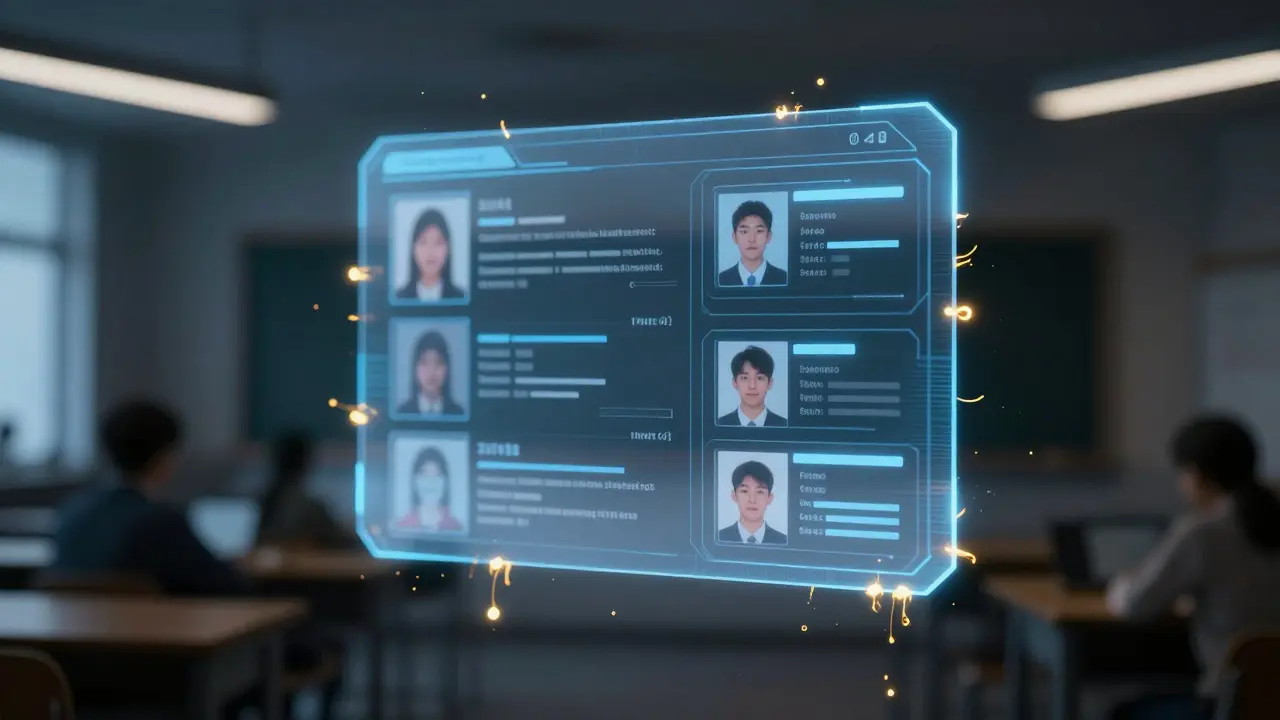
The core problem is that many educators treat a Learning Management System as a simple digital filing cabinet. In reality, an LMS is a complex software application for the administration, documentation, tracking, reporting, and delivery of educational courses. Because these platforms act as a hub for all student interaction, they become primary targets for data breaches and accidental leaks.
Key Privacy Takeaways for Teachers
- Data ownership stays with the student/parent, not the software provider.
- Compliance isn't a one-time checkbox; it's a continuous audit process.
- Third-party "free" tools are often the weakest link in the privacy chain.
- Minimalism is the best defense: only collect the data you actually need.
The Legal Landscape: More Than Just Rules
Depending on where your students live, you're juggling several heavy-hitting laws. In the US, the big one is FERPA. This is the Family Educational Rights and Privacy Act, which protects the privacy of student education records. If you're sharing a student's progress report via an unencrypted LMS chat, you might be violating federal law. Then there's COPPA, the Children's Online Privacy Protection Act, which kicks in for kids under 13. If your LMS requires a 10-year-old to create an account with an email address, the platform must have verifiable parental consent.
For those in Europe or teaching international students, GDPR is the gold standard. The General Data Protection Regulation doesn't just ask for consent; it demands "data portability" and the "right to be forgotten." This means if a student leaves your school, you can't just archive their data in a dusty digital folder; you may actually have to delete it permanently upon request.
| Regulation | Primary Focus | Key Requirement | Critical Age Limit |
|---|---|---|---|
| FERPA | Educational Records | Parental consent for record release | 18+ (Rights transfer to student) |
| COPPA | Online Data Collection | Verifiable parental consent | Under 13 |
| GDPR | Personal Data Privacy | Right to erasure & transparency | Variable (usually 13-16) |
Hidden Dangers in the LMS Ecosystem
Most educators trust the big names like Canvas or Moodle. While these platforms have robust security, the danger usually enters through the side door: LTI integrations. LTI, or Learning Tools Interoperability, allows you to plug in a third-party quiz app or a fancy interactive map. When you click "Authorize" to link a new tool to your LMS data privacy strategy, you're often granting that app permission to read your entire class roster.
Have you ever wondered why some educational apps are free? Often, the currency isn't money; it's data. Some tools scrape metadata about how students interact with content to build profiles that are later sold to EdTech marketers. This is a massive compliance red flag. If the Terms of Service mention "improving user experience through third-party sharing," you're likely dealing with a privacy leak.
Practical Steps for Compliance
You don't need to be a lawyer to protect your students, but you do need a system. Start by performing a "Data Audit." List every piece of information your LMS collects. Do you really need the student's home address and phone number for a biology quiz? If not, strip it out. This is called data minimization.
Next, look at your access controls. Not everyone in the school needs to see everything. A gym teacher doesn't need access to a student's specialized IEP (Individualized Education Program) notes stored in the LMS. Use "Role-Based Access Control" to ensure that data is only visible to those who absolutely need it for a specific educational purpose.
- Review the DPA: Always ask for the Data Processing Agreement. If a company can't provide one, don't use their tool.
- Audit Plugins: Every semester, go through your integrated apps and delete the ones you no longer use.
- Train Students: Teach students not to post PII (Personally Identifiable Information) in public forums or peer-review comments.
- Verify Encryption: Ensure the platform uses AES-256 encryption for data at rest and TLS for data in transit.
The Human Element: Social Engineering and Over-Sharing
Technology is only half the battle. The biggest privacy breaches often happen because of human error. Consider the "grade screenshot" phenomenon. A student posts a screenshot of their high grade on social media, but the screenshot also shows the names of five other students and their scores. Now you have a FERPA violation caused by a student, but as the educator, you're the one who managed the environment where that data was exposed.
Encourage a culture of "Privacy First." Instead of just posting grades in a way that's easy for you, use the LMS's private feedback loops. When students realize that their digital footprint is permanent, they become more careful. When teachers model this behavior by not sharing sensitive details in open channels, the whole community levels up.
Evaluating New Platforms: A Decision Tree
When a salesperson pitches you a new "AI-powered' learning tool, don't get dazzled by the features. Ask these three questions first. First: "Where is the data stored?" If it's in a country with weak privacy laws, move on. Second: "Who owns the data?" If the company claims ownership of student work to train their AI models, that's a non-starter. Third: "What happens when the contract ends?" You need a guarantee that all data will be purged within 30 days.
It's a trade-off between convenience and security. A tool that integrates perfectly with everything usually does so by having wide-open permissions. The most secure tools are often the ones that require a bit more manual setup because they don't automatically siphon data from your main directory.
Does using a password-protected LMS guarantee FERPA compliance?
No. Password protection is just basic security. Compliance is about how the data is handled, who has access to it, and whether the platform shares that data with third parties. You can have a strong password but still be non-compliant if you're using a plugin that sells student data.
What should I do if I suspect a data leak in my LMS?
First, disconnect any third-party integrations that seem suspicious. Then, notify your school's IT administrator and Data Protection Officer (DPO) immediately. Do not try to fix it yourself by deleting accounts, as this might destroy the evidence needed for a forensic audit.
Can students request to have their data deleted from an LMS?
Under GDPR, yes, via the "Right to Erasure." Under FERPA, it's more complicated; students can request to amend records that are inaccurate, but schools generally maintain records for legal and academic purposes for a set number of years.
Is it safe to use free Google Classroom or Microsoft Teams accounts?
Only if you are using the specific education editions (like Google Workspace for Education). Personal accounts do not offer the same privacy protections and may use data for ad targeting, which is a violation of most school policies and COPPA regulations.
How often should we review our LMS privacy settings?
At least once per semester. Software updates often reset permissions or introduce new "features" that automatically enable data sharing. A quick audit at the start and end of every term is the best way to catch these changes.
Next Steps and Troubleshooting
If you're an educator starting from scratch, don't try to fix everything overnight. Start by auditing your most-used three plugins. If you find one that doesn't have a clear privacy policy, find an alternative. For IT admins, the next step is to implement Multi-Factor Authentication (MFA) across all staff accounts to prevent the most common cause of breaches: phished passwords.
If you're dealing with a legacy system that doesn't support modern privacy standards, it might be time to migrate. Using an outdated LMS is like using a screen door for security-it looks like a barrier, but it doesn't actually stop anything. Look for platforms that prioritize "Privacy by Design," meaning the most restrictive settings are the default, and you have to consciously choose to open them.

Comments (9)
Samuel Bennett April 15 2026
Typical. You're talking about "compliance" like it's just a set of rules, but you're ignoring the fact that the backdoors are built-in by design. The government doesn't want a "secure" LMS; they want a database they can tap into whenever they feel like it. Also, your use of a hyphen in "AI-powered" is technically acceptable here, but the overall structure of your list is amateur hour.
Jen Becker April 16 2026
Whatever. Just use paper.
Glenn Celaya April 16 2026
honestly its sad that we even need a guide for this... some of you just dont get basic data hygiene it's embarrassing really
imagine leting a random plug-in steal your kids data just bc you wanted a fancy quiz lol
Jess Ciro April 17 2026
The a-ha moment here is that they are training AI on our kids. It's not about "improving user experience" it's a psychological harvest. They want the patterns, the disability markers, everything. Once that data is in the cloud it never actually disappears regardless of what GDPR says
Ryan Toporowski April 17 2026
Great tips! 🌟 I've already started auditing my plugins and found two I didn't even remember installing. Thanks for the heads up! 🚀💻
Rob D April 19 2026
Listen, while the EU is playing around with their GDPR fairy tales, we need to dominate the EdTech space with sheer American efficiency. Get the tools that actually work and stop worrying about every little data crumb. If a company is based in the States, we're the ones calling the shots anyway. This whole "data minimization" thing sounds like a recipe for mediocrity. Just get the damn software that scales and let the kids learn some resilience while they're at it!
Franklin Hooper April 19 2026
The lack of consistent capitalization in some of these points is genuinely grating
one would assume an educator could manage basic syntax
Madeline VanHorn April 19 2026
I can't believe some of you actually think this is a choice. If you aren't using high-end, vetted systems, you're basically just playing school. It's honestly a tragedy that most districts are so behind. The simpletons among us love "free" tools and then act shocked when the data leaks. It's basic logic, really.
Chris Atkins April 19 2026
thanks for sharing this man its really helpful for those of us trying to navigate different school systems