
Most sales training programs don’t work. They’re long, boring, and forgettable. You spend a day in a conference room, watch a video on objection handling, fill out a worksheet, and then go back to your desk-only to find nothing changed in how you sell. Six months later, revenue hasn’t budged. Why? Because most training treats sales like a checklist, not a skill that needs real practice, feedback, and reinforcement.
Sales training that works focuses on behavior change, not content delivery
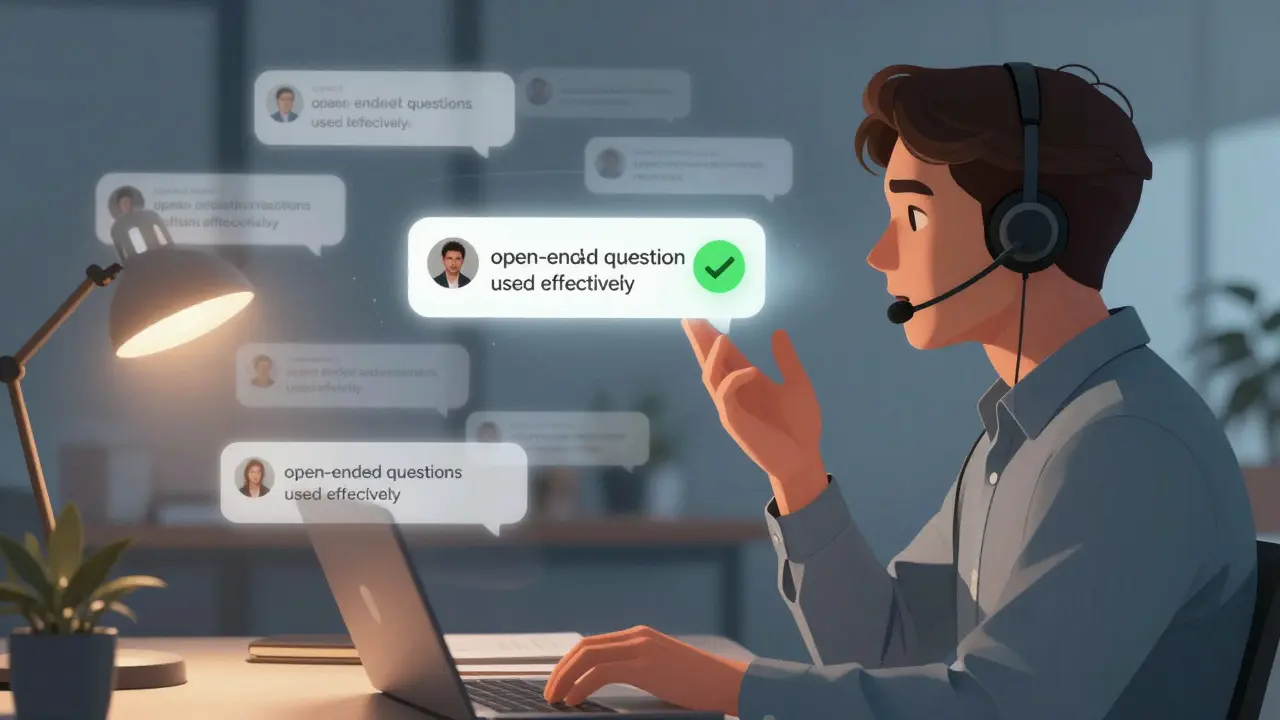
Effective sales training doesn’t teach you what to say. It teaches you how to think, react, and adapt in real conversations. The best programs measure improvement by what reps actually do on calls, not by how many slides they watched. A 2024 study by the Sales Management Association found that companies using behavior-based training saw a 27% increase in win rates within six months. The key? They tracked specific actions: how often reps asked open-ended questions, how long they waited after a prospect spoke, and whether they tied solutions to measurable outcomes.
Think about it: if you trained a basketball player by handing them a 50-page manual on shooting form, then sent them onto the court, would they improve? No. They’d need drills, reps, video review, and a coach correcting their stance in real time. Sales is the same. Training that sticks builds muscle memory through repetition, not memorization.
What makes a sales training program actually move the needle?
There are four non-negotiable elements in programs that drive revenue growth:
- Role-playing with real scenarios - Not fake objections like “I need to think about it.” Real ones: “Your price is 40% higher than the competitor,” or “We’re locked into a contract until next year.” The best programs use recordings of actual customer calls to build exercises.
- Immediate feedback loops - Reps get coached within 24 hours of a live call. Not a quarterly review. Not a generic email. A 5-minute voice note from their manager pointing out exactly what worked and what didn’t.
- Microlearning chunks - 10-minute videos on one skill: how to reframe a price objection, how to use silence effectively, how to identify economic buyers. These are consumed on mobile, during breaks, before calls.
- Accountability tied to metrics - Training isn’t optional. It’s baked into performance goals. If you don’t complete your weekly role-play and feedback session, your quota review gets delayed.
One SaaS company in Edinburgh cut their sales cycle by 22% after switching from a traditional two-day seminar to a 15-minute daily microcoaching program. Each rep received a short video from their manager analyzing one of their recent calls. Within six weeks, 83% of reps started using the exact phrases and pacing techniques modeled in the feedback. Revenue per rep went up by 19%.
Most companies get this wrong: training is not an event
Too many businesses treat sales training like an annual HR checkbox. They book a trainer, send everyone to a hotel conference room, hand out branded notebooks, and move on. That’s not training. That’s an event. And events don’t change behavior.
Real training is continuous. It’s the manager who asks, “What did you learn from that last call?” before the rep walks into the next one. It’s the CRM that flags when a rep hasn’t used the discovery framework in three calls. It’s the peer group that meets every Friday to replay one tough call and brainstorm better approaches.
Companies with the highest revenue growth from sales training don’t spend more money-they spend smarter. They use tools like Gong or Chorus to record calls, then tag key moments: “price objection,” “decision-maker identified,” “next steps agreed.” Managers then pull those tagged clips and use them for coaching. No guesswork. No theory. Just real data from real interactions.
Training without reinforcement is wasted time
Memory fades fast. A study from the University of California found that without reinforcement, people forget 70% of what they learned within 24 hours. Sales training is no different. If you don’t revisit skills, they disappear.
The most effective programs build reinforcement into the workflow:
- Weekly 10-minute video summaries of top-performing calls
- Monthly “battle cards” updated with new objections and responses from the field
- Quarterly skill assessments where reps are scored on 5 core behaviors
- A leaderboard showing who improved most on key metrics-not who closed the most deals, but who asked the best questions
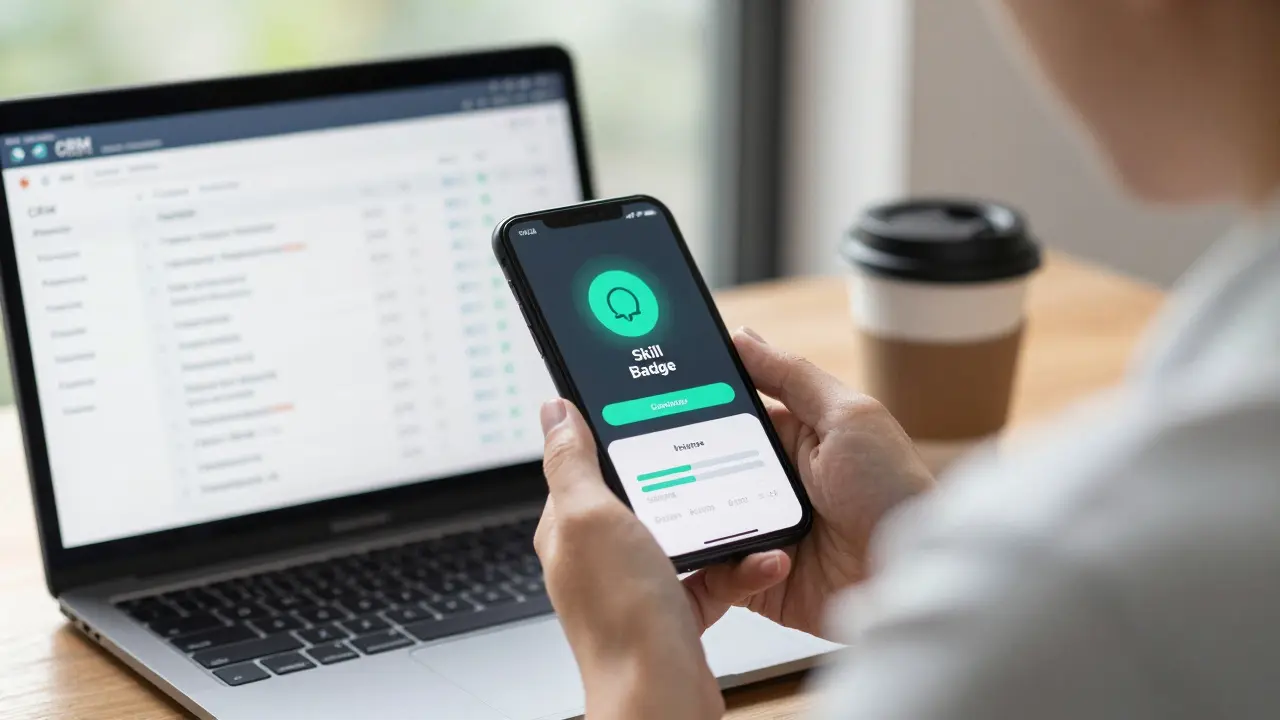
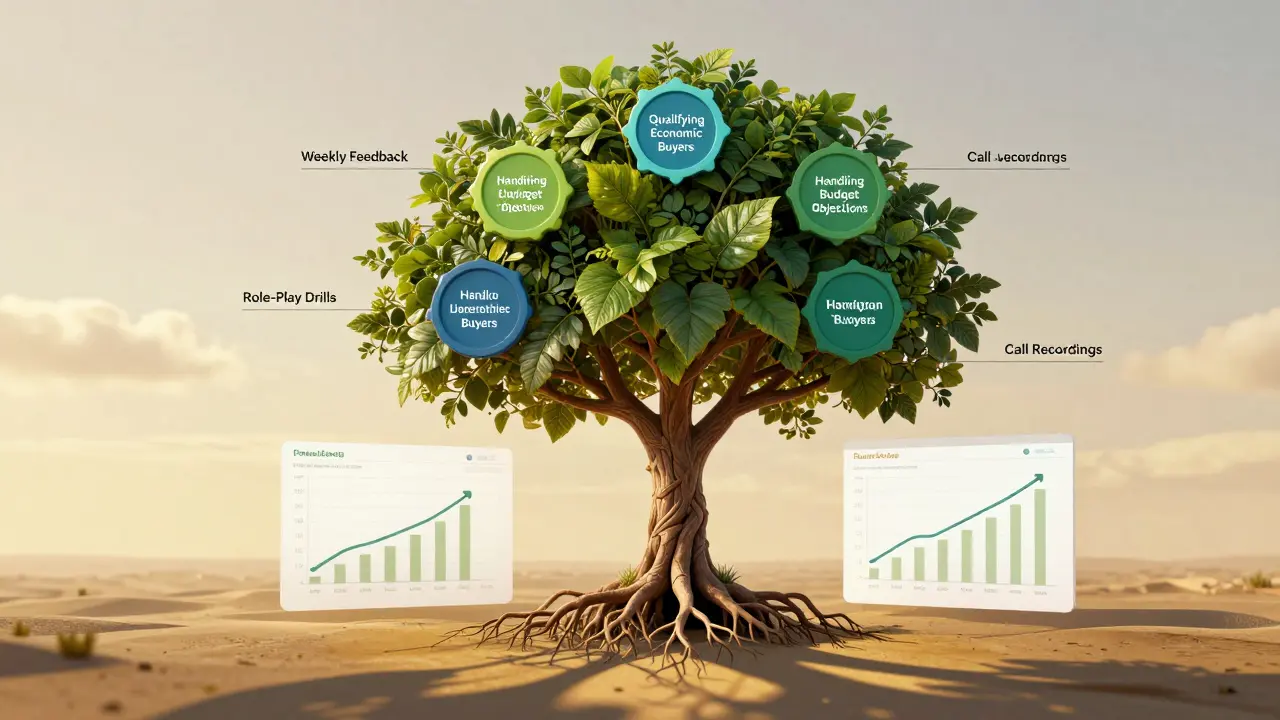
One UK-based manufacturing firm stopped giving out certificates at the end of training. Instead, they started giving out “Skill Badges” - digital icons in their CRM that updated when reps demonstrated mastery. A badge for “Qualifying Economic Buyers,” another for “Handling Budget Objections.” Reps started competing to earn them. Sales conversations got sharper. Close rates rose by 14% in three months.
What to avoid in sales training programs
Not all training is created equal. Here are the red flags to watch for:
- Generic scripts - If the program gives you a script to read word-for-word, run. Sales isn’t a monologue. It’s a conversation.
- One-size-fits-all - A program that treats a new rep the same as a 5-year veteran won’t work. Tailor content to experience level.
- No real data - If they can’t show you before-and-after metrics from their own clients, they’re guessing.
- Too much theory - If more than 30% of the content is about sales models (SPIN, MEDDIC, Challenger) without showing how to apply them, skip it.
- No manager involvement - Training fails when managers don’t participate. They’re the ones who reinforce it daily.
How to pick the right program for your team
Don’t buy a program because it looks fancy. Ask these five questions before signing anything:
- Can you show me real results from a company like mine? - Not case studies with made-up numbers. Real revenue data from businesses with similar team size, product complexity, and sales cycle length.
- How is progress measured? - Not “satisfaction scores.” Are they tracking call behaviors, win rates, deal velocity?
- How often do reps get coached? - Weekly? Monthly? If it’s not weekly, it won’t stick.
- Do they use actual customer calls for training? - If they use fictional scenarios, they’re not preparing you for reality.
- What happens after the first month? - Is there ongoing content? Updates? New scenarios? Or is it a one-time download?
One company in Glasgow tried three different programs in 18 months. Two were flashy, expensive, and delivered nothing. The third was a $2,000/month platform that gave them access to 100 real call recordings from their industry, weekly coaching templates, and a simple dashboard showing which reps were improving. Within four months, their average deal size increased by 17%.
Training isn’t a cost. It’s an investment with compound returns
Think of sales training like compound interest. A 5% improvement in conversion rate might not seem like much. But over a year, with a team of 10 reps closing $500K each, that’s an extra $300K in revenue. Multiply that by a 10% increase in deal velocity, and you’re talking about a half-million-dollar gain.
The companies that win aren’t the ones with the biggest budgets. They’re the ones who treat sales training like a daily habit-consistent, measurable, and tied directly to what happens in front of the customer. They don’t wait for a big event. They build learning into every call, every meeting, every feedback loop.
If your sales team isn’t growing revenue, it’s not because they’re lazy. It’s because they haven’t been trained the right way. And the right way isn’t about PowerPoint slides. It’s about practice, feedback, and repetition-just like any skill worth mastering.
How long does it take to see results from sales training?
You’ll start seeing small improvements in call quality within 2-3 weeks if the training includes daily feedback and real call reviews. Revenue impact usually shows up in 60-90 days, once reps have had enough live conversations to apply what they’ve learned. Companies that combine coaching with CRM tracking see measurable revenue growth in under three months.
Should we train our entire sales team at once or in batches?
Train in batches of 5-8 people. This allows managers to give focused feedback and creates peer accountability. Training the whole team at once makes coaching impossible. Smaller groups mean more repetition, better role-playing, and faster skill mastery. Plus, early adopters become internal champions who help others catch up.
Can remote sales teams benefit from the same training as in-office teams?
Yes-sometimes even better. Remote teams rely more on recorded calls and digital feedback, which makes tracking progress easier. Tools like Gong, Chorus, or Microsoft Viva Learning make it simple to review calls, tag key moments, and assign coaching tasks. The key is consistency: daily 10-minute feedback sessions work better than monthly Zoom calls.
What’s the biggest mistake companies make when choosing a sales training vendor?
They focus on the presenter’s reputation instead of the methodology. A famous speaker doesn’t mean effective training. Ask for data: “Show me how your clients improved win rates, deal size, or sales cycle length.” If they can’t show you specific metrics tied to behavior change, walk away.
Do we need to buy expensive software to make sales training work?
No. You can start with free tools: use your CRM to log call outcomes, record calls with your phone’s voice memo app, and share feedback via Slack or Teams. The most important thing isn’t the tool-it’s the habit of reviewing calls, giving feedback, and repeating the process. Software helps scale it, but it doesn’t replace the human element of coaching.
Next steps: Start small, measure everything
If you’re ready to make your sales training actually work, don’t overhaul everything tomorrow. Pick one skill-like asking better discovery questions-and build a 10-minute daily routine around it. Record three calls this week. Pick the best one. Watch it with your manager. Ask: “What did we learn?” Then do it again next week. Track the change in win rate. After four weeks, you’ll know if it’s working. If it is, add the next skill. If not, you’ve wasted two hours, not two weeks. That’s how real improvement happens: one small win at a time.
