
Think about the last time you checked a transaction on a major blockchain. You saw it confirm in seconds, maybe milliseconds. You didn't think about the electricity humming through miles of copper or the fans spinning at high RPMs in a cold aisle somewhere in Northern Europe. But that infrastructure is real, and it’s changing. The era of running blockchain validators on cheap, dirty power is ending. Today, sustainability isn't just a nice-to-have badge for your whitepaper; it’s a technical requirement and a market differentiator.
If you’re running nodes or validating blocks, you’ve likely felt the squeeze. Public cloud bills are unpredictable, performance fluctuates because of "noisy neighbors," and regulators are starting to ask hard questions about carbon footprints. This guide breaks down why sustainable data centers are becoming the standard for serious validator operations, how to choose the right hardware, and what actually makes a facility "green" enough to matter.
The Shift from Cloud to Bare Metal
For years, many node operators defaulted to public cloud providers like AWS or Azure. It seemed easy: spin up a server, pay by the hour, scale when needed. But for blockchain workloads, this model has cracked under pressure. Networks like Solana validate blocks in milliseconds. When consensus demands that kind of precision, shared resources become a liability. Hyperscale platforms weren’t designed for the constant, heavy I/O loads that blockchain state requires.
Enter bare metal servers. These are dedicated machines hosted in professional facilities where you get exclusive access to CPU cycles and memory bandwidth. No hypervisor overhead stealing your resources. No burst credit limitations throttling your disk speed when traffic spikes. For a validator, this means consistent performance during critical consensus windows. If your node falls behind because another tenant on the same physical server decided to run a massive database backup, you risk slashing penalties or missed rewards. Bare metal eliminates that variable.
This shift also impacts sustainability metrics. While cloud providers offer efficiency gains through economies of scale, they often obscure the actual energy source powering specific regions. Dedicated bare metal allows operators to choose facilities with transparent energy sourcing, giving you direct control over your environmental impact.
Why Sustainability Is Now a Technical Requirement
You might wonder if green energy actually affects your uptime. It does, but not directly through the voltage coming out of the wall. It affects it through infrastructure quality and regulatory stability. Facilities committed to renewable energy often invest heavily in modern cooling systems and redundant power grids to manage intermittent sources like wind and solar. These investments usually correlate with higher overall reliability.
Moreover, the market is shifting. Investors and users increasingly scrutinize the energy procurement transparency of blockchain networks. If your validator operates in a region known for coal-heavy grids, you face reputational risks. Conversely, hosting in a facility powered by verified renewables can be a selling point for institutional clients who have their own ESG (Environmental, Social, and Governance) mandates. It’s no longer just about saving polar bears; it’s about keeping your enterprise customers happy.
| Feature | Public Cloud | Shared VPS | Dedicated Bare Metal |
|---|---|---|---|
| Resource Exclusivity | Low (Shared) | Very Low | High (Exclusive) |
| Latency Consistency | Variable | Poor | Excellent |
| Energy Transparency | Regional Average | Unknown | Facility-Specific |
| Cost Predictability | Unpredictable (Egress fees) | Fixed but Limited | Fixed Monthly |
| Suitability for High-Frequency Chains | Risky | Not Recommended | Ideal |
Choosing the Right Facility Tier
Not all data centers are created equal. When selecting a home for your nodes, look for Tier III or Tier IV certifications. These classifications refer to redundancy levels. A Tier III facility supports concurrent maintainability, meaning you can perform maintenance without downtime. Tier IV goes further, offering fault tolerance against single-point failures.
Why does this matter for sustainability? Because downtime wastes energy. A server running idle due to network issues still consumes power while earning zero rewards. Redundant power and cooling systems ensure that your validator stays online, maximizing the return on every kilowatt-hour consumed. Furthermore, top-tier facilities are more likely to have sophisticated monitoring tools that help optimize energy usage, such as AI-driven cooling adjustments based on real-time load.
Geographic location plays a huge role here too. If your validator primarily communicates with peers in Europe, hosting in Edinburgh or Frankfurt reduces latency compared to hosting in Virginia. Lower latency means faster block propagation, which improves network efficiency. Less wasted time waiting for packets equals less energy burned per transaction processed.
Hardware Specifications for Efficiency
Your software stack matters, but your hardware determines your baseline efficiency. Modern validators need fast storage and reliable memory. Look for NVMe SSDs rather than traditional SATA drives. NVMe drives consume less power per input/output operation and generate less heat, reducing the cooling load on the facility. Similarly, using ECC (Error-Correcting Code) memory prevents silent data corruption, which can force expensive re-syncs-a process that burns significant CPU and electricity.
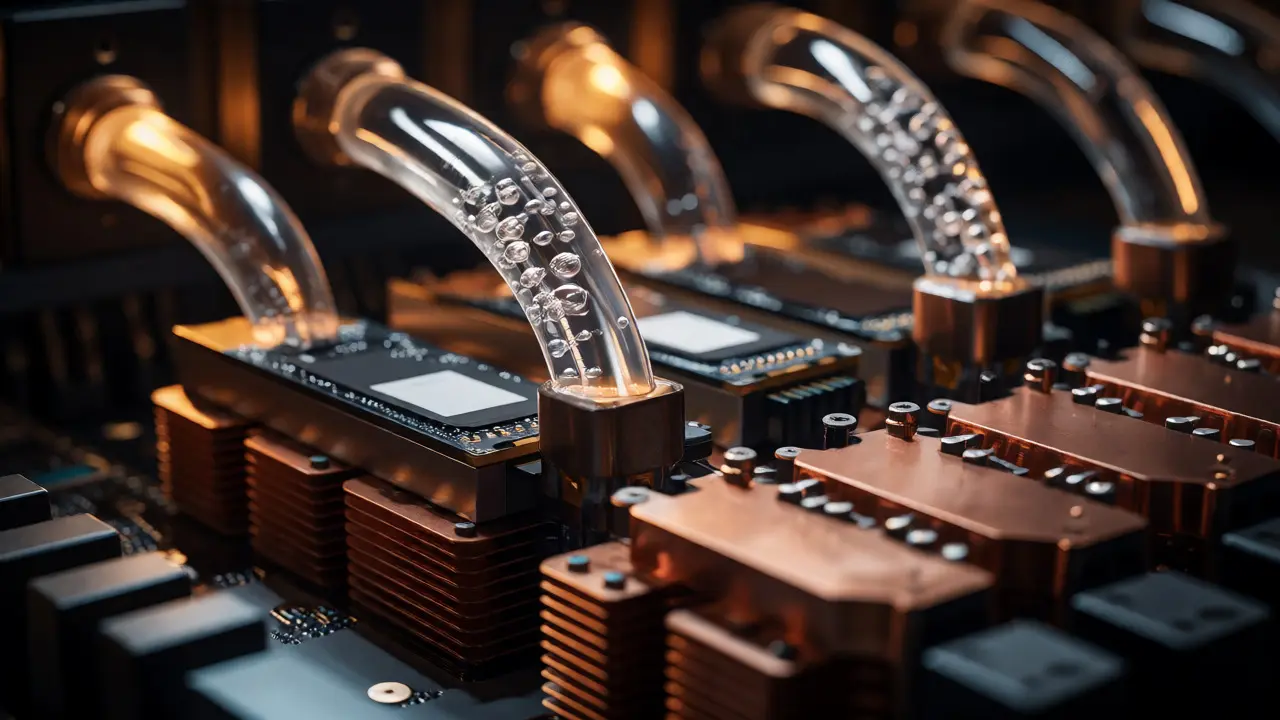
Consider the processor architecture. Many modern CPUs offer better performance-per-watt ratios than older generations. Upgrading to newer hardware might seem costly upfront, but the operational savings over two or three years often justify the investment. Some specialized providers even offer liquid-cooled racks, which are significantly more efficient than air cooling for high-density deployments.
Verifying Renewable Energy Claims
Greenwashing is rampant in tech. Just because a data center buys renewable energy credits doesn’t mean it runs on wind power in real-time. To truly assess sustainability, look for Power Purchase Agreements (PPAs) that directly fund new renewable projects. These agreements provide clearer proof of additionality-meaning your money helped build new green capacity rather than just subsidizing existing hydro plants.
Ask potential providers for their Power Usage Effectiveness (PUE) rating. PUE measures how efficiently a facility uses power. A PUE of 1.5 means that for every 1.5 kW used by the building, 1 kW goes to IT equipment. Anything below 1.3 is excellent. Facilities in cooler climates, like those in Scandinavia or Scotland, naturally achieve lower PUEs because they rely less on mechanical cooling.
Operational Best Practices for Green Validation
Even in a green facility, your configuration choices impact your footprint. Here are practical steps to minimize waste:
- Optimize Network Traffic: Ensure your node only syncs necessary data. Avoid unnecessary peer connections that increase bandwidth usage without improving consensus participation.
- Use Efficient Clients: Some client implementations are optimized for lower resource consumption. Test different clients in non-production environments to see which offers the best balance of speed and efficiency.
- Monitor Idle Times: If you run multiple testnet nodes, consider powering them down during off-peak hours if consensus requirements allow. Every watt saved counts.
- Regular Maintenance: Dust buildup insulates components, causing them to run hotter and use more power. Regular cleaning keeps thermal efficiency high.
The Role of Professional Validator Services
Not everyone wants to manage hardware. Providers like Stakin or W3coins operate validator nodes across networks like Ethereum, Solana, and Cosmos. They handle the infrastructure, ensuring 99.5%+ uptime. When choosing such a provider, ask specifically about their data center partners. Do they use facilities with verified renewable energy? Do they publish annual sustainability reports?
Using a reputable service provider can indirectly improve your sustainability profile. Large operators aggregate demand, allowing them to negotiate better terms with green energy suppliers. They also benefit from economies of scale in cooling and power management, spreading the fixed costs of sustainable infrastructure across hundreds of validators.
Frequently Asked Questions
Is bare metal really more sustainable than cloud?
It depends on the specific setup. Bare metal eliminates the overhead of virtualization layers, which can save 10-15% of energy. More importantly, it gives you control over the energy source. With cloud, you often inherit the grid mix of a large region. With bare metal, you can choose a facility powered by 100% renewable energy, making your specific contribution greener.
What is PUE and why should I care?
Power Usage Effectiveness (PUE) is a metric that calculates total facility energy divided by IT equipment energy. A lower number is better. A PUE of 1.2 means only 20% extra energy is used for cooling and lighting. High PUE facilities waste electricity, increasing both your cost and your carbon footprint.
Do renewable energy certificates (RECs) count as sustainable?
They help, but they aren't perfect. RECs allow companies to claim renewable usage without physically consuming green electrons. For true sustainability, look for direct PPAs or on-site generation. However, buying RECs still supports the broader transition to green energy markets.
How does location affect my validator's carbon score?
Location determines the local grid mix. Hosting in Norway or Iceland, where hydro and geothermal dominate, results in a much lower carbon score than hosting in regions reliant on coal. Additionally, cooler climates reduce the energy needed for cooling, further lowering the total footprint.
Can I switch data centers without losing rewards?
Yes, but plan carefully. Migrate gradually. Run your old and new nodes simultaneously until the new one is fully synced and stable. This overlap period ensures you don't miss blocks during the transition. Most protocols allow multiple active keys, so you can verify performance before shutting down the old instance.
Next Steps for Your Infrastructure
Auditing your current setup is the first move. Calculate your monthly energy costs and check the grid intensity of your current hosting region. If you’re paying premium prices for unstable performance on public cloud, quote a migration to dedicated bare metal. Compare quotes from providers in low-carbon regions like Northern Europe or Canada.
Don’t wait for regulations to force your hand. The trend toward sustainable validation is accelerating. By securing green infrastructure now, you future-proof your operations against rising energy costs and tightening environmental standards. Your nodes will run faster, your bills will stabilize, and your project’s reputation will benefit from tangible proof of responsibility.

Comments (14)
Brad Walker September 30 2026
Look, I get it. We all want to feel good about our little digital ledgers humming along in some icy cave in Iceland while the rest of us burn coal just to keep the lights on. But let's be real for a second here. This whole 'green blockchain' thing feels like a massive cope for people who don't understand that entropy is the only true constant in the universe. You can put your shiny NVMe drives in a facility powered by windmills, but does that actually change the fundamental nature of what you are doing? Or are we just decorating the deck chairs on the Titanic with renewable energy credits? It’s almost poetic, in a tragic sort of way, how we try to impose order and morality on something as chaotic and indifferent as data validation. The fans spin, the electricity flows, and somewhere a tree gets cut down or doesn't get cut down, and you think that matters? Maybe it does. Maybe it doesn't. Honestly, I’m too tired to care which one it is today. Just don’t tell me my carbon footprint is saving the world when I’m literally just letting a machine do math for me. It’s a beautiful illusion, and I respect the effort, even if the premise is fundamentally flawed by the sheer weight of human existence.
william mcstay October 1 2026
This is exactly right. Stop paying AWS tax and move to bare metal. Simple.
Prayagraj Medicose October 3 2026
Brother, wake up! 🤯 They are hiding the real PUE numbers from us. I saw a report last week that said the 'green' data centers in Scandinavia are actually secretly plugged into backup diesel generators 40% of the time because the wind stops blowing when the moon is in retrograde or something. It’s all a smokescreen to keep the validators dependent on their infrastructure providers. If you switch to bare metal, they track your IP address and throttle your bandwidth based on your political leaning. I swear on my grandmother’s health, the moment you buy an ECC RAM stick, your node starts syncing slower. It’s not physics, it’s control. They want you on the cloud so they can meter every kilowatt-hour and charge you extra for 'cooling surcharges' that don’t exist. Don’t fall for the Tier III certification trap. That paper is worthless if the grid behind it is dirty. Trust no one. Especially not Stakin. 😡📉
Howard Hurd October 3 2026
Listen here, folks. :D I’ve been running nodes since Bitcoin was worth less than a cup of coffee, and I’m telling you, this guide is spot on but missing the obvious. You Americans (and everyone else) need to stop overcomplicating this. Get a server. Put it in a garage. Plug it into solar panels. Done. Why are we talking about 'Tier IV redundancy'? My buddy Dave runs a validator in his basement in Ohio and he hasn’t missed a block in three years. Sure, his cat knocks things over sometimes, but that’s character building. The 'experts' love to confuse you with terms like 'Power Purchase Agreements' so they can charge you more. Just buy the hardware and run it. If it goes down, reboot it. That’s American engineering spirit right there. No fancy cooling needed. Just pure grit and copper wire. :)
Manoj Kumar October 4 2026
One must critically examine the underlying assumptions presented herein. The assertion that bare metal inherently offers superior sustainability metrics is fraught with logical inconsistencies. Firstly, the capital expenditure required for dedicated hardware leads to significant e-waste upon decommissioning, a factor often ignored in these 'green' narratives. Secondly, the reliance on geographic arbitrage-moving servers to colder climates-is merely shifting the environmental burden rather than eliminating it. One cannot ignore the embodied carbon in the transportation of such heavy equipment. Furthermore, the opacity of energy grids in regions touted as 'green' remains a persistent concern; without granular, real-time verification, claims of renewable usage remain anecdotal at best. It appears the author prioritizes marketing rhetoric over rigorous scientific scrutiny. :(
Hemali Jaiswal October 6 2026
This is such a vibrant and necessary conversation! 💫 Navigating the labyrinthine world of blockchain infrastructure can feel overwhelming, but framing sustainability as a technical requirement rather than just a moral imperative is truly empowering. It helps us see the ecosystem not just as code, but as a living, breathing entity that interacts with our physical world. For those new to this journey, remember that every choice, from the type of SSD to the location of your rack, ripples outwards. It’s about cultivating harmony between efficiency and ethics. Keep exploring, keep learning, and never underestimate the power of a well-optimized, eco-conscious node! 🌿✨
Sean Eagen October 7 2026
Cloud bills rippin us off. Bare metal is honest work. Green energy is the only moral path. Do it right or dont bother.
Kieran Mitchell October 8 2026
Oh, please!! You think buying a few RECs makes you a saint?! The audacity!!! We know the truth!!! Big Tech is lying to us!!! They build these 'green' facilities just to look good in press releases while burning fossil fuels in the background!!! And don't get me started on the latency arguments!!! It's all rigged!!! The network propagates blocks faster in Europe because they have better cables, not because they are greener!!! It's a conspiracy of geography and corporate greed!!! Wake up!!! The slashing penalties are designed to keep you poor!!! The cloud providers are vampires!!! Sucking the life out of your wallet and the planet!!! I am furious!!! Absolutely livid!!! This guide is okay, I guess, but it misses the rage!!! The absolute, unadulterated rage of the common validator!!!
Darlene Hopkins October 10 2026
It’s comforting to know that infrastructure choices can align with personal values. Thank you for sharing this perspective.
Sherri Jones October 11 2026
Great breakdown! ✅ I’d add that checking the PUE is crucial, but also look for facilities using liquid immersion cooling. It can drop PUE below 1.1! 🌊 Also, don't forget about the waste heat reuse programs some Nordic data centers have-they heat local swimming pools. How cool is that? ❄️♨️ Always verify the PPAs directly with the provider, not just trust the website badge. Good luck with your migrations! 🚀💚
SHANNON GRUBER October 13 2026
Generic advice. Everyone knows bare metal is better for performance. The sustainability angle is just fluff for investors who don't understand tech. If you're still on cloud for a Solana validator, you're already losing money. Move on.
Charles Reah October 13 2026
A very balanced overview. For those considering the transition, I would recommend starting with a testnet deployment first. Ensure your monitoring stack is robust before going mainnet. It reduces stress significantly.
LoriBeth Blair October 14 2026
Actually, most people misunderstand PUE. A low PUE doesn't mean green energy; it just means efficient cooling. You could have a PUE of 1.1 and still be running on coal. The article conflates efficiency with sustainability. Typical oversight. Also, 'bare metal' isn't always sustainable if the hardware lifecycle isn't managed properly. E-waste is a huge problem nobody talks about in these guides. Lazy analysis.
Bryce Imbriale October 16 2026
Love the energy here! Really pushing for that optimization mindset. Remember that consistency is key! Whether you choose cloud or bare metal, staying online is the ultimate goal! Let's build a resilient future together! Onward and upward! 🚀💪🔥