
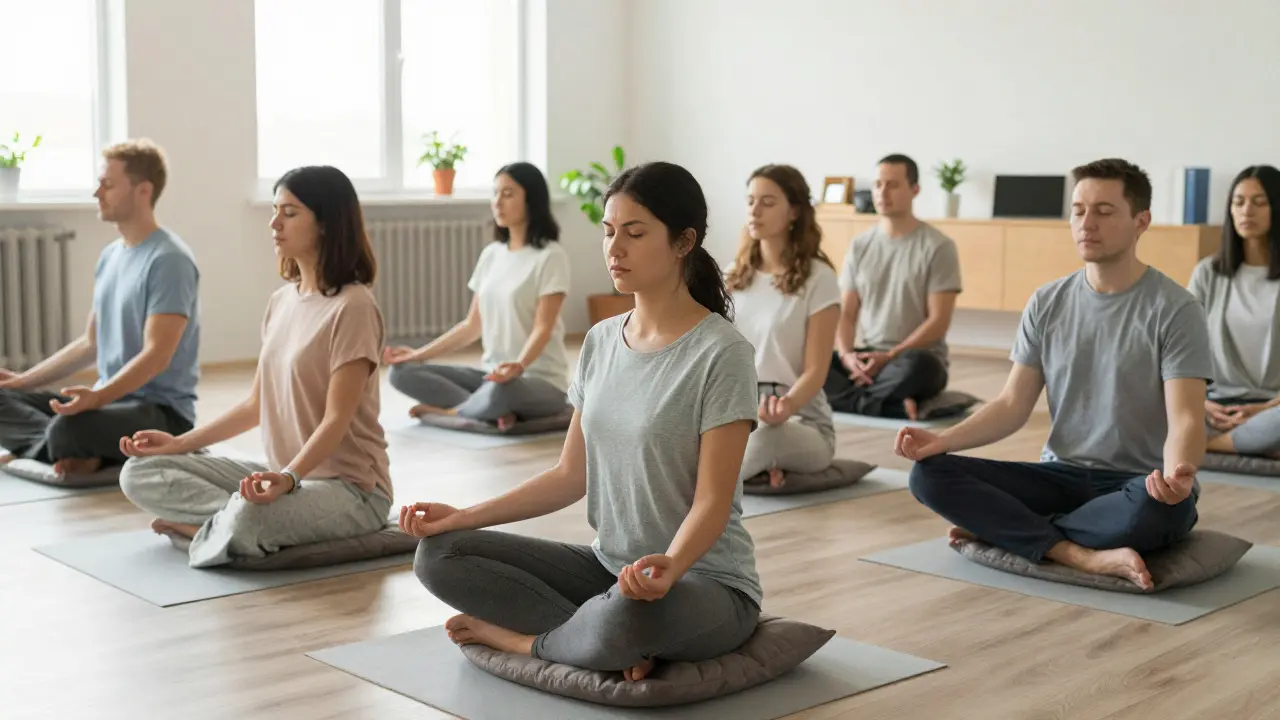
Stress doesn't care about your job title or your income. It hits everyone, from the exhausted nurse on a double shift to the entrepreneur staring at spreadsheets at midnight. For decades, the standard advice was "just relax," which is about as helpful as telling someone with a broken leg to "walk it off." That changed in the late 1970s when Jon Kabat-Zinn, a molecular biologist at University of Massachusetts Medical School, stripped the spiritual trappings from Buddhist meditation and created a secular, evidence-based protocol. He called it Mindfulness-Based Stress Reduction, or MBSR. Today, it is the gold standard for clinical mindfulness training, used in hospitals and clinics worldwide to treat chronic pain, anxiety, and burnout.
If you are considering an MBSR course, you might be wondering what actually happens inside those eight weeks. Is it just sitting quietly? Do you have to believe in anything specific? The answer is no. MBSR is a rigorous, structured educational program. It is not a retreat; it is a curriculum. Understanding the structure helps you commit to the process, because the benefits come from consistent practice, not passive attendance.
The Eight-Week Framework: A Step-by-Step Breakdown
An authentic MBSR course follows a strict timeline established by Kabat-Zinn. Deviating from this structure often dilutes the effectiveness. Most courses meet once a week for two-and-a-half hours, plus one full-day silent retreat (usually six to eight hours) between week six and seven. Here is how the progression works.
Weeks 1-3: Building Awareness
In the beginning, the focus is on grounding yourself in the present moment. You learn the Body Scan, a technique where you mentally scan your body from head to toe, noticing sensations without judgment. This seems simple, but if you try it, you will find your mind racing within seconds. The goal isn't to stop thoughts; it is to notice them drifting away and gently return to the breath. You also start practicing informal mindfulness-bringing attention to daily activities like eating or walking.
Weeks 4-6: Moving Mindfully
As comfort with stillness grows, the course introduces movement. Hatha Yoga practices are adapted for all ability levels, focusing on posture and flexibility rather than fitness. This teaches you to observe physical limits and discomfort without reacting with frustration. You begin to see that pain and suffering are different things; pain is inevitable, but suffering comes from your resistance to it.
Weeks 7-8: Integration and Application
The final weeks focus on applying mindfulness to difficult emotions and interpersonal relationships. You learn how to respond to stress triggers with awareness rather than automatic reaction. The course ends with a discussion on maintaining practice after graduation, ensuring the skills stick long-term.
Core Protocols: The Daily Practice Requirements
Attending the weekly class is only part of the equation. The real transformation happens during the home practice. An accredited MBSR course requires approximately 45 minutes of daily practice, six days a week. This non-negotiable commitment is what separates MBSR from casual mindfulness apps.
- Formal Practices: These include the Body Scan, Sitting Meditation (focusing on breath, sounds, and thoughts), and Hatha Yoga postures. You alternate these throughout the week.
- Informal Practices: These involve bringing mindful awareness to routine activities. Eating one meal a day in silence and with full attention is a classic example. Walking mindfully while commuting or doing dishes can also count.
- Journaling: Many programs ask you to keep a brief log of your practice experience, noting obstacles and insights. This builds self-reflection skills.
The protocol is designed to build neural pathways associated with attention regulation. Research from Harvard University shows that just eight weeks of consistent MBSR practice can increase gray matter density in the hippocampus, known for learning and memory, and decrease gray matter in the amygdala, responsible for stress and anxiety.
Who Teaches MBSR? Certification and Standards
Not every meditation teacher is qualified to lead an MBSR course. The term "MBSR" is protected by the Center for Mindfulness in Medicine, Health Care, and Society (CFM) at UMass Chan Medical School. To teach MBSR, an instructor must complete a rigorous certification process involving hundreds of hours of teaching, mentoring, and personal practice under senior faculty.
When looking for a course, check if the instructor is certified by CFM or another recognized body like the Association for Contemplative Mind in Education. Be wary of generic "mindfulness workshops" that claim to be MBSR but lack the eight-week structure and daily homework requirements. Authentic MBSR instructors are trained to handle trauma responses and group dynamics safely.
MBSR vs. Other Mindfulness Programs
Mindfulness has exploded in popularity, leading to many variations. How does MBSR compare?
| Feature | MBSR | MBCT (Mindfulness-Based Cognitive Therapy) | Corporate Workshops |
|---|---|---|---|
| Duration | 8 Weeks | 8 Weeks | 1-2 Days |
| Primary Goal | Stress Reduction, Pain Management | Preventing Depression Relapse | Productivity, Quick Relief |
| Daily Practice | Required (45 mins/day) | Required (45 mins/day) | Optional |
| Target Audience | General Public, Chronic Illness | History of Depression | Employees, Managers |
| Clinical Evidence | Extensive (50+ years) | Strong (Depression Focus) | Limited |
While MBCT shares the same structure as MBSR, it adds cognitive behavioral techniques specifically for depression. Corporate workshops are useful for introduction but lack the depth to create lasting neurological change. If you are dealing with significant stress, anxiety, or chronic pain, MBSR remains the most robust option.
What to Expect: Challenges and Benefits
Let's be honest: MBSR is hard work. In the first few weeks, many participants report feeling *more* stressed. Why? Because you are finally paying attention to the tension you've been ignoring. You might feel boredom, restlessness, or emotional upheaval. This is normal. It is called the "backwash" effect. The key is to trust the process and continue practicing.
By week four, most people start noticing shifts. You might catch yourself snapping at a colleague and pause before reacting. You might feel less overwhelmed by a mountain of tasks. Studies published in JAMA Internal Medicine show that MBSR reduces symptoms of anxiety and depression significantly more than control groups. Participants also report improved sleep quality and better immune function.
Finding a Course Near You
You don't need to live near a major university to access MBSR. Many certified teachers offer online courses via Zoom, which maintain the same rigor as in-person sessions. Look for providers affiliated with:
- University Hospitals: Many medical centers run community MBSR programs.
- Private Clinics: Search for "CFM-certified MBSR instructor" in your area.
- Online Platforms: Websites like Palouse Mindfulness or Insight Timer offer free or low-cost MBSR courses led by certified teachers.
Cost varies widely. Hospital-based programs may charge £200-£400, while private practitioners might charge £500+. Some health insurance plans now cover MBSR for stress-related conditions, so check with your provider. Remember, you are investing in a skill set that lasts a lifetime, not a temporary fix.
Practical Tips for Success
To get the most out of your MBSR journey, keep these principles in mind:
- Start Small: If 45 minutes feels impossible, begin with 10 minutes and gradually increase. Consistency matters more than duration.
- Create a Space: Designate a quiet corner for practice. Use a cushion or chair that supports good posture.
- Be Kind to Yourself: Missing a day doesn't mean failure. Just pick up again the next day. Judgment is the enemy of mindfulness.
- Ask Questions: Use the weekly classes to clarify doubts. Teachers are there to guide you through difficulties.
MBSR is not about becoming a perfect meditator. It is about becoming aware of who you are right now, exactly as you are. In a world that constantly pulls your attention outward, learning to turn inward is a radical act of self-care.
Is MBSR religious?
No. MBSR is entirely secular. While its roots are in Buddhist meditation, Jon Kabat-Zinn deliberately removed all spiritual and religious elements. It focuses on psychological and physiological benefits, making it suitable for people of any faith or no faith at all.
How much time do I need to commit daily?
An accredited MBSR course requires approximately 45 minutes of daily home practice, six days a week. This includes formal meditation and yoga exercises. Additionally, you attend a 2.5-hour weekly class and one full-day silent retreat.
Can MBSR help with chronic pain?
Yes. One of the original purposes of MBSR was to help patients manage chronic pain. Research shows it can reduce the perception of pain intensity and improve coping mechanisms by changing how the brain processes pain signals.
Do I need prior meditation experience?
No prior experience is needed. MBSR is designed for beginners. The instructor guides you step-by-step through each technique. In fact, having no preconceived notions about meditation can be an advantage.
Is online MBSR as effective as in-person?
Recent studies suggest that online MBSR delivered by certified instructors is equally effective as in-person courses. The key factors are the quality of instruction, adherence to the protocol, and consistency of practice, which can be maintained virtually.
What if I miss a class or practice session?
Life happens. If you miss a class, contact the instructor to discuss catching up. If you miss a practice day, simply resume the next day without guilt. Mindfulness is about returning to the present moment, including moments of missed practice.
Does insurance cover MBSR?
Coverage varies by provider and region. Some health insurance plans cover MBSR for diagnosed conditions like anxiety, depression, or chronic pain. Contact your insurer to ask about coverage for "mindfulness-based stress reduction" or "behavioral therapy."
Who should avoid MBSR?
MBSR is generally safe for most people. However, individuals with severe psychiatric conditions like psychosis or acute trauma may need additional support. Always consult with a mental health professional before starting if you have a history of severe mental illness.
