
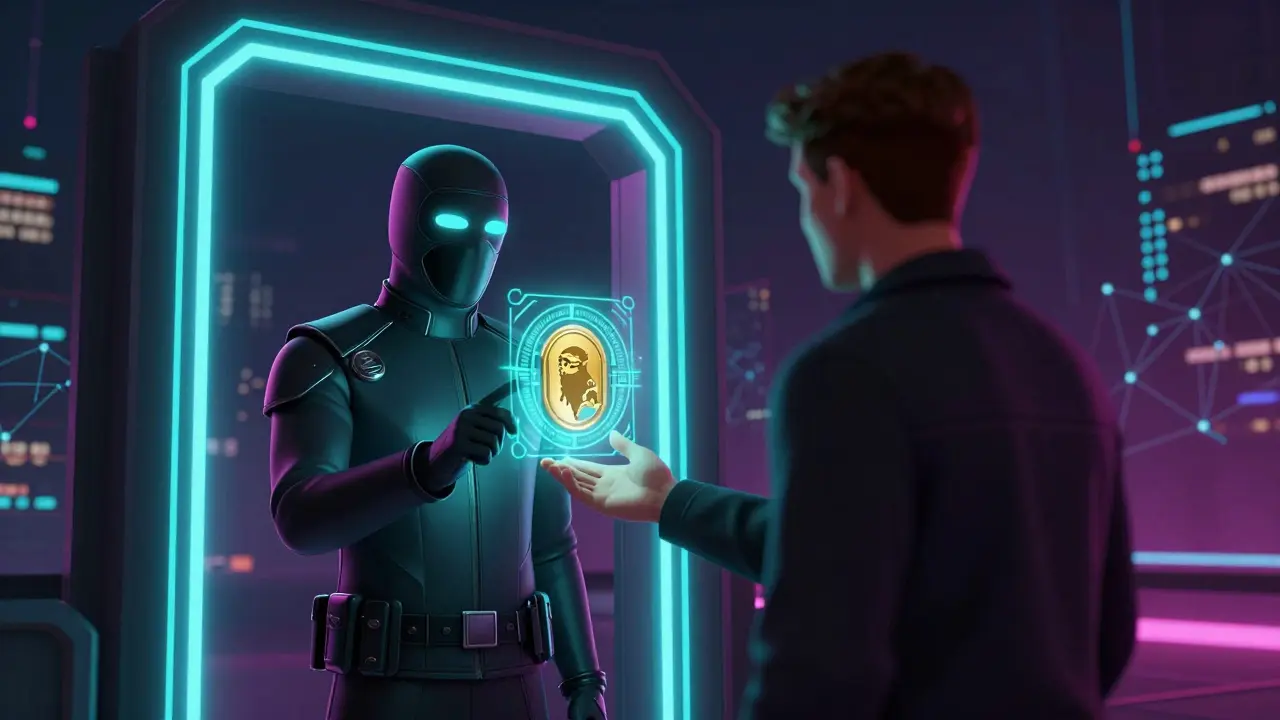
Imagine walking into a private club where the bouncer doesn't check your ID or ask for an invitation. Instead, they scan your pocket, see a specific digital token, and let you in instantly. That is exactly how token gating is a blockchain-based verification method that restricts access to digital spaces, events, and content exclusively to individuals who own specific tokens or NFTs. It functions as a digital permission layer, replacing traditional username-and-password logins with cryptographic proof of ownership.
In the early days of the internet, community membership meant signing up for an email list or joining a forum. Today, in the Web3 era, membership is an asset. You own it, you can trade it, and it grants you real access. This shift has transformed how creators, brands, and developers build loyal audiences. But does it actually work better than the old ways? Let's look at the mechanics, the benefits, and the pitfalls of building a community behind a token wall.
How Token Gating Actually Works
At its core, token gating relies on the transparency of public ledgers. When you connect your Web3 wallet (like MetaMask or Phantom) to a platform, you are not just logging in; you are presenting a cryptographic key. The platform then runs a quick check against the blockchain to see if your wallet holds the required assets.
This process happens in seconds. According to Formo.so's Q4 2025 load testing with 10,000 concurrent users, verification on Ethereum mainnet typically takes 2-5 seconds. If you use Layer 2 solutions like Polygon, that time drops to under a second. The system checks for specific standards:
- ERC-721 or ERC-1155: These are non-fungible tokens (NFTs). The gate checks if you hold a specific NFT, like a Bored Ape or a project-specific membership badge.
- ERC-20 or SPL: These are fungible tokens. The gate checks if you have a minimum balance of a specific coin.
Platforms like Collab.Land is an early infrastructure provider for token gating that supports over 40 blockchain networks including Ethereum, Solana, and Polygon have become the standard for this integration. They allow community managers to set rules without writing code. For example, you can set a rule that says "Allow access only if the user owns an NFT with the trait 'Background: Gold'." This level of granularity was impossible with traditional email lists.
The Core Benefits: Why Creators Are Switching
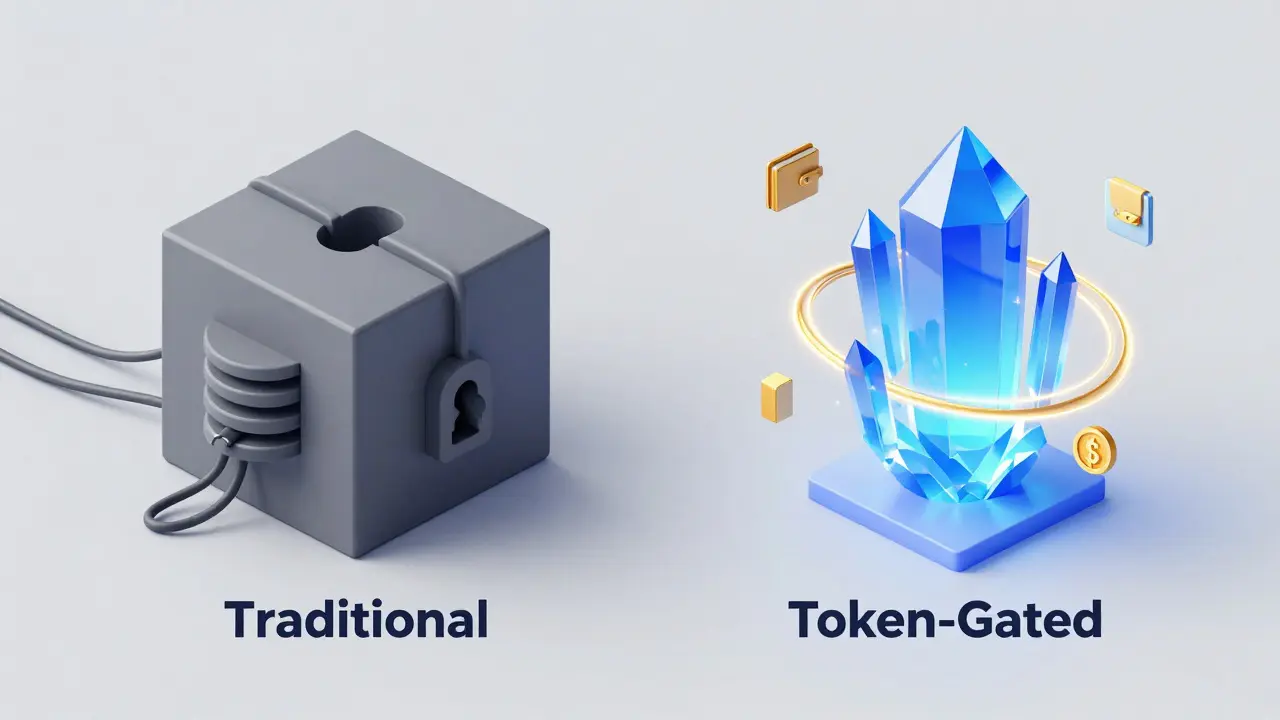
Why go through the hassle of setting up blockchain verification? The answer lies in alignment and security. Traditional memberships are static. Once you pay $10 a month, you stay a member until you cancel. There is no secondary market, no interoperability, and often no way to prove your status outside that single platform.
Token-gated memberships change this dynamic entirely. Here is what makes them powerful:
| Feature | Traditional Membership | Token-Gated Membership |
|---|---|---|
| Ownership | Non-transferable license | Asset owned by user; can be sold/traded |
| Verification Speed | Manual or database lookup (hours) | Cryptographic proof (seconds) |
| Fraud Resistance | 87% (username/password systems) | 99.98% (Ledger Academy 2025 data) |
| Interoperability | Siloed within one brand | Can unlock benefits across partner ecosystems |
| Update Flexibility | Requires manual admin changes | Smart contract updates (avg 2.3 seconds) |
The financial upside is also real. Look at the Bored Ape Yacht Club (BAYC). In 2021, the floor price was around 0.08 ETH. By 2025, it had appreciated to 42 ETH in verified cases. Holding that NFT wasn't just a picture; it was a ticket to exclusive parties, collaborations, and networking opportunities. That value proposition drives engagement. Formo.so's January 2025 case study found that token-gated spaces saw 73% higher engagement rates compared to traditional online communities.
Implementation: Tools and Technical Requirements
You don't need to be a blockchain developer to start token gating, but you do need to understand the tools. The ecosystem has matured significantly since the 2021 boom. Today, there are three main paths for implementation:
- No-Code Platforms: Services like Collab.Land and Formo.so offer plug-and-play integrations for Discord, Telegram, and websites. Collab.Land, which has been operating since 2022, commands 45% of the market share for Discord integrations. They support 30+ wallet types, making it easier for users to connect.
- Developer SDKs: For custom web experiences, libraries like Thirdweb provide open-source tools. With 12,850 stars on GitHub as of January 2026, Thirdweb allows experienced developers to reduce implementation time from weeks to days.
- Custom Smart Contracts: For high-security or unique logic requirements, teams may write their own verification contracts. This offers maximum flexibility but comes with a steeper learning curve and higher audit costs.
A critical technical consideration is re-verification. Many failed implementations suffer from a simple flaw: they check for the token once at login but never again. If a user sells their NFT ten minutes later, they still have access. Leading platforms now implement continuous or periodic re-checks to ensure current ownership. miniOrange's 2025 analysis found that 63% of failed token gating setups resulted from inadequate re-verification systems.
Pitfalls and Challenges to Avoid
Token gating is not a silver bullet. It introduces new complexities that can alienate users if not handled carefully. The biggest hurdle remains usability. For the average person, connecting a wallet, managing seed phrases, and paying gas fees is intimidating.
Data from Reddit's r/NFT subreddit highlights this friction. In a January 2026 thread analyzing user sentiment, 32% of respondents cited frustrations with the setup process. Wallet connection issues were reported by 57% of negative reviewers. Mobile users face even steeper odds, experiencing 2.3x more connection failures than desktop users according to Formo.so's user testing.
Then there is the issue of exclusion. Dr. Marcus Wong of MIT's Digital Trust Lab warned in February 2025 that relying solely on token ownership can create echo chambers. If the entry price skyrockets, you lock out potential contributors who might add value but lack the capital. High-value NFT communities have seen engagement drop by 40% when prices became unaffordable for new members.
To mitigate this, successful projects are moving toward hybrid models. Formo.so introduced reputation-based access in January 2026, requiring both token ownership and a minimum contribution score. This ensures that while wealth provides entry, activity sustains membership.

Regulatory Landscape and Future Trends
As adoption grows, so does scrutiny. The regulatory environment for token-gated communities is evolving rapidly. In March 2025, the SEC issued guidance classifying some token-gated access models as securities offerings if they were tied to profit-sharing mechanisms. This affected 17% of reviewed projects, according to Coinbase's Legal Analysis Unit. Creators must be careful to structure their tokens as utility assets rather than investment contracts.
Looking ahead, the technology is becoming more sophisticated. We are seeing the rise of Dynamic Token Gating, announced by Venly.io in February 2026, which adjusts access permissions based on real-time market conditions or user behavior. Additionally, the Ethereum Name Service (ENS) is integrating deeply with these systems, allowing .eth domains to serve as unified identity keys for gated access.
The long-term viability looks strong. Gartner positioned token gating at the 'Slope of Enlightenment' phase in their 2026 Hype Cycle, predicting mainstream adoption within 5-7 years. However, Forrester cautioned that without solving usability barriers, it risks remaining a niche tool for crypto enthusiasts. The key will be abstraction-making the blockchain invisible to the end-user while retaining the security and ownership benefits underneath.
Best Practices for Community Builders
If you are planning to launch a token-gated community, here are actionable steps to ensure success:
- Start Simple: Don't overcomplicate the initial gate. Use a single, clear NFT requirement before adding tiered structures.
- Provide Support: Create step-by-step guides for wallet setup. Video tutorials perform best for reducing support tickets.
- Plan for Liquidity: Ensure your token has a fair launch mechanism to prevent immediate speculation that prices out genuine community members.
- Implement Re-verification: Choose a platform that checks ownership regularly, not just at login.
- Focus on Value: The token is just the key. The content, network effects, and experiences inside the gate are what keep people engaged. As u/CryptoBuilder89 noted on Reddit, spontaneous collaboration in well-managed gates led to significant project funding opportunities.
Token gating represents a fundamental shift in how we define digital belonging. It moves us from renting attention to owning access. While the technology is still maturing, the benefits of secure, verifiable, and valuable community membership are already evident for those willing to navigate the learning curve.
What is the difference between token gating and traditional membership?
Traditional membership is a non-transferable license managed by a central database. Token gating uses blockchain to verify ownership of a digital asset (NFT or token), making the membership portable, tradable, and cryptographically secure without relying on personal data.
Is token gating legal?
Generally, yes, but it depends on how the token is structured. If the token promises financial returns or profit-sharing, it may be classified as a security by regulators like the SEC. Utility tokens that grant access to services or content are typically treated differently, but legal advice is recommended.
Which platforms are best for token gating?
For Discord and Telegram, Collab.Land and Formo.so are leading providers. For custom web applications, developer SDKs like Thirdweb or Moralis offer robust integration options. The choice depends on your technical expertise and desired customization level.
Can users lose access if they sell their token?
Yes. Since access is tied to wallet ownership, selling the token transfers the membership rights to the buyer. Properly configured systems will revoke access immediately upon detection of the transfer via re-verification protocols.
How much does it cost to implement token gating?
No-code platforms often have free tiers or monthly subscriptions based on usage. Custom development involves costs for smart contract auditing and developer time. Gas fees for transactions vary by blockchain, with Layer 2 solutions like Polygon offering significantly lower costs than Ethereum mainnet.
