
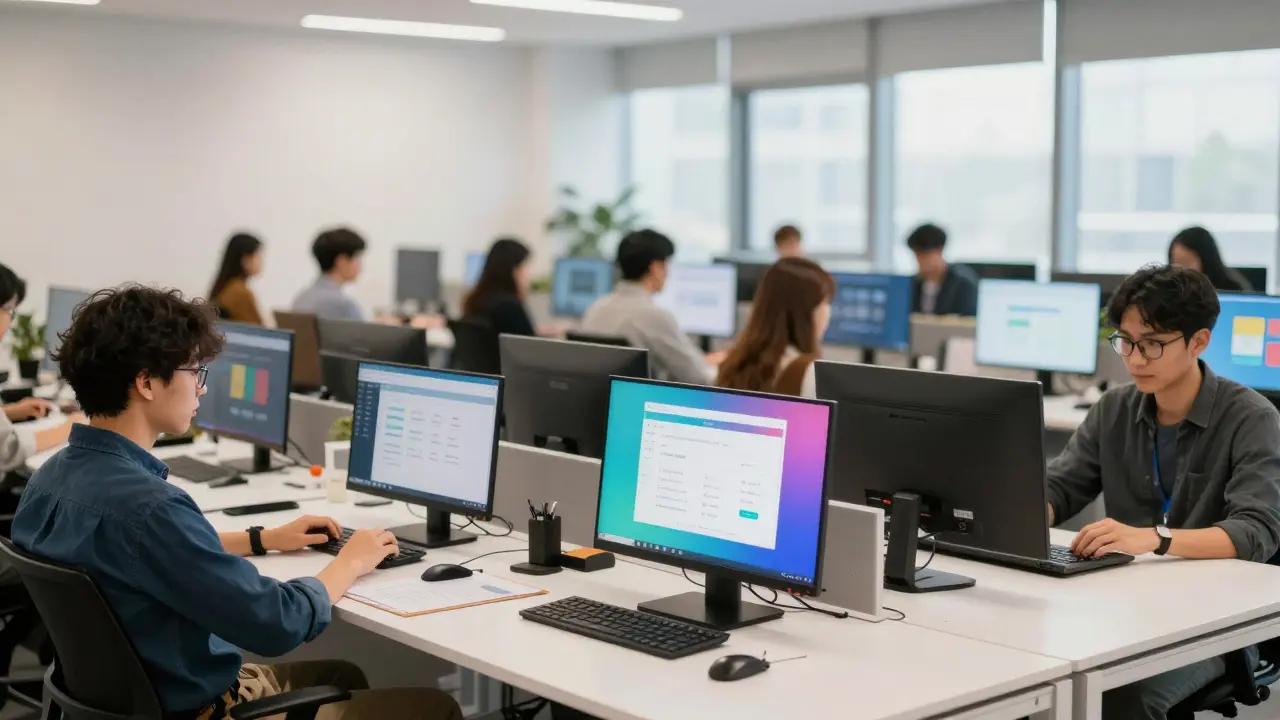
Imagine running a training program for five thousand employees or teaching a university course with three hundred students. Now imagine every single one of them has a different background, pace, and way of understanding information. If you try to teach them all the same way, at the same time, you will fail most of them. This is the core challenge of modern education and corporate training: how do we respect individual differences when we are dealing with massive groups?
The answer lies in adaptive learning. It is not just a buzzword; it is the only viable method to handle diverse learning needs at scale without burning out instructors or frustrating learners. By using data and algorithms to adjust content in real-time, organizations can offer personalized paths that feel custom-made, even though they are automated.
Why One-Size-Fits-All Fails at Scale
We have been stuck in the industrial model of education for too long. The idea is simple: everyone sits down, listens to the same lecture, and takes the same test. In a classroom of twenty, this might work. In a digital environment with thousands of users, it breaks completely.
When you scale up, diversity explodes. You get beginners who need basic definitions and experts who want advanced case studies. You get visual learners who need diagrams and auditory learners who prefer podcasts. You get people who study at night and others who learn in ten-minute bursts during their commute. A static curriculum cannot address these variations. It forces the slowest learner to wait and the fastest learner to bore themselves. The result? High dropout rates, low engagement, and poor knowledge retention.
To fix this, we need to stop thinking about 'content delivery' and start thinking about 'learning pathways.' Each learner needs a unique route to mastery. At small scales, a human tutor does this naturally. At large scales, software must do it.
What Is Adaptive Learning Really?
Adaptive learning is an educational approach that uses computer algorithms to orchestrate the interaction with the user and present customized resources and learning paths to each student. It is not just an e-learning platform where you click 'next.' It is a dynamic system that reacts to your behavior.
Here is how it works in practice:
- Data Collection: The system tracks every click, pause, error, and time spent on a question.
- Analysis: Algorithms compare your performance against a model of what a successful learner looks like. It identifies gaps in your knowledge.
- Adaptation: If you struggle with a concept, the system doesn't just give you the answer. It offers a simpler explanation, a video instead of text, or a practice quiz. If you ace it, it skips the fluff and moves you to harder material.
This creates a feedback loop. The more you interact, the better the system knows you. Unlike traditional online courses, which are linear, adaptive learning is non-linear. It branches based on your needs.
Key Technologies Powering Scalable Personalization
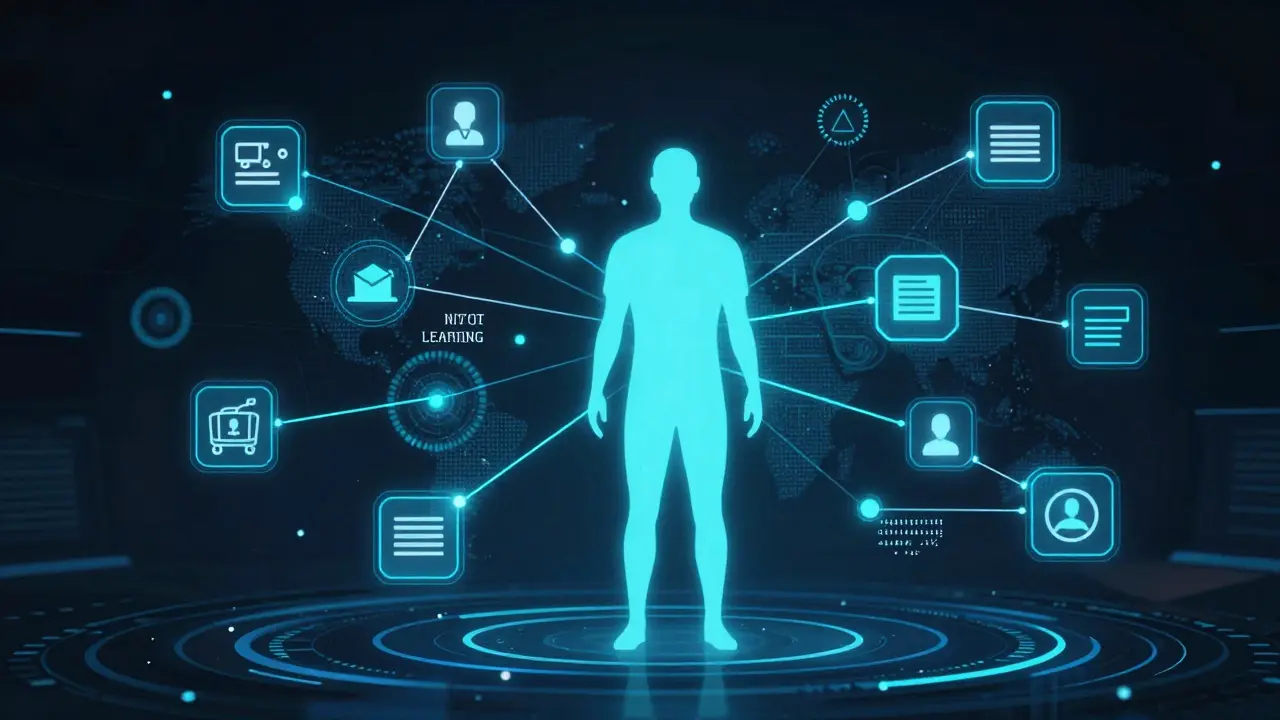
You cannot build this system with spreadsheets. Handling diverse needs at scale requires robust technological infrastructure. Three main technologies drive effective adaptive systems.
| Technology | Function | Impact on Diversity |
|---|---|---|
| Learning Analytics | Collects and processes behavioral data from learners. | Identifies specific pain points for individuals rather than guessing group averages. |
| Artificial Intelligence (AI) | Predicts future performance and recommends next steps. | Automates the tutoring process, allowing one system to serve millions. |
| Knowledge Graphs | Maps relationships between concepts (e.g., A leads to B). | Ensures logical progression regardless of the path taken by the learner. |
Learning analytics provide the raw material. Without knowing that a user paused for thirty seconds on a specific diagram, the system cannot adapt. Artificial intelligence turns that data into action. Machine learning models detect patterns humans might miss, such as a correlation between late-night studying and lower retention rates. Finally, knowledge graphs ensure structural integrity. They prevent a learner from jumping to advanced calculus before mastering basic algebra, no matter how fast they move.
Designing Content for Adaptability
Many organizations buy adaptive software but feed it bad content. You cannot take a forty-page PDF and call it adaptive. To handle diverse needs, your content must be modular. Think of it like Lego bricks instead of a solid block of concrete.
Break your curriculum into micro-lessons. Each module should cover one specific objective. For example, instead of a single hour-long video on 'Marketing Strategies,' create ten five-minute videos covering 'SEO Basics,' 'Email Copywriting,' and 'Social Media Trends.'
Then, tag each module with metadata:
- Difficulty Level: Beginner, Intermediate, Advanced.
- Media Type: Video, Text, Interactive Quiz, Audio.
- Prerequisites: What must the learner know before starting?
- Learning Style Preference: Visual, Kinesthetic, Reading/Writing.
This structure allows the algorithm to mix and match. If a user fails a quiz on 'SEO Basics,' the system can offer a text-based summary or a visual infographic, depending on what the user prefers. If they pass, it moves them to 'Email Copywriting.' This modularity is essential for scale because it reuses content efficiently while delivering a unique experience.
Balancing Automation with Human Touch
A common fear is that adaptive learning removes the human element. In reality, it frees up humans to do what they do best: mentor and inspire. When software handles the rote memorization and basic skill checks, instructors can focus on high-value interactions.
In a corporate setting, managers use dashboards provided by the adaptive platform to see who is struggling. Instead of sending a generic email to everyone, they can reach out to the five employees who are stuck on compliance training. In higher education, professors can identify topics where the whole class is failing and adjust their live lectures accordingly.
This hybrid model is often called 'blended learning.' The technology scales the personalization, while the human provides context, motivation, and complex problem-solving guidance. You do not have to choose between scale and care; you can have both if you design the workflow correctly.

Measuring Success Beyond Completion Rates
If you measure success only by whether someone finished the course, you are missing the point. Adaptive learning aims for mastery, not completion. A learner who spends less time because they already knew the material should not be penalized. A learner who spends more time because they needed extra help should not be labeled 'slow.'
Focus on these metrics instead:
- Mastery Rate: The percentage of learners who achieve a predefined proficiency level.
- Time to Competency: How quickly learners reach the desired skill level compared to traditional methods.
- Engagement Depth: Are learners interacting with the adaptive features, or just clicking through?
- Retention Over Time: Do learners remember the information six months later?
For example, a sales training program might show that adaptive learners close deals 15% faster than those in traditional training, even if they spent 20% less time in the course. That is a clear ROI. Data-driven decisions replace gut feelings about what works.
Pitfalls to Avoid When Scaling
Even with the best technology, projects fail. Here are the most common traps.
Ignoring Accessibility: Adaptive systems must comply with accessibility standards like WCAG 2.1. If your adaptive video player lacks captions, you are excluding deaf learners. If your interface is not screen-reader friendly, you are excluding visually impaired users. Diversity includes ability. Ensure your tech stack supports universal design principles from day one.
Data Privacy Concerns: Collecting detailed behavioral data raises privacy issues. Be transparent with learners about what data you collect and why. Comply with regulations like GDPR or CCPA. Anonymize data where possible. Trust is a critical component of engagement; if learners feel spied on, they will disengage.
Over-Automation: Don't let the algorithm make every decision. Allow learners some agency. Let them choose to explore a topic deeper or skip ahead if they are confident. A purely deterministic path can feel robotic and restrictive. The best systems offer suggestions, not commands.
Implementing Adaptive Learning: A Step-by-Step Guide
Ready to start? Here is a practical roadmap to handling diverse needs at scale.
- Audit Your Current Content: Identify what is working and what is not. Look for high dropout points in existing courses.
- Define Learning Objectives: Clearly state what mastery looks like. You cannot adapt towards a vague goal.
- Chunk Your Content: Break materials into small, tagged modules as described earlier.
- Select the Right Platform: Choose an LMS (Learning Management System) that supports xAPI or Tin Can API. These standards allow for detailed tracking of learning interactions beyond simple 'complete/incomplete' status.
- Pilot with a Small Group: Test the adaptive logic with fifty users. Gather feedback on the recommendations. Are they helpful? Too frequent? Too sparse?
- Iterate and Scale: Refine the algorithms based on pilot data. Then roll out to the broader audience.
- Monitor and Adjust: Continuously review analytics. Update content tags and rules as you learn more about your audience.
Handling diverse learning needs at scale is no longer a luxury; it is a necessity. Whether you are training staff, educating students, or upskilling a workforce, the old methods are breaking. Adaptive learning offers a path forward that respects individuality while leveraging the power of technology. By focusing on modular content, robust data, and human-centered design, you can create an inclusive, effective, and scalable learning environment.
Is adaptive learning suitable for soft skills training?
Yes, but with limitations. Adaptive learning excels at factual knowledge and procedural skills. For soft skills like leadership or empathy, it can provide scenarios and feedback, but it cannot fully replace human interaction. Use it to prepare learners for role-plays or discussions, rather than as the sole method of instruction.
How much does implementing adaptive learning cost?
Costs vary widely. Off-the-shelf platforms with pre-built adaptive features may cost per user per month. Custom solutions require significant investment in content creation, technology integration, and ongoing maintenance. However, the ROI often comes from reduced training time and improved performance outcomes.
Can I use adaptive learning with my existing LMS?
It depends on your LMS. Many modern LMS platforms support xAPI, which enables adaptive features. If your current system is outdated, you may need to integrate a third-party adaptive engine or upgrade your LMS. Check for compatibility with SCORM 2004 or Tin Can API.
Does adaptive learning reduce the need for instructors?
No, it changes their role. Instructors shift from lecturers to facilitators and mentors. They spend less time grading quizzes and more time providing personalized support, answering complex questions, and fostering community. The technology handles the routine tasks.
How do I ensure data privacy in adaptive systems?
Choose vendors that comply with relevant regulations like GDPR or FERPA. Implement strict access controls, anonymize data for analysis, and be transparent with users about data collection. Regular security audits and clear privacy policies are essential.
