

Quick Takeaways
- Synchronous Learning: Real-time, scheduled interaction. Best for social connection and immediate feedback.
- Asynchronous Learning: Self-paced, flexible timing. Best for deep focus and accessibility.
- The Winner: Blended learning usually beats both by combining live touchpoints with flexible study.
The Real-Time Rush: Understanding Synchronous Learning
When we talk about Synchronous Learning is an educational format where students and instructors interact in real-time, regardless of their physical location. It’s essentially the digital version of a traditional classroom. If you’ve ever joined a live webinar, a scheduled Google Meet session, or a live Q&A, you’ve experienced this. The core value here is the "now." You ask a question, and you get an answer immediately. This instant feedback loop prevents the frustration of spending hours heading down the wrong path because you misunderstood a single instruction.
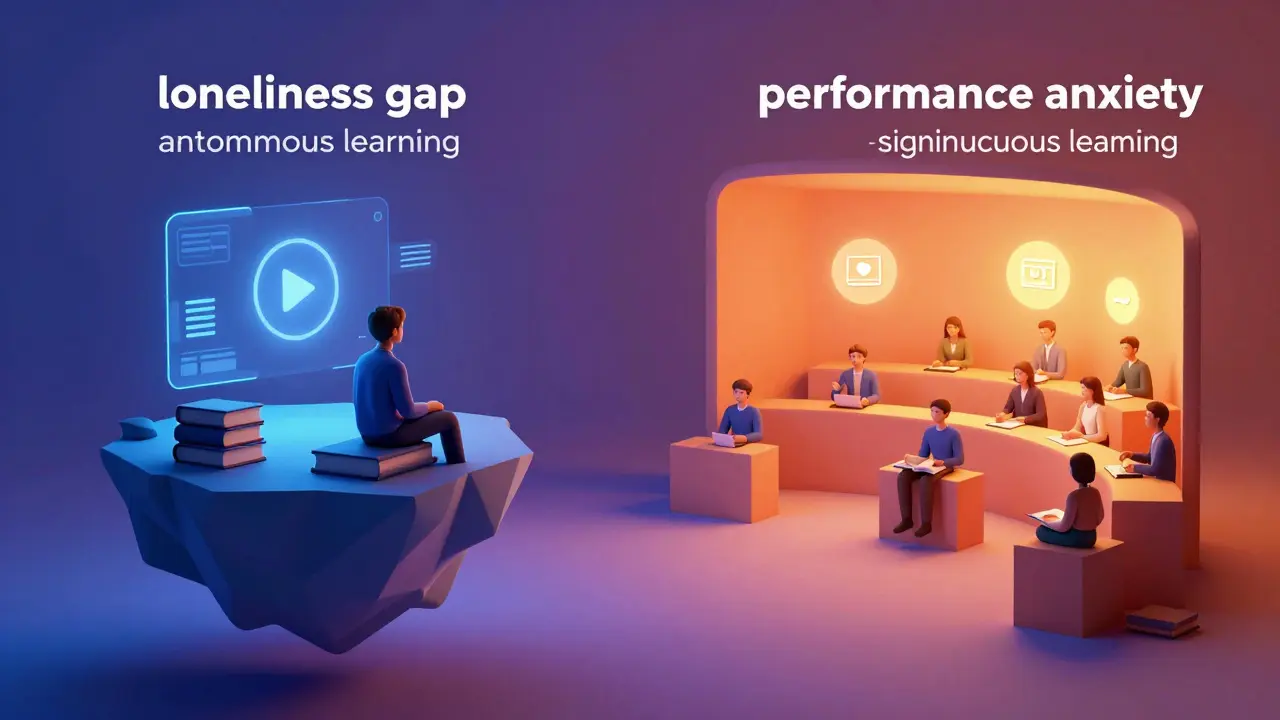
But it comes with a price: the schedule. Everyone has to be online at the exact same time. For a global team or a group of students across different time zones, this is a nightmare. You end up with one person waking up at 3 AM just to catch a lecture. There's also the psychological weight of "performance anxiety." Some people freeze up in live settings, fearing they'll say the wrong thing in front of a virtual crowd, which can actually hinder their ability to absorb the material.
The Freedom of the Pause Button: Asynchronous Learning
On the flip side, Asynchronous Learning is a student-centered teaching method where learners engage with materials at their own pace and on their own schedule. Think of it as the "Netflix of education." You have the recorded lectures, the reading lists, and the forum boards. You dive in when your brain is actually awake-whether that's at 6 AM with coffee or 11 PM after the kids are asleep.
The biggest win here is cognitive load management. In a live lecture, if you miss a key point, you're often lost for the rest of the hour. In an asynchronous setup, you can pause, rewind a tricky section on Quantum Mechanics or a complex coding tutorial, and look up a reference before moving forward. This autonomy often leads to deeper mastery because the learner isn't rushing to keep up with the fastest person in the room.
However, the "loneliness gap" is real. Without a scheduled meeting, it's easy to feel like you're shouting into a void. Motivation becomes the biggest hurdle. When there's no live class on Tuesday, it's incredibly tempting to push the reading to Wednesday, then Thursday, and suddenly you're three weeks behind and panicking.
Head-to-Head: Breaking Down the Differences
Choosing between these two depends on what you're trying to achieve. If you need to build a team's culture or brainstorm a new project, a self-paced PDF won't cut it. If you're teaching a technical skill that requires thousands of repetitions, a two-hour live call is an inefficient use of everyone's time.
| Attribute | Synchronous | Asynchronous |
|---|---|---|
| Flexibility | Low (Fixed Schedule) | High (Self-Paced) |
| Feedback Speed | Instant / Real-time | Delayed (Email/Forums) |
| Social Interaction | High (Dynamic) | Low (Isolated) |
| Accessibility | Requires stable live internet | Can be downloaded/accessed offline |
| Primary Tool | Video Conferencing | Learning Management Systems (LMS) |
The Hybrid Secret: Why Blended Learning Wins
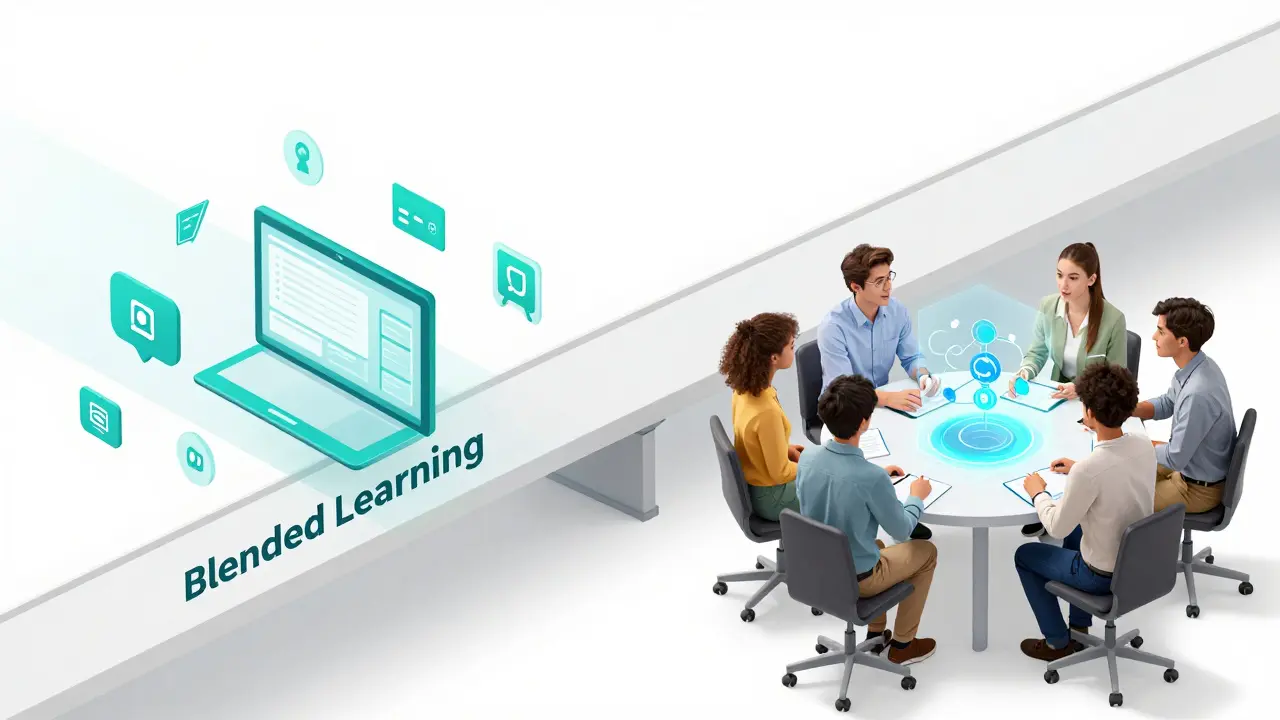
Most modern educators are moving toward Blended Learning is an approach that combines online digital media with traditional classroom methods or a mix of synchronous and asynchronous delivery. Why? Because it kills the weaknesses of both. Instead of a three-hour live lecture, a teacher might provide a 15-minute recorded video (asynchronous) for the students to watch beforehand. Then, they meet for a 45-minute live session (synchronous) specifically for debate, problem-solving, and Q&A.
This is often called the "Flipped Classroom." It treats the live time as a premium resource. You don't use your precious face-to-face time to deliver information-you use it to apply information. For example, in a corporate training scenario for Salesforce implementation, users can watch the "how-to" videos on their own, and then jump on a live call to troubleshoot their specific company data. This is far more effective than forcing 50 people to watch one person click buttons on a screen in real-time.
When to Use Which: A Decision Framework
Stop guessing and start using a simple set of rules. If you're designing a course or choosing a certification, ask yourself these three questions:
- Is the material highly conceptual or emotional? Use Synchronous. Things like leadership training, soft skills, or complex theory need the nuance of live conversation and tone of voice to land correctly.
- Is the goal skill acquisition and repetition? Use Asynchronous. Learning a language on Duolingo or practicing Python syntax is a solo journey of trial and error. You don't need a teacher watching you type every line of code.
- Is the audience globally distributed? Lean heavily into Asynchronous. While you can offer one or two "office hour" live sessions, forcing a developer in Tokyo and a manager in New York to be online at 2 AM is a recipe for resentment and poor retention.
Avoiding the Common Pitfalls
The biggest mistake in synchronous learning is the "Lecture Trap." Just because you're live doesn't mean you should talk at people. If there's no interaction, you're just providing a low-quality asynchronous experience that happens to be inconvenient. To fix this, use polls, breakout rooms, and rapid-fire chat questions every 10 minutes to keep the energy up.
In the asynchronous world, the biggest trap is "Content Dumping." Throwing a student into a folder with 20 PDFs and 10 hours of video isn't a course; it's a library. Without a clear path, a sense of urgency, and milestones, most learners will quit. You need to build in "forcing functions"-like a quiz that must be passed before the next module unlocks, or a peer-review requirement where they must comment on someone else's work.
The Future of Online Delivery
We are seeing a shift toward "Micro-learning," which is essentially asynchronous learning on steroids. By breaking content into 3-to-5 minute bursts, educators are fighting the shrinking attention span of the digital age. When combined with Artificial Intelligence, we're entering an era where the "asynchronous" part is no longer lonely. AI tutors can now provide the immediate feedback that used to only happen in synchronous settings, bridging the gap between the two methods.
Ultimately, the "best" method is the one that respects the learner's time and cognitive limits. Whether you're a corporate trainer, a university professor, or a self-taught coder, the goal remains the same: moving a person from a state of not knowing to a state of mastery. Using the right tool for the right job is how you get there faster.
Is asynchronous learning better for introverts?
Generally, yes. Asynchronous learning allows introverts to process information internally and compose their thoughts carefully before contributing to forums or submitting assignments, removing the pressure of "on-the-spot" responses typical in live sessions.
How do I keep students engaged in an asynchronous course?
Use a mix of media (video, text, interactive quizzes), set clear weekly deadlines to create a sense of urgency, and implement peer-to-peer feedback loops so students feel connected to a community despite the lack of live meetings.
Can a completely synchronous online course be as effective as in-person learning?
It can, provided the instructor uses active learning strategies. If the course is just a mirrored lecture, it usually fails. However, using tools like digital whiteboards and breakout rooms can replicate the collaborative energy of a physical classroom.
What is the most cost-effective method for corporate training?
Asynchronous learning is typically more cost-effective at scale because you record the content once and deploy it to thousands. However, adding a few synchronous "expert clinics" can significantly increase the ROI by ensuring employees actually apply the training to their specific roles.
Which method is better for teaching complex mathematics or coding?
A blended approach is best. Asynchronous videos are great for the initial walkthrough of a logic problem, but synchronous sessions are critical for "live debugging" and seeing how an expert thinks through a problem in real-time.
