
| Metric | Green Flag (Sustainable) | Red Flag (Risky) |
|---|---|---|
| Utility | Required for core functions (gas, staking, governance) | Purely speculative or "marketing" utility |
| Distribution | Fairly spread across community and developers | Majority held by a few VCs or insiders |
| Emission | Clear decay or fixed cap (deflationary/stable) | Infinite minting with no burn mechanism |
| Vesting | Long-term lock-ups for the founding team | Immediate or short-term liquidity for insiders |
Decoding Supply and Distribution
Supply isn't just a number; it's a psychological driver of price. You first need to distinguish between total supply and circulating supply. Total Supply refers to the total amount of tokens created, while Circulating Supply is what is actually available for trading. If a project has 10 million tokens circulating but a total supply of 1 billion, you're looking at massive future dilution. When those remaining tokens hit the market, the price usually feels the pressure. Then there's the cap. Some projects, like Bitcoin, have a hard cap of 21 million, creating natural scarcity. Others, like Ethereum, use a more dynamic approach. To keep a token's value from plummeting, many modern projects use "burning" mechanisms-literally destroying tokens to reduce supply. Binance Coin (BNB) is a prime example of using burns to offset inflation. Who owns the tokens is just as important as how many exist. If 50% of the supply is held by the team and a few venture capitalists, the project is highly centralized. This creates a "whale" risk where a single person's decision to sell can wipe out the gains of thousands of small holders. Look for a distribution map that prioritizes the community and active participants over early seed investors.The Utility Test: Does the Token Actually Do Something?
Ask yourself: "If this token disappeared tomorrow, would the project still function?" If the answer is yes, the token is likely a governance wrapper with no real value. For a project to be viable, the token must be integrated into the core logic of the system. Real utility usually falls into three buckets:- Staking and Security: Tokens are locked up to secure the network or validate transactions, which reduces the available supply and rewards long-term believers.
- Governance: Holders get a vote on the future of the protocol. While this sounds nice, it only adds value if the project is actually decentralized and the votes matter.
- Payment/Access: The token is the only way to pay for services within the ecosystem. This creates constant demand as the user base grows.

Analyzing Incentive Structures and Sustainability
Many projects lure users with massive Staking Rewards. While 20% APY looks great on a website, you have to ask where that money comes from. If the rewards are paid by minting new tokens, you're essentially dealing with a high-inflation environment. This is a common trap in DeFi; the high yield attracts users, but the resulting inflation crashes the token price, making those rewards worthless in real terms. Sustainability is about balancing the needs of early adopters with the long-term health of the network. This is often managed through Vesting Schedules. Instead of giving a founder 1 million tokens on day one, a viable project locks those tokens for 2-4 years, releasing them gradually. This forces the team to actually build the product rather than dumping their bags and disappearing. Check for a "cliff" in the vesting schedule. A cliff is a date when a large chunk of tokens is released all at once. If you see a massive unlock coming up in three months, be prepared for a potential price drop as insiders liquidate their holdings.Spotting Red Flags and Pump-and-Dump Patterns
Not every project is designed for longevity. Some are built specifically to extract value from retail investors. One of the biggest warning signs is a "mystery" allocation. If the whitepaper says 20% of tokens are for "strategic partners" without naming them or outlining the lock-up period, assume those tokens will be dumped on you. Another red flag is the lack of a Tokenomics Audit. Serious projects hire third-party firms to stress-test their economy. These audits use tools like the Gini coefficient to measure wealth concentration. If a project refuses to be transparent about its emissions schedule or who controls the multisig wallet, they are hiding something. Watch out for "circular economies" where the only way the token gains value is by attracting new investors who buy the token. This isn't a business model; it's a Ponzi scheme. A viable project generates value from external sources-like transaction fees, service charges, or enterprise partnerships-not just from the influx of new buyers.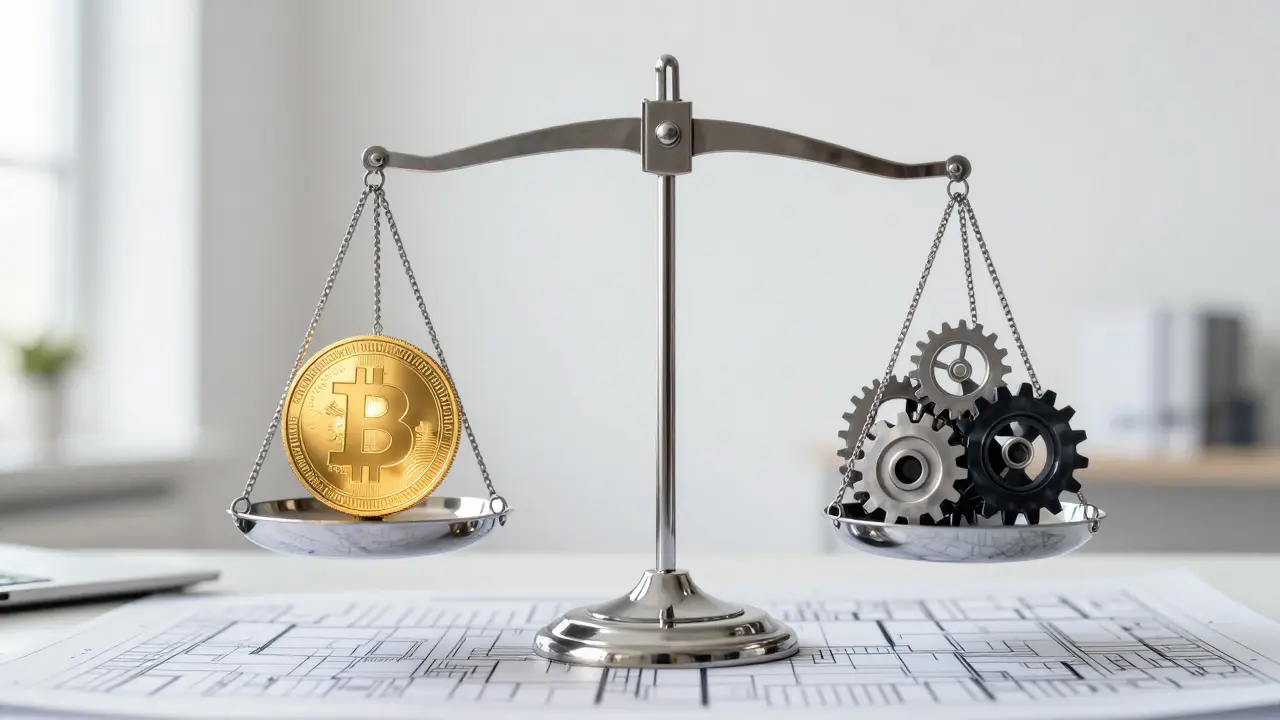
The Long-Term Viability Framework
To put it all together, you need a mental framework for your due diligence. Stop looking at the 1-minute chart and start looking at the 1-year emission curve. A project is viable if its demand growth outpaces its supply inflation. When evaluating, consider these three pillars:- Economic Equilibrium: Does the project have a way to remove tokens from circulation (burning) when the price gets too high, or a way to incentivize holding when it's too low?
- Fairness: Is the distribution designed to empower users, or is it designed to enrich a small group of insiders?
- Value Capture: Does the token actually capture the value created by the project? If the platform becomes a billion-dollar success but the token remains useless, the investors lose while the company wins.
What is the difference between inflationary and deflationary tokenomics?
Inflationary tokenomics mean the total supply of tokens increases over time, often through mining or staking rewards. This can lower the price if demand doesn't keep up. Deflationary tokenomics involve mechanisms that reduce the supply, such as token burns or halving events, which can potentially increase the value of remaining tokens due to scarcity.
Why are vesting schedules important for investors?
Vesting schedules prevent founders and early investors from selling all their tokens immediately after launch. This aligns the interests of the team with the long-term success of the project, as they only receive their tokens if the project continues to develop and maintain its value over several years.
Can a project survive with bad tokenomics but great tech?
Rarely. Even the best technology cannot save a project if the economic incentives are broken. If the token price crashes due to oversupply, the team may lose the funding needed to maintain the tech, and users may lose the incentive to participate in the network, leading to a "death spiral."
What is a Gini coefficient in the context of crypto?
The Gini coefficient is a statistical measure of distribution. In tokenomics, it's used to measure how concentrated token ownership is. A score of 0 means perfect equality, while a score of 1 means one person owns everything. A very high Gini coefficient suggests the project is centrally controlled by a few "whales."
How do I find the tokenomics of a project?
The best place to start is the project's whitepaper or a dedicated "Tokenomics" page on their official website. You should also check blockchain explorers to see the actual distribution of tokens across wallets and look for third-party audit reports from security firms.

Comments (9)
Aryan Jain April 16 2026
Wake up people! This is all just a game to keep us distracted while the big banks control the multisig wallets. The "math" is just a cover for the elite to drain our pockets! Everything is rigged from the start and these whitepapers are just fairy tales for the masses!!
Nalini Venugopal April 18 2026
I really love how clearly this is laid out. It makes a complex topic so much easier to digest!
Pramod Usdadiya April 20 2026
Very usefull guide. I think many peopel ignore the vesting part and just look at the price. Thanks for sharin l this knowledge with us.
Aditya Singh Bisht April 22 2026
Keep pushing forward everyone! If we all start doing proper due diligence, we can actually filter out the scams and support the real builders. Let's turn this into a habit! The future of finance is right here if we just stay disciplined and keep learning every single day. We got this!
Agni Saucedo Medel April 22 2026
The section on whale risk is so important 🐋✨. It's always better to be safe than sorry when investing your hard-earned money 🛡️💖.
ANAND BHUSHAN April 23 2026
makes sense
Pooja Kalra April 24 2026
The pursuit of wealth in these digital realms often blinds one to the void of actual value. Most chase a ghost of utility while ignoring the spiritual bankruptcy of the system. True value is not found in a burn mechanism, but in the intrinsic purpose of the creation. We are merely rearranging digital pebbles on a beach of vanity.
Sumit SM April 24 2026
Wait... if the Gini coefficient is high... then the decentralization is a lie!!! Why do we even trust these projects??? It is all a masquerade of freedom... while the chains are just written in Solidity!!!
Indi s April 25 2026
I feel you. It's really scary to lose money because of things you didn't understand. This guide helps a lot.