
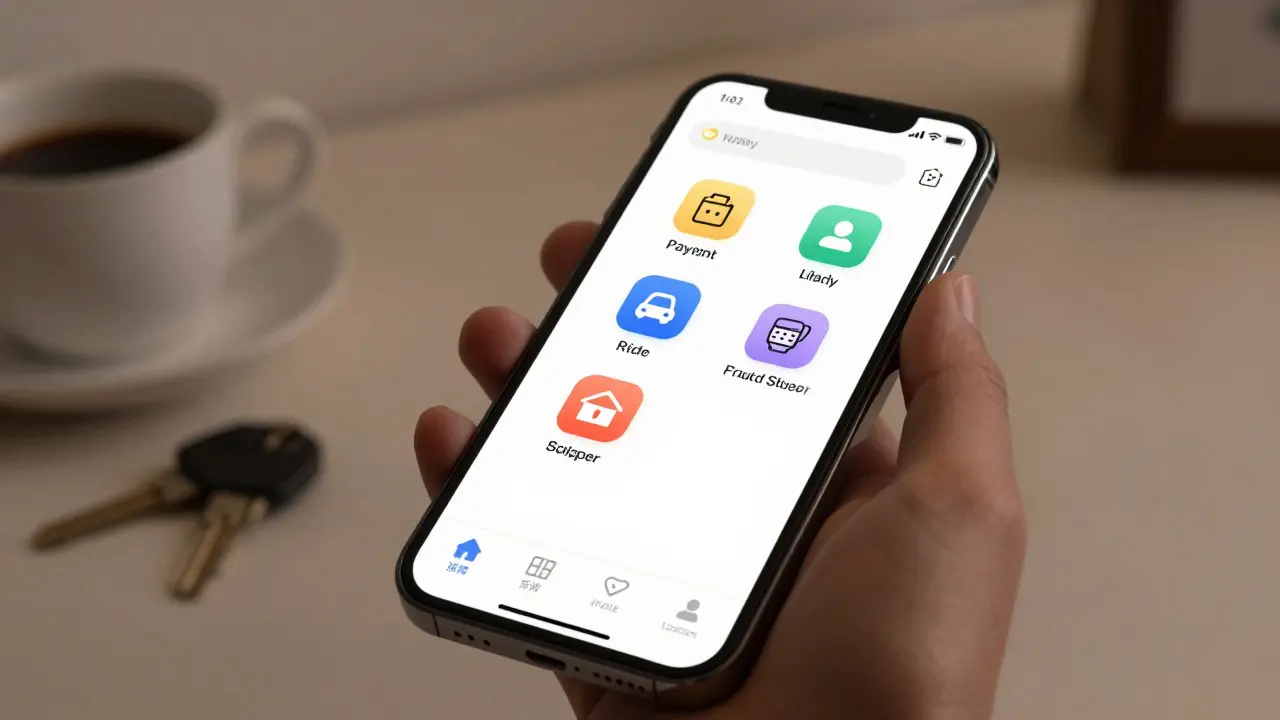
Forget juggling five apps just to pay a bill, book a ride, and check your bank balance. The future of digital life isn’t about more apps-it’s about wallet superapps. These aren’t just digital wallets anymore. They’re your one-stop shop for everything financial, personal, and daily. And by 2025, they’re no longer a trend-they’re the norm in Asia and rapidly catching up everywhere else.
What makes a wallet a superapp? It’s simple: it does more than store your card details. It becomes your identity, your payment gateway, your marketplace, and your service hub-all in one place. Think WeChat in China, Paytm in India, or Grab in Southeast Asia. You don’t open a separate app to pay your electricity bill. You don’t switch to another app to order food. You don’t log in again to verify your age for a vape purchase. It all happens inside the same app. That’s the power of consolidation.
The Anatomy of a Wallet Superapp
A wallet superapp isn’t built like a traditional app. It’s a modular ecosystem. At its core is a secure payment engine that handles UPI, credit cards, digital wallets, and even crypto. Around it, microservices plug in like LEGO bricks: ride-hailing, food delivery, insurance, healthcare bookings, utility payments, and even stock trading. Third-party developers build lightweight mini-programs that run inside the superapp, using its login, payment system, and user data-without needing users to download anything new.
Behind the scenes, AI tracks your habits. If you pay your phone bill every 28th of the month, it reminds you. If you order coffee every Tuesday, it suggests a loyalty discount. If your ride gets canceled, it auto-rebooks you. This isn’t magic-it’s predictive behavior analysis powered by machine learning trained on millions of daily transactions.
Security is tight but complex. Superapps use biometric authentication, end-to-end encryption, and real-time fraud detection. But here’s the catch: because everything is linked-your ID, your money, your location, your shopping habits-a single breach could expose all of it. That’s why top platforms like Alipay and WeChat run monthly security audits and store credentials in isolated, encrypted vaults. Still, users report frustration when one service fails and locks them out of everything else.
Why Users Love Them (and Why Some Hate Them)
On Trustpilot, Alipay has a 4.3/5 rating. Why? 78% of positive reviews say: “I don’t need 10 apps anymore.” A Reddit user in Mumbai said using Paytm for everything-from metro tickets to buying stocks-saved them 2 hours a day. That’s the real win: time. No more typing passwords. No more switching between screens. No more forgotten logins.
But the same users who love convenience also complain. In 63% of negative reviews, people say: “It’s too much.” Too many menus. Too many options. One user on Techmeme said their wallet got frozen during a security check-and suddenly they couldn’t book a Grab ride, pay for groceries, or even check their balance. All because one module had an issue. That’s the downside of integration: everything is connected, so everything can break together.
Users are asking for better service isolation. They want to know: “If my food delivery fails, why does my payment system crash?” The answer? Developers are working on it. New architectures now allow services to run independently, even within the same app. Think of it like a house with separate circuit breakers-so one faulty light doesn’t kill the whole power supply.
How Superapps Make Money
Traditional banks make money from fees and interest. Superapps make money from ecosystem density. Every time you use a mini-program to buy a movie ticket, the superapp takes a cut. Every time you use a loan offer within the app, they earn referral fees. Every time you click on a personalized ad for a new phone, they get paid by the retailer.
SDK.finance found that superapp users generate 2.8x more lifetime value than users of standalone banking apps. Why? Because you’re not just paying-you’re shopping, borrowing, booking, and trusting. And the more you use the app, the more data it collects. The more data it collects, the better it predicts what you want next. That’s the flywheel: convenience → usage → data → personalization → more usage.
But building this isn’t cheap. Initial development costs are 4-5x higher than a single-purpose app. You need teams for payments, identity, AI, security, UX, and third-party integrations. That’s why only big players-Tencent, Alibaba, Grab, Paytm-can afford to build them from scratch. Smaller banks and fintechs are joining through API partnerships, plugging into existing superapp frameworks instead of building their own.
Regional Differences: Why Asia Leads
Asia dominates the superapp space. Why? Three reasons: unified mobile infrastructure, high smartphone penetration, and less regulatory fragmentation.
In China, Alipay and WeChat control 92% of mobile payments. In India, Paytm has 40% of the digital wallet market. In Southeast Asia, Grab isn’t just a ride-hailing app-it’s your insurance broker, your bank, and your grocery store. Statista reports that 68% of urban users in Southeast Asia use a superapp as their primary financial tool. In North America? Only 19%.
Western markets lag because of regulation. The EU’s GDPR makes it harder to collect and link personal data across services. The U.S. has no central digital ID system. Banks are slow to share data. Consumers are wary of giving one company too much control. Visa’s research says financial services must be the “core anchor” of any superapp-and in the West, banks aren’t ready to hand over that role.
But change is coming. Apple Wallet is testing ID verification for age-restricted purchases. Google Pay is rolling out mini-apps for local services. Even PayPal is experimenting with embedded commerce. The pressure to compete with Asia’s speed and scale is forcing Western players to adapt-or get left behind.
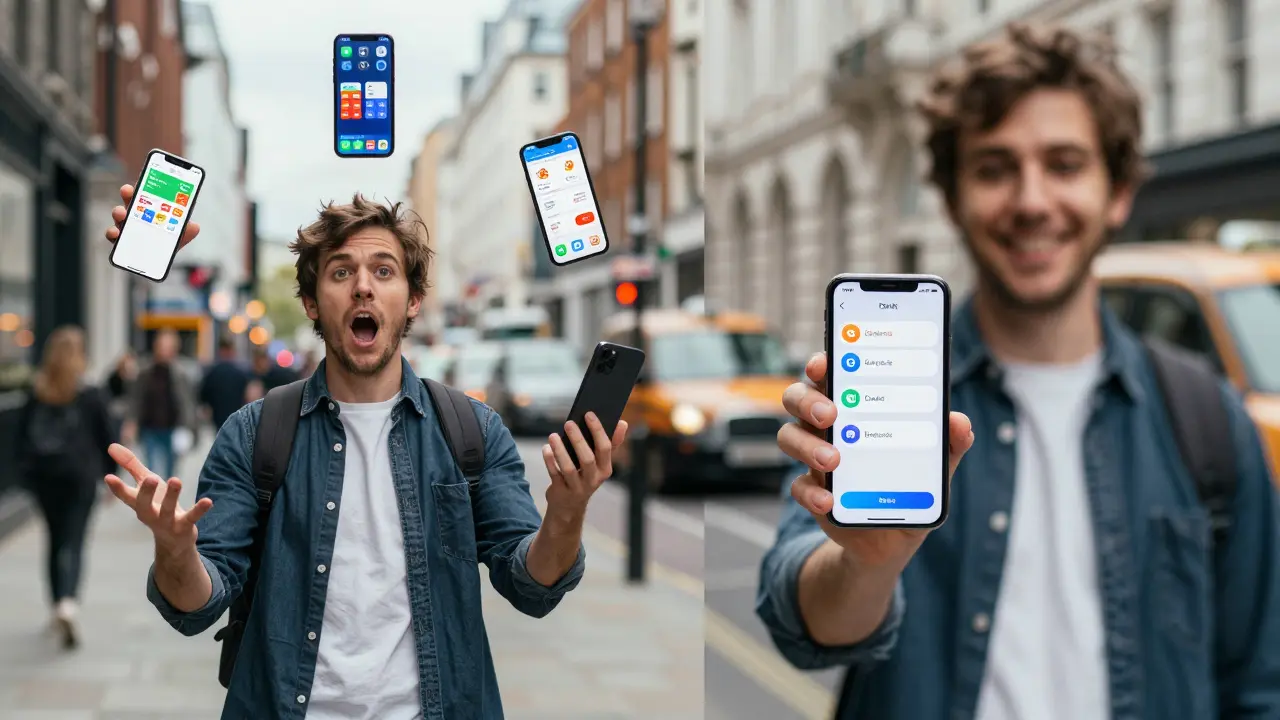
The Future: Vertical Superapps and AI-Driven Commerce
The next wave isn’t just bigger superapps-it’s smarter, niche ones. Healthcare superapps will let you book a doctor, pay the bill, get a prescription delivered, and sync your vitals-all in one place. Education superapps will handle tuition payments, exam registrations, and campus dining. Even government services are moving in: imagine filing taxes, renewing your license, and checking your pension-all without leaving your wallet app.
WeChat’s new “WeCommerce” feature uses generative AI to create personalized shopping feeds inside the app. If you’ve been searching for running shoes, it shows you local stores with discounts, lets you pay with your wallet, and even schedules delivery. No need to open Amazon or Zalando. It’s all inside.
By 2027, Gartner predicts superapps will handle 35% of global digital commerce-up from 12% in 2023. But success won’t go to the app with the most features. It’ll go to the one that balances depth with simplicity. Users don’t want a Swiss Army knife with 50 tools. They want the right tool, at the right time, without effort.
What This Means for You
If you’re a consumer: start using one. Pick a superapp that’s popular in your region. Link your bank, add your ID, try ordering food or paying a bill through it. You’ll save time. You’ll get better deals. But always check privacy settings. Don’t give access to services you don’t use.
If you’re a business owner: get listed. Superapps are where your customers are. If you’re a local restaurant, a pharmacy, or a small retailer, don’t wait for your own app. Build a mini-program inside Paytm, Grab, or WeChat. You’ll reach millions of users without marketing spend.
If you’re a developer: learn microservices and API integrations. The demand for superapp engineers is growing fast. The skills you need? Secure authentication, payment gateway APIs, AI-driven recommendation engines, and modular architecture design. The tools are out there-SDK.finance, Alipay’s Open Framework, and WeChat’s mini-program docs are free to use.
The wallet superapp isn’t just changing how we pay. It’s changing how we live. Identity, money, and services are no longer separate. They’re fused. And the next decade belongs to whoever makes that fusion seamless, safe, and simple.

Comments (14)
Rubina Jadhav December 19 2025
This is already my life in Mumbai. Paytm for bills, food, metro, and even buying gifts for my mom. No more app hopping.
Shivani Vaidya December 20 2025
The consolidation of financial and personal services into a single platform represents a profound shift in human-computer interaction. The efficiency gains are undeniable, yet the centralization of identity and transactional data introduces systemic risks that demand rigorous governance frameworks. Without robust, transparent, and user-centric data sovereignty protocols, convenience may eclipse autonomy.
sumraa hussain December 21 2025
Bro, I used to have 12 apps open at once… now I just open Paytm and I’m done. It’s like my phone finally learned how to be useful. But man, when it crashed last month? I sat there like a caveman without fire. No Uber. No groceries. No nothing. I felt naked.
Raji viji December 23 2025
Superapps? More like surveillance apps with a side of extortion. You think you’re saving time but you’re just feeding your entire digital life into a corporate black box. Alipay doesn’t care if you pay your bills - it cares if you click on that ad for overpriced protein powder. This isn’t innovation, it’s colonization of your daily habits.
Rajashree Iyer December 25 2025
What is identity, really? When your wallet becomes your passport, your grocery list, your therapist’s referral, your bank, your love letter to convenience - are you still you? Or are you just a data stream stitched together by algorithms that know you better than your mother? We’re not evolving. We’re being absorbed.
Parth Haz December 25 2025
For those new to superapps, start small. Link one service - maybe your utility bill or transit card. See how it feels. If it saves you time and reduces stress, gradually add more. Always review permissions. This isn’t magic - it’s a tool. Use it wisely.
Vishal Bharadwaj December 26 2025
lol 68% in SE Asia? yeah right. half those users are forced to use it because their bank doesn't even have an app. and the 'ai' just reminds you to pay your phone bill every 28th? i did that manually for 10 years. this is just rebranded laziness with extra steps.
anoushka singh December 26 2025
Okay but like… why do I need to give my superapp access to my location, my contacts, AND my health data just to pay for chai? I’m not even using the insurance thing. Can I just turn off everything except payments? No? Okay then I’m uninstalling. Bye.
Jitendra Singh December 28 2025
India’s superapp growth is the quiet revolution nobody talks about. We skipped credit cards, went straight to QR codes. Now we’re skipping separate apps and going straight to unified ecosystems. It’s messy, imperfect, but it’s working for millions. This isn’t copy-paste from China - it’s homegrown adaptation.
Madhuri Pujari December 29 2025
Ohhh so now you’re telling me I should trust a single app with my ID, money, and life choices? And you call this progress? When your superapp freezes, you’re not just locked out of food delivery - you’re locked out of life. And who fixes it? Some overworked engineer in Bangalore at 3 a.m.? No thanks. I’ll keep my 17 passwords and my sanity.
Sandeepan Gupta December 29 2025
If you’re a developer looking to build for superapps, focus on modular design first. Use API-first principles. Test failure scenarios hard - what happens when the payment module crashes but the ride-hailing module doesn’t? Learn from WeChat’s mini-program sandboxing. Use Alipay’s open SDKs - they’re free and well-documented. Start small, iterate fast.
Tarun nahata December 30 2025
This is the future and it’s beautiful. Imagine your wallet knowing you need a flu shot before you even feel sick - and booking it, paying for it, and sending the record to your doctor - all while you’re sipping coffee. That’s not sci-fi. That’s next year. Stop resisting. Embrace the flow.
Aryan Jain January 1 2026
They’re not building superapps… they’re building digital prisons. Every tap, every click, every location ping is feeding a central AI that’s being sold to the government. You think your data is safe? Look at what happened in China. One day you’re paying for chai, the next you’re flagged for ‘non-compliant consumption patterns.’ This isn’t convenience. It’s control.
Nalini Venugopal January 1 2026
Just a quick note: you wrote 'SDK.finance found that superapp users generate 2.8x more lifetime value' - the correct citation is SDK.finance 2023 Annual Fintech Report, page 17. Also, 'WeCommerce' is trademarked by Tencent - make sure to use the capitalization correctly in future posts. Small details matter!