

When someone loses their job because their factory closed, or they can’t leave home because of a disability, or they’re raising kids alone and can’t afford childcare, traditional job training programs often don’t work for them. That’s where online workforce development programs come in - they’re not just convenient, they’re life-changing for people who’ve been left behind.
Who These Programs Are For
Online workforce development isn’t just for tech-savvy millennials. It’s designed for people who face real, daily barriers to employment. Think single parents juggling three jobs. Veterans struggling with PTSD. People with mobility issues who can’t commute. Formerly incarcerated individuals trying to rebuild. Immigrants who need language support and credential recognition. These aren’t edge cases - they’re millions of people in the UK alone.
Traditional in-person programs require fixed hours, transportation, childcare, and time off work. For many, that’s impossible. Online programs remove those walls. You can log in at 2 a.m. after putting the kids to bed. You can do your training from a kitchen table, a car, or a shelter. The flexibility isn’t a bonus - it’s the whole point.
What These Programs Actually Offer
These aren’t just YouTube tutorials or generic Coursera courses. The best online workforce programs are built with input from employers, disability advocates, and community organisations. They include:
- Job-specific skills like warehouse logistics, medical billing, customer service, or basic coding
- Soft skills training: communication, time management, handling rejection
- Accessibility features: screen reader compatibility, captioned videos, adjustable pacing
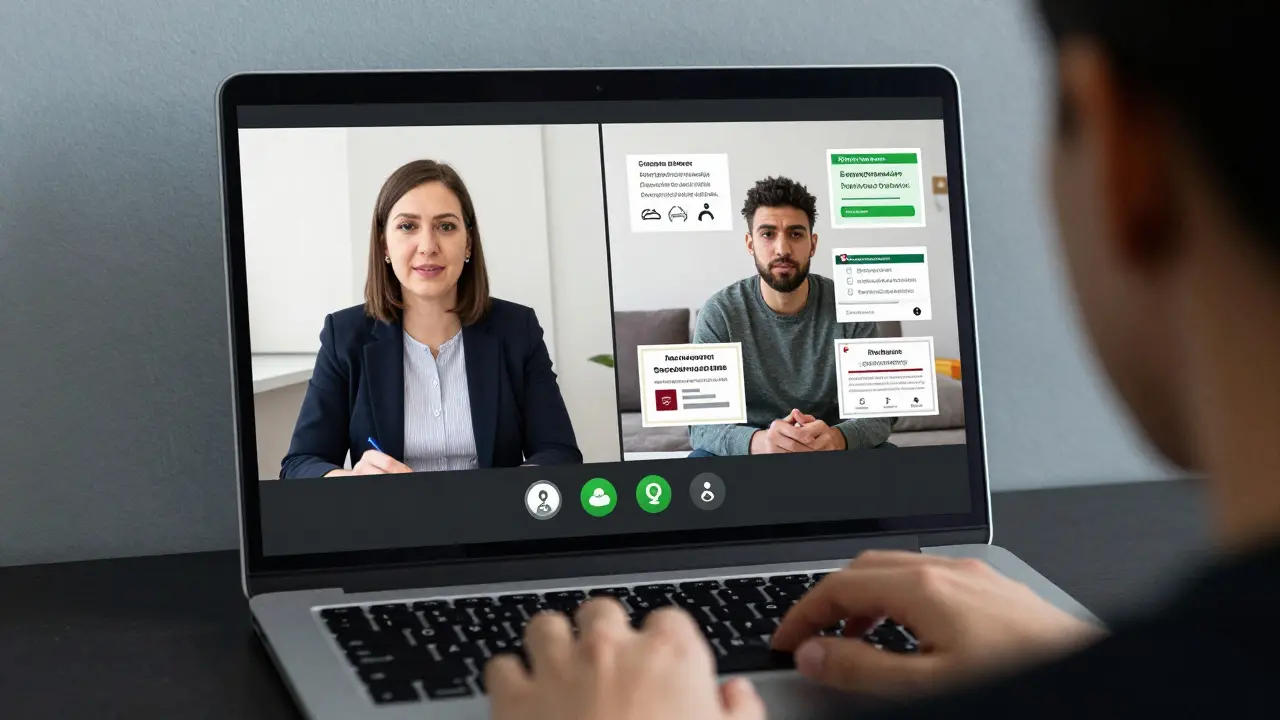
- Live coaching via video calls with trained career advisors
- Micro-credentials you can actually put on your CV - recognised by UK employers
For example, a program in Glasgow partners with local logistics firms to train people in warehouse operations. Trainees learn how to use forklifts via VR simulations, then get placed in real entry-level roles. No degree needed. No prior experience required. Just a laptop and the will to try.
How They’re Different From Regular Online Courses
Most online courses say they’ll get you a job. Very few actually do. The difference with these programs is accountability.
They don’t just dump content on you. They check in. They track progress. They connect you with employers. Some even provide free devices or data plans if you can’t afford them. Others offer wraparound services - like help with filling out job applications or preparing for interviews.
One study from the University of Edinburgh tracked 1,200 participants in online workforce programs over two years. Those who completed the full program had a 68% job placement rate within six months. Compare that to 22% for people who only took free online courses without support.
Real Stories, Real Results
Carol, 52, from Dundee, lost her job as a receptionist after a car accident left her with chronic pain. She couldn’t sit for long periods or travel far. She found an online program for medical transcription through her local Jobcentre Plus. She trained from her bed, using voice-to-text software. Six months later, she’s working remotely for a NHS contractor - full-time, with benefits.
Jamal, 29, was released from prison with no qualifications and no references. He enrolled in an online IT support course run by a charity in Edinburgh. The program paired him with a mentor, helped him build a portfolio, and arranged a six-week trial placement. He’s now a full-time IT assistant at a social enterprise.
These aren’t outliers. They’re the norm in well-designed programs.
What Makes Them Work
Not every online program delivers results. The ones that do share five key traits:
- Employer partnerships - they know what skills local businesses actually need
- Personalised support - no one is left to figure it out alone
- Flexible pacing - you can pause and restart without penalty
- Accessible design - built for people with vision, hearing, cognitive, or mobility challenges
- Credential recognition - certificates that employers trust
Programs that skip any of these five often fail. They look good on paper, but they don’t change lives.

Where to Find These Programs in the UK
You won’t find them on Google Ads. They’re usually run by:
- Local councils and Jobcentre Plus offices
- Charities like Scope, Mencap, or The Prince’s Trust
- Community colleges and adult learning centres
- Union-run training funds (like those for transport or hospitality workers)
Start by contacting your local Jobcentre. Ask: “Do you run any online workforce programs for people with barriers to employment?” If they don’t know, ask for the skills and employment officer. They’re the ones who track these programs.
Also check: Skills for Life a UK government-backed initiative that funds online training for adults with low qualifications or employment barriers. It’s active in every region and covers everything from digital literacy to advanced manufacturing.
What to Watch Out For
Not everything called “online workforce training” is legit. Some private companies charge hundreds of pounds for courses that offer no job placement, no support, and no recognised certification. Red flags include:
- Upfront fees over £50
- Promises like “guaranteed job” or “earn £50k in 6 weeks”
- No mention of employer partners or accreditation
- No way to speak to a real person before signing up
Legit programs are free or heavily subsidised. If you’re asked to pay, ask why - and get it in writing.
The Bigger Picture
Online workforce development isn’t just about jobs. It’s about dignity. It’s about proving that someone’s past doesn’t define their future. It’s about giving people who’ve been told “you’re not fit for work” the tools to prove otherwise.
When these programs work, they don’t just change individual lives - they change communities. Fewer people rely on benefits. More people pay taxes. More kids see their parents working and believe they can too.
The technology is here. The data proves it works. What’s missing is awareness - and political will.
Are online workforce development programs really free?
Yes, the best ones are. Most are funded by local councils, the UK government, or charities. You might need to provide proof of eligibility - like being on Universal Credit, having a disability, or being a care leaver - but you won’t be charged for the training itself. Beware of private companies that charge fees - they’re not part of the official system.
Can I join if I have no computer or internet?
Many programs provide devices and data. If you’re enrolled in a government-backed program and don’t have access to a laptop or reliable internet, ask about their tech support scheme. Some offer loaner laptops, free Wi-Fi hotspots, or access to computer labs at libraries or community centres.
Do I need previous experience to join?
No. These programs are designed for people with little or no experience. Some start with basic digital skills - how to use email, fill out an online form, or join a Zoom meeting. From there, you build up to job-specific training. The goal isn’t to test what you know - it’s to help you learn what you need.
How long do these programs take?
It varies. Basic digital literacy courses can take 4-8 weeks. Job-specific training like medical coding or warehouse operations usually runs 8-16 weeks. Some offer part-time options that stretch over 6-12 months. The key is that you control the pace. If life gets busy, you can pause and come back.
Will I get a job at the end?
No program can guarantee a job - but the best ones guarantee support. They’ll help you build a CV, practice interviews, and connect you directly with employers who’ve agreed to hire from their program. Many participants get job offers before they even finish. The success rate for those who complete the full program is often over 60%.
