

Most B2B companies struggle to grow because they’re chasing the wrong leads. They blast emails, run generic ads, and wonder why their pipeline feels empty. The truth? B2B marketing isn’t about volume anymore. It’s about precision. Two approaches dominate modern B2B growth: account-based marketing (ABM) and demand generation. And if you’re serious about scaling your revenue, you need to understand both - not just as theory, but as practiced systems.
What Exactly Is Account-Based Marketing?
Account-based marketing treats each high-value customer like a one-person market. Instead of casting a wide net, you identify 50, 100, or 500 key companies - the ones that fit your ideal customer profile - and build custom campaigns just for them. Think of it like handcrafting a gift for each client instead of sending out a bulk catalog.
ABM works because B2B buying is no longer a single decision. It’s a committee. A procurement officer, a technical lead, a CFO, and a department head all weigh in. ABM speaks to all of them, at once, with tailored content. A case in point: a Scottish SaaS company targeting enterprise logistics firms used ABM to land a £2.4M deal. They didn’t just send a whitepaper. They created a custom ROI calculator for each prospect’s specific fleet size, sent personalized video messages from their CEO, and even mailed printed reports to decision-makers’ offices. Result? 87% of targeted accounts moved into the sales funnel.
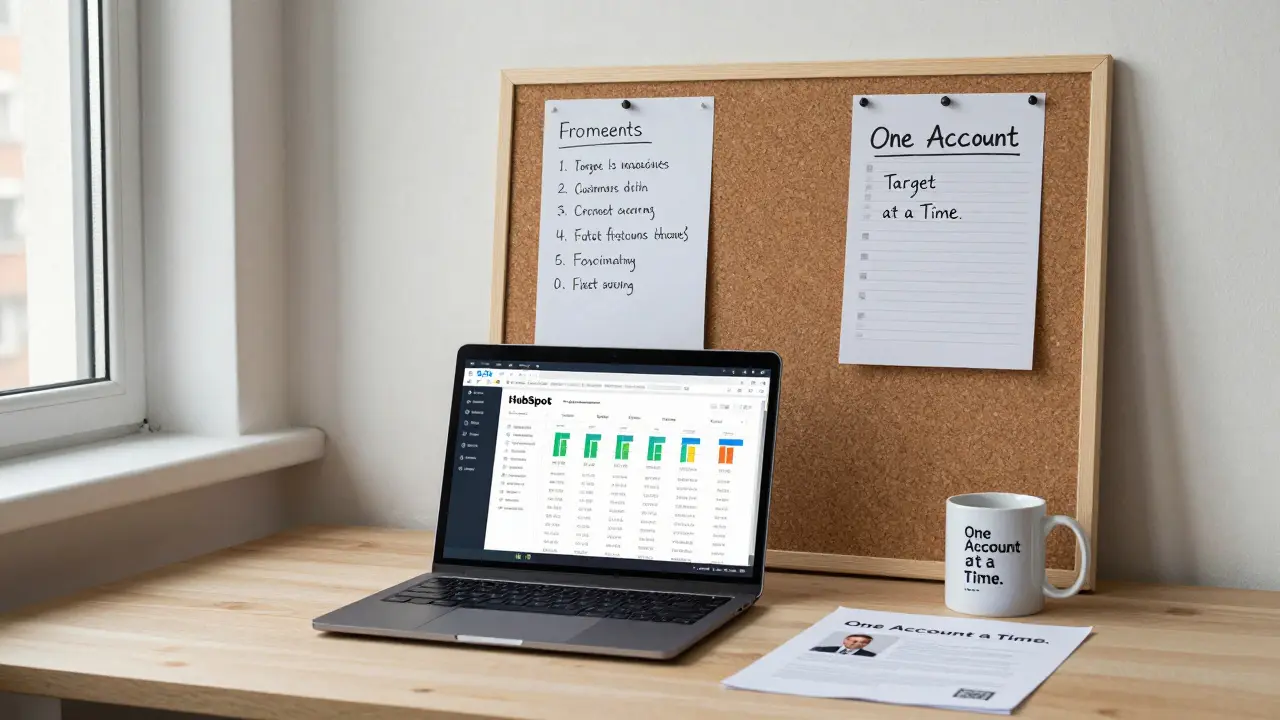
ABM isn’t just for big budgets. Even mid-sized firms can run lean ABM with tools like LinkedIn Sales Navigator, HubSpot, and clear account lists. The key? Start small. Pick five accounts. Research them. Build one piece of content per account. Track engagement. Repeat.
Demand Generation: The Engine Behind the Funnel
If ABM is a scalpel, demand generation is the entire surgical suite. It’s the broad, systematic process of creating awareness, interest, and momentum for your product across a wide audience. It’s webinars, SEO-optimized blogs, gated eBooks, retargeting ads, and nurture sequences.
Here’s what most people get wrong: demand generation isn’t just about lead volume. It’s about lead quality. A good demand gen strategy doesn’t just collect emails - it filters them. A lead who downloads a “How to Reduce Cloud Costs” guide from a tech firm is far more qualified than someone who clicks a banner ad for a free webinar on “10 Marketing Hacks.”
One UK-based cybersecurity firm saw a 300% increase in qualified leads after restructuring their demand gen engine. They stopped running generic LinkedIn ads. Instead, they created a 6-part email series based on real pain points from customer interviews: “Why Your SOC Team Is Overwhelmed,” “The Hidden Cost of False Positives,” and “How to Get Buy-In from Your CFO.” Each piece linked to a short, no-fluff video. They didn’t ask for a signup until the fourth email. Conversion rate? 18% - nearly triple the industry average.
Why You Need Both - Not Either/Or
Some marketers treat ABM and demand generation like rivals. They’re not. They’re teammates.
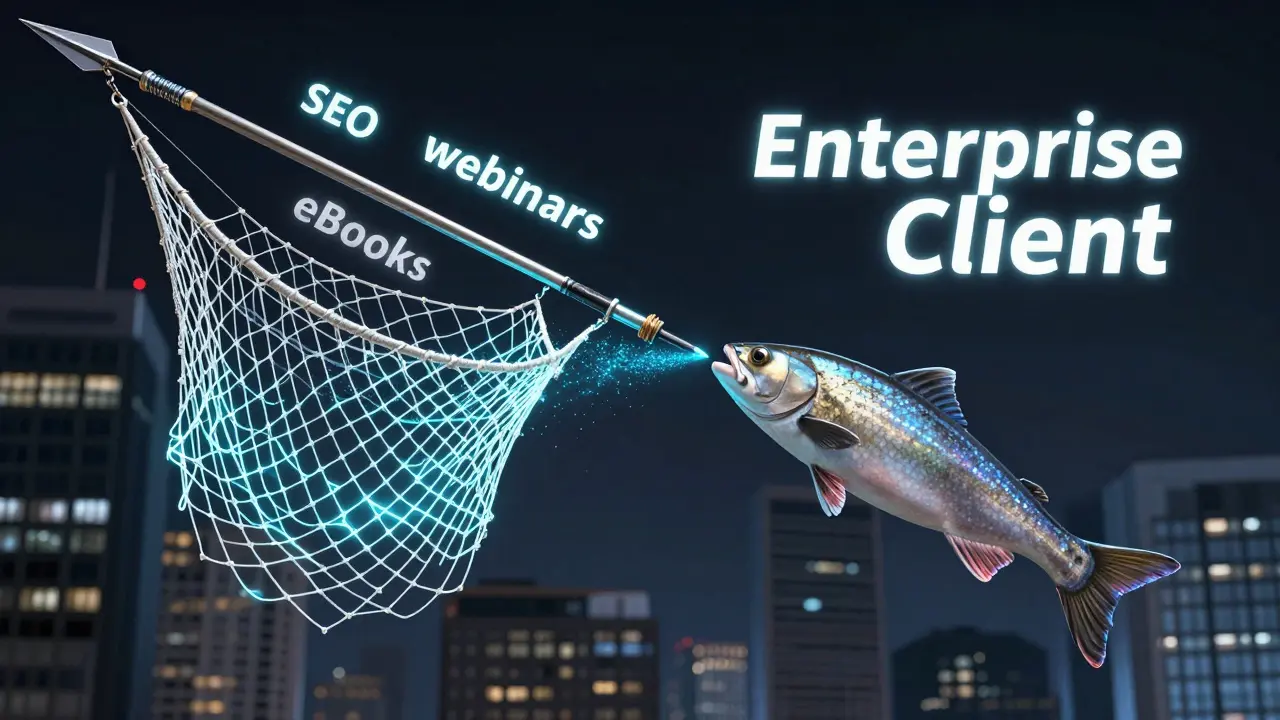
Demand generation fills the top of your funnel with warm, interested prospects. ABM takes the hottest ones - the ones who’ve already shown interest - and turns them into closed deals. Think of demand gen as the fishing net and ABM as the spear. You need both to catch fish and land the big ones.
Here’s how they work together in practice:
- A prospect downloads your “2026 B2B Tech Spend Report” (demand gen).
- You tag them as “interested in cybersecurity budgeting” (CRM automation).
- Three days later, they’re added to a targeted ABM campaign with a custom case study from a similar company in their industry (ABM).
- A sales rep reaches out with a personalized message referencing their download (ABM + sales alignment).
- They book a demo. Close.
This synergy is why top-performing B2B teams invest in integrated platforms. Tools like Salesforce, Marketo, and HubSpot aren’t just for tracking - they’re for connecting the dots between broad awareness and deep engagement.
What to Look for in a B2B Marketing Course
Not all courses are created equal. Many offer fluff: “5 Tips to Grow Your Pipeline!” That’s not enough. You need courses that teach systems - not slogans.
Here’s what a real B2B marketing course should cover:
- Account identification: How to build an ICP (Ideal Customer Profile) using firmographic and technographic data - not guesswork.
- Personalization at scale: How to use dynamic content, CRM triggers, and AI tools to create 1:1 experiences without hiring a team of copywriters.
- Content mapping: Which assets drive awareness, which build trust, and which close deals. No more “throw everything at the wall” strategy.
- Metrics that matter: Pipeline velocity, account engagement score, win rate per campaign - not just clicks or email opens.
- Integration with sales: How to align marketing and sales teams so they’re not working in silos. This is where 90% of B2B efforts fail.
Top-rated courses include those from the Marketing Profs a leading provider of B2B marketing education and certifications, HubSpot Academy offers free, certification-backed courses on ABM and demand generation, and ABM Institute specializes in enterprise-level ABM frameworks. Look for courses that include real campaign templates, not just slides.
Common Mistakes to Avoid
Even experienced marketers stumble. Here are the top three errors I’ve seen in Edinburgh-based tech firms:
- Using the same messaging for all accounts. If you’re sending the same LinkedIn ad to a hospital IT director and a fintech CFO, you’re not doing ABM - you’re doing spam.
- Ignoring intent data. Tools like 6sense and Bombora show which accounts are actively researching your product. If you’re not using this data, you’re flying blind.
- Measuring only leads, not revenue. A campaign that generates 500 leads but zero closed deals is a cost center, not a growth engine.
One company I worked with spent £120,000 on demand gen last year. They got 1,200 leads. Only 3 became customers. Why? They targeted “any tech company” instead of “tech companies with over 200 employees using AWS.” Narrowing their audience to 120 accounts - and running ABM campaigns with tailored content - increased their close rate from 0.25% to 8.3%.
Where to Start Today
You don’t need a big budget. You don’t need a team. You just need to start.
Here’s your 7-day plan:
- Day 1: List your top 10 ideal customers. What do they do? What tech do they use? What keeps them up at night?
- Day 2: Pick one. Write a 300-word personalized email - not a template. Mention their recent blog post, their hiring trend, or a product they launched.
- Day 3: Create one piece of content that solves one specific problem for that account. A short video. A one-pager. A checklist.
- Day 4: Set up a simple LinkedIn ad targeting just those 10 accounts. Use your personalized message.
- Day 5: Set up a drip email sequence for anyone who clicks. No form fills. Just nurture.
- Day 6: Talk to your sales team. Ask: “Which accounts are you struggling to close?”
- Day 7: Repeat with 5 more accounts.
This isn’t theory. This is how real B2B growth happens - one account, one piece of content, one conversation at a time.
Are ABM and demand generation only for big companies?
No. ABM works best when you have a clear target audience - even if it’s just 50 companies. Demand generation scales with your budget, but even small teams can run effective campaigns using free tools like Mailchimp, Canva, and LinkedIn organic posts. The key is focus, not size.
How long does it take to see results from B2B marketing courses?
You’ll start seeing better alignment between marketing and sales within 30 days. Real revenue impact usually takes 3-6 months. That’s because you’re changing systems, not just tactics. Don’t expect a spike - expect a steady climb.
Can I do ABM without CRM software?
Yes - but it’s harder. You can use spreadsheets and manual tracking for a few accounts. But if you’re targeting more than 20 companies, you’ll waste time. HubSpot, Salesforce, or even Pipedrive can automate account tagging, content delivery, and follow-up reminders. The ROI on CRM for ABM is almost always positive.
What’s the difference between lead generation and demand generation?
Lead generation is about collecting contact info - often through forms or giveaways. Demand generation builds awareness and interest over time. It’s not asking for an email right away. It’s teaching, informing, and building trust so when someone is ready to buy, they come to you.
Which should I prioritize: ABM or demand generation?
Start with demand generation if you’re still figuring out who your best customers are. Once you have clear patterns - say, 3-5 types of companies that convert consistently - shift 30% of your budget into ABM for those accounts. Use demand gen to find the fish. Use ABM to catch the ones worth keeping.
Next Steps
If you’re serious about scaling your B2B revenue, don’t just take a course - apply it. Pick one tactic from this article. Run it for 30 days. Measure it. Adjust. Repeat. The companies that win aren’t the ones with the biggest budgets. They’re the ones who execute consistently, one account at a time.

Comments (8)
James Boggs March 19 2026
Great breakdown. I’ve seen too many teams chase vanity metrics instead of actual pipeline velocity. The real win is when marketing and sales stop blaming each other and start sharing KPIs. One team I worked with aligned on 'account engagement score' instead of lead volume - their close rate jumped 4x in six months. No magic, just alignment.
selma souza March 21 2026
There is no excuse for using generic messaging across accounts. If you are targeting enterprise decision-makers, you must treat them as individuals. The fact that this is even a point of discussion reveals how deeply broken many B2B marketing departments are. Precision is not optional. It is the baseline.
Frank Piccolo March 22 2026
Let’s be real - most of these 'ABM success stories' are just PR fluff from HubSpot partners. I’ve seen companies spend $200K on 'custom video messages' and still close zero deals. The real secret? Stop overcomplicating it. Pick one vertical. Talk to five customers. Write one email. Send it. Repeat. No AI. No CRM. Just humans talking to humans. The rest is noise.
Lissa Veldhuis March 23 2026
Ugh I’m so tired of people acting like ABM is some revolutionary breakthrough - it’s just good sales 2.0. I’ve been doing this since 2018 and everyone acts like they just discovered fire. And don’t even get me started on demand gen - it’s not about 'building trust' it’s about being visible when the buyer is ready to buy. Stop pretending you’re a therapist and start being a vendor. And also stop using 'thought leadership' as a euphemism for 'I have nothing to sell.'
Michael Jones March 23 2026
The beauty of this isn’t in the tools it’s in the mindset shift - from spraying and praying to planting and nurturing. Every account is a garden. You don’t throw seeds everywhere and hope one grows. You choose the soil. You water the right ones. You wait. You listen. You adjust. That’s growth. Not clicks. Not leads. Not campaigns. Relationships. That’s the real metric.
Barbara & Greg March 24 2026
While I appreciate the practical framework presented here, I must point out that the underlying assumption - that B2B marketing can be reduced to a systematic, repeatable process - fundamentally misunderstands the human element of decision-making. Organizations are not machines. They are ecosystems of individuals with irrational biases, emotional triggers, and unspoken hierarchies. No CRM, no AI, no personalized video can replace genuine empathy and deep contextual understanding. The most successful campaigns I’ve observed weren’t the ones with the most data - they were the ones where a sales rep remembered a prospect’s child’s name, referenced a recent industry article they wrote, and followed up not because the system told them to, but because they cared. Technology enhances, but never replaces, humanity.
allison berroteran March 25 2026
I’ve been experimenting with the 7-day plan mentioned, and honestly, it’s been transformative. I started with just three accounts - a local SaaS startup, a regional logistics firm, and a nonprofit I’ve worked with before. I wrote three personalized emails - no templates, no AI, just me typing from scratch. One replied within two hours. Another asked for a call. The third didn’t respond but liked my LinkedIn post. That’s it. No fancy tech. Just presence. I’ve since expanded to 12 accounts, and the engagement rate is 60% - way higher than any blast campaign I’ve ever run. The lesson? Depth beats breadth every time. And it doesn’t require a budget. It requires attention.
David Smith March 25 2026
THIS. This right here. I’ve been screaming this into the void for years. Everyone’s obsessed with scaling - but scaling what? A broken system? You don’t need more leads. You need better ones. You don’t need more content. You need more *truth*. I had a client last year who spent $80K on LinkedIn ads and got 800 leads. Zero closed. Then they shifted to 15 targeted accounts with one custom case study per account. 7 closed. 7. Not 800. 7. And they’re now scaling their ABM because it WORKS. Stop chasing volume. Start chasing relevance. And stop pretending you’re being 'strategic' when you’re just throwing spaghetti at the wall.