
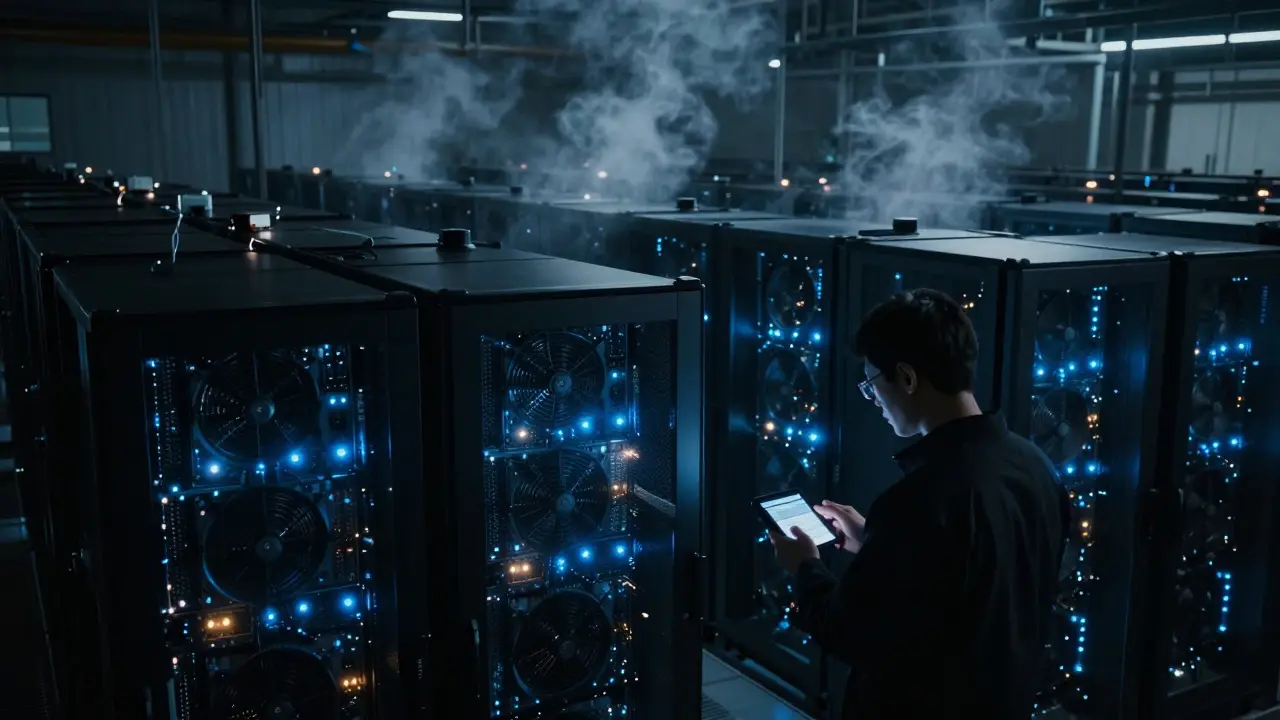
Standing here in early 2026, looking back at the April 2024 Bitcoin Halvinga protocol-driven event reducing block rewards by 50% approximately every four years, the reality of mining economics has shifted dramatically. We are now over a year past the event that cut the Block Subsidythe newly minted bitcoins awarded to miners for validating blocks from 6.25 to 3.125 coins. The immediate question on everyone's mind was whether miners would shut down their rigs. For many, they did. But for those who stayed, the game changed completely.
It isn't just about less coins per block; it is about where the income comes from. Before the halving, the subsidy made up nearly 90% of miner revenue. Fast forward to today, and we are seeing a slow but steady march toward a world where Transaction Feespayments users attach to transactions to prioritize inclusion in blocks matter more than ever. This shift isn't theoretical anymore. It dictates who turns off their machines, who upgrades to newer hardware, and whether the network remains secure when the free coin giveaway eventually stops entirely.
The Mechanics of the Revenue Cut
To understand why this matters, you have to look at the numbers. When the code executes a halving, the math is brutal and binary. There is no negotiation. If you were mining a block right before the event, you were paid 6.25 BTC plus whatever fees users threw in. Right after, that base payment became 3.125 BTC. Assuming Bitcoin's price stays flat for a second, your dollar revenue instantly drops by half.
Most people forget that operational costs-specifically electricity bills-do not cut in half when the halving happens. You still pay the utility company the same rate per kilowatt-hour. This creates a dangerous gap. In the months immediately following the 2024 event, we saw this pressure mount. Miners who relied solely on high volume without low-cost power found their margins vanish overnight. This forced a reckoning across the industry, testing whether the remaining participants could survive purely on the new mathematical reality of the ledger.
Why Fees Are Becoming Critical
As the subsidy shrinks, the fee component takes on a heavier load. Historically, fees were the "tip" miners got on top of their salary. Now, the tip has to help buy dinner. We are observing a structural change where fee revenue percentage is climbing steadily. While subsidy revenue remains substantial in 2026, the volatility of fees means miners can no longer predict cash flow based on Bitcoin price alone.
The driver here is scarcity of space. Every block has a size limit (weight units). As demand for transactions grows-whether through standard spending or complex protocols like Ordinals-users compete to get their data into a block. This competition bids up the fee price. During periods of high network congestion, a single block might generate thousands of dollars in fees alone, sometimes rivaling the subsidy value itself. This dynamic is crucial because subsidies are fixed by code, but fees are determined by market demand. If demand dries up, so does the secondary income stream.
| Metric | Pre-2024 Halving | Post-2024 Halving (2026) |
|---|---|---|
| Block Reward | 6.25 BTC + Fees | 3.125 BTC + Fees |
| Fees Share of Total Rev | ~5% to 10% | Variable (15% to 40%) |
| Margin Sensitivity | Low (Subsidy buffered shocks) | High (Must optimize kWh cost) |
| Hardware Lifespan | Extended (Older gear survived) | Shortened (Efficiency is key) |
The Hashrate Adjustment Cycle
When the pain becomes too much, weaker miners quit. This is actually a necessary feature, not a bug. When unprofitable operators pull the plug on their ASIC Minersspecialized computers designed specifically for cryptocurrency mining, the total computing power of the network, known as hashrate, dips slightly. The Bitcoin protocol notices this dip within days. Every two weeks, the protocol recalculates the target to ensure blocks keep appearing roughly every ten minutes.
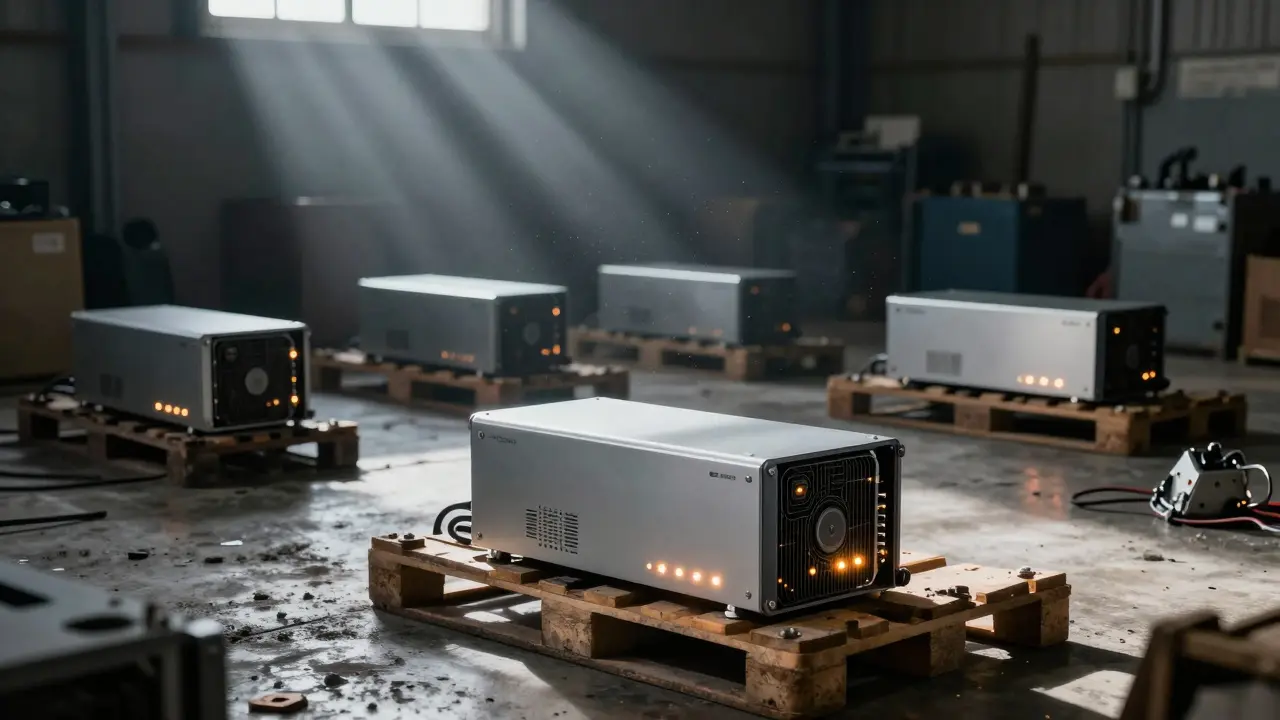
This adjustment lowers the difficulty for everyone else. Suddenly, the miners who didn't shut off get more work assigned to them relative to their peers. If the 2024 period was a purge, 2025 and 2026 have been the recovery phase for the survivors. By removing inefficient power consumers, the average cost to mine a Bitcoin drops for those who remained. However, this benefit requires you to own efficient hardware in the first place. Old machines burning excessive energy per terahash are simply scrap metal in this new economy.
Cash Flow and Operational Reality
For business owners running operations, the cash flow timing has become critical. Many miners carry debt from buying equipment during the previous boom cycles. When the 2024 halving hit, their collateral value (BTC holdings) fluctuated while their yield dropped. We saw several large public miners struggle to refinance loans. Those who survived often did so by having deep reserves of cash or cheaper debt. Being solvent is now as important as being technically capable.
Electricity contracts play a massive role here. A miner paying $0.05 per kWh might break even on 3.125 BTC at a lower price point than someone paying $0.08. In 2026, we see a clear winner-takes-most scenario. Large industrial operations located near stranded energy assets-like hydro dams that don't transmit all their power-hold an unfair advantage. Smaller operators often rent out their capacity to hosting providers rather than managing farms themselves, trading margin for survival.
What Happens When the Subsidy Ends?
Looking further ahead, the schedule shows the next halving occurring in 2028. Each event pushes us closer to the day the subsidy vanishes completely. Eventually, Bitcoin mining revenue will be 100% fee-based. This scares some investors who worry miners will lose incentive to secure the chain. But history suggests the network self-corrects. Just as land became valuable because people wanted to live there, block space becomes valuable because people want to transact. If the security budget relies on fees, the community effectively taxes its own usage to protect itself.
The big risk in this long-term model isn't that fees won't exist, but that they might be lumpy. If the market crashes and transaction volume drops, miners might see a week of low fees followed by a month of high fees. They need stable cash flow to pay payroll and utilities. This volatility makes mining operations harder to run as traditional businesses, requiring smarter hedging strategies and more diversified portfolios of digital assets.
Preparing for the Next Cycle
If you are evaluating mining setups today, the metrics you used three years ago are outdated. You can't just look at peak price or total output. You need to calculate net profit after electricity costs, maintenance, and cooling expenses. Efficiency ratings like J/TH (Joules per Terahash) are now king. A machine that produces slightly fewer hashes but uses significantly less power will print money while a faster, hungry competitor goes bankrupt.
We are also seeing a rise in strategic partnerships between mining companies and renewable energy providers. Instead of burning fossil fuels just because it is cheap, many are moving toward carbon-neutral operations. Why? Because regulatory pressure is mounting globally. Even in 2026, governments are scrutinizing energy consumption. Future-proofing your operation involves clean energy certificates and sustainable practices as much as it involves buying the latest silicon chips.
Does halving affect my personal Bitcoin holdings?
No, halving affects the supply rate of new coins, not your existing wallet balance. Your coins remain exactly the same. However, reduced new supply entering the market historically influences price, which indirectly changes the fiat value of your holdings.
Will mining ever stop completely?
Mining will not stop, but the method changes. When the block subsidy reaches zero around 2140, miners will rely entirely on transaction fees. As long as there is demand for securing Bitcoin, fees will incentivize the computation required to validate blocks.
How do transaction fees impact daily users?
Higher miner reliance on fees means users may pay more during congested times. However, this ensures their transaction gets confirmed quickly. During quiet periods, fees drop drastically, sometimes returning to negligible amounts, allowing for cheap transfers again.
Is it still profitable to mine at home?
Generally, no. Home electricity rates are rarely low enough to compete with industrial mines. Unless you have free or subsidized energy, buying Bitcoin directly is almost always cheaper than trying to generate it yourself post-halving.
What determines the difficulty adjustment?
Difficulty adjusts every 2016 blocks (approx. two weeks). It targets a constant block time of 10 minutes. If the network mined too fast recently, difficulty goes up. If too many miners quit, difficulty drops to give remaining operators a better chance at finding blocks.

Comments (14)
Ronnie Kaye March 26 2026
Honestly I think everyone forgets that electricity costs do not drop when the block reward gets cut by half lol.
Chuck Doland March 28 2026
The transition period is indeed fascinating for anyone studying the ledger. We must observe the shift in revenue streams closely. Miners who fail to adapt will perish quickly in this environment. Electricity costs are the primary determinant now instead of coin issuance. Many operators lack the foresight required here. They focus on price rather than efficiency metrics. This is a fundamental error in business strategy. The protocol demands mathematical discipline from all participants. Emotional reactions lead to poor financial outcomes consistently. One must study the block reward reductions in detail. Fee markets offer a new opportunity for profit generation. Congestion drives up the necessary transaction costs during spikes. Survivors will enjoy higher margins eventually in this economy. Hardware upgrades are mandatory for longevity in the field. The network remains secure regardless of market volatility levels.
Michael Gradwell March 29 2026
efficiency rules now
Ian Maggs March 30 2026
The energy consumption debate is absolutely critical!!!!! Why do people ignore the math!!!!?? The grid cannot support infinite growth!!! It is a physical limit after all.
Flannery Smail March 31 2026
I bet the grid handles it just fine actually since demand fluctuates.
Priyank Panchal April 1 2026
Stop crying about the halving and fix your power contract.
Madeline VanHorn April 3 2026
Real investors hold their bags while miners chase pennies for scraps.
Glenn Celaya April 4 2026
this whole thing is scaring me so much i cant slep at night. the price of electrcity is going to kill us all if we dont watch out. i sold my rigs already just to stay sane.
Mark Brantner April 5 2026
lol yeah good luck selling those old machines nobody wants junk anymore.
Kate Tran April 6 2026
Its going to change evrything for us lot in the UK mines too. The govment rules on carbon are getting tough fast. Hope you guys got the green deals sorted out.
Tamil selvan April 8 2026
It is important to remain calm! Please read the data thoroughly! You must understand the difficulty adjustment mechanism! Do not panic sell based on fear!
Nicholas Carpenter April 8 2026
We are evolving towards a more sustainable model of network security eventually. The fee market will take over the load successfully.
Emmanuel Sadi April 10 2026
Optimism is for losers who cant afford better hardware. Only the strong survive in this wasteland of ASIC farms.
amber hopman April 11 2026
We need to adapt or die out soon enough. Collaboration between hosts and miners helps mitigate these risks for everyone involved.