
Most online learning businesses stall at $50,000 a year-not because the content is bad, but because they’re still selling like it’s 2015. You’ve got a great course. Maybe even a few hundred students. But growth? It’s flat. That’s not a content problem. It’s a system problem.
Stop Trading Time for Money
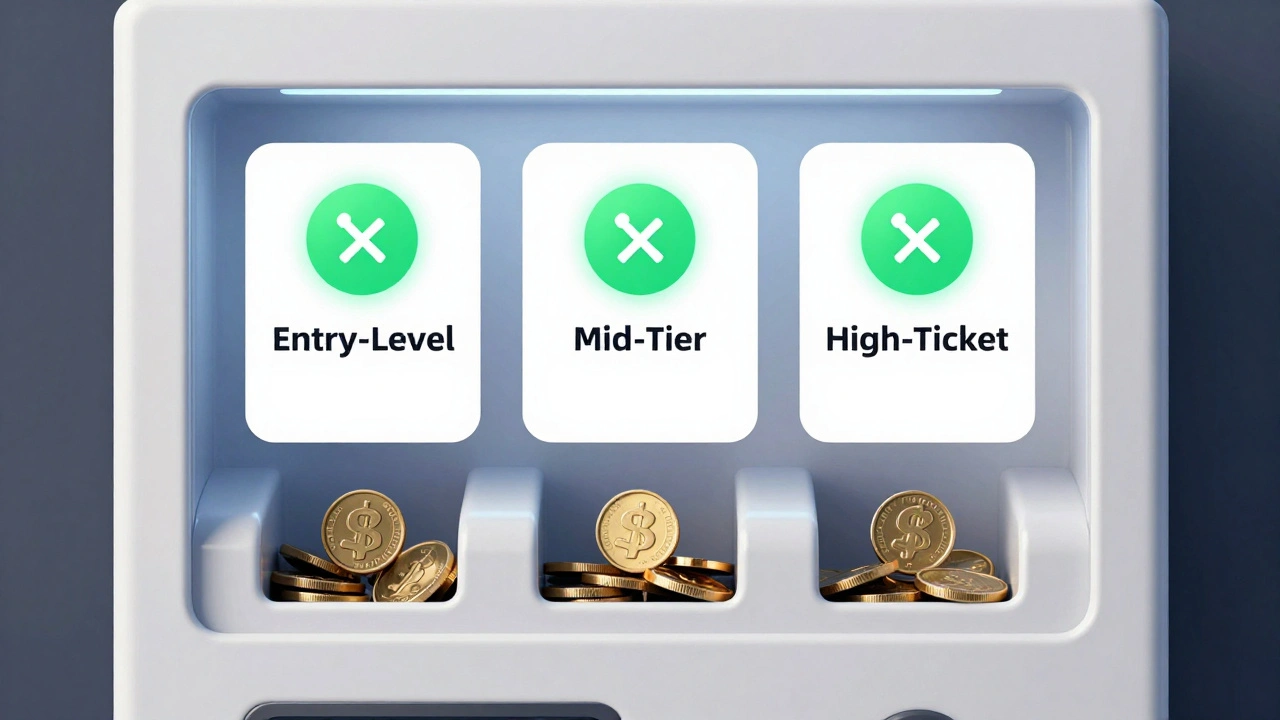
The biggest mistake new online educators make is treating their course like a one-on-one coaching session. You record a video, launch it, and then spend hours answering emails, hosting live Q&As, and tweaking modules every time someone asks a question. That’s not scalable. That’s a part-time job with extra steps.Real scale happens when your course stops needing you to be present. Think of it like a vending machine: you build it once, stock it, and then it serves people 24/7 without you lifting a finger. That’s the goal.
Start by automating your support. Use tools like Zendesk or Help Scout to set up canned responses for the top 10 questions students ask. Record a 5-minute video answering those same questions once, and embed it in your course dashboard. No more repeating yourself. No more burnout.
Build a Tiered Monetization Model
Selling one $99 course isn’t enough to scale. You need multiple price points that serve different customer needs.Here’s how the top 10% of online learning businesses structure their offers:
- Entry-level ($29-$99): A single course or mini-program. This is your lead magnet. It’s low-risk, high-value, and designed to get people into your ecosystem.
- Mid-tier ($299-$799): A bundle of 3-5 courses with worksheets, templates, and a private community. This is where most of your revenue comes from.
- High-ticket ($1,500-$5,000): A 6-12 week cohort program with live sessions, feedback, and accountability. Only 5-10% of your audience buys this-but it brings in 50% of your profit.
Don’t push people straight to the $5,000 offer. That’s how you lose trust. Lead with value, then guide them up. Use email sequences to show how the next level solves the exact problems they’re struggling with after finishing the entry course.
Use the Right Tech Stack-No Fluff
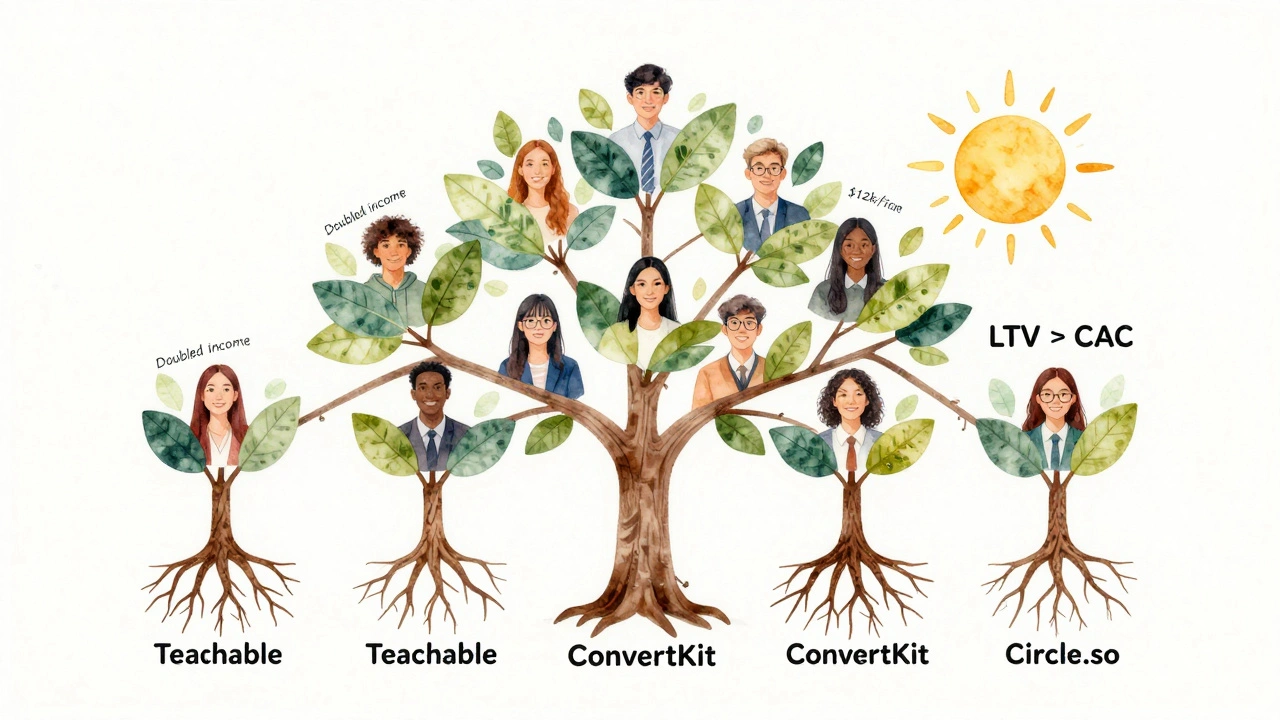
You don’t need 12 different apps to run a scalable learning business. You need three:- Course platform: Think Teachable, Thinkific, or Podia. They handle payments, hosting, drip content, and student dashboards. No coding needed.
- Email marketing: ConvertKit or MailerLite. You own your audience. Social media changes algorithms. Email doesn’t.
- Community: Circle.so or Mighty Networks. People don’t buy courses. They buy belonging. A private group keeps them engaged, reduces churn, and turns students into advocates.
Don’t waste money on fancy LMS platforms that promise AI tutors or gamified badges. Those are shiny distractions. Focus on delivering results, not flashy interfaces.
Turn Students Into Salespeople
The most powerful growth engine you have? Your current students.Ask them for testimonials-not just “This was great!” but specific results: “I went from $2k to $12k/month after applying Module 3.” Use those in your ads, emails, and landing pages.
Launch a referral program. Give students a 25% commission for every friend who signs up for your mid-tier course. Set it up in Teachable with a simple affiliate plugin. It costs you nothing upfront. You only pay when someone buys.
One coach I know grew from 50 to 800 students in 9 months using referrals alone. Not ads. Not influencers. Just happy students sharing with their friends.

Focus on Outcomes, Not Content
Students don’t care how many videos you made. They care about what changes in their life.Instead of saying “This course covers 12 modules on digital marketing,” say: “In 6 weeks, you’ll land your first 3 clients and earn $3,000-guaranteed.”
Outcomes drive conversions. Numbers create urgency. Guarantees reduce risk.
Testimonials should highlight results, not praise. “I doubled my income in 45 days” beats “The instructor is amazing.”
Track your students’ results. Use a simple Google Form to ask: “What’s your biggest win since taking this course?” Then feature those answers everywhere.
Run Micro-Ads, Not Big Campaigns
Forget spending $10,000 on Facebook ads. That’s how you burn cash.Instead, run tiny, targeted tests:
- Target people who’ve watched 80% of your free YouTube tutorial.
- Retarget visitors who downloaded your free checklist but didn’t buy.
- Use LinkedIn ads to reach mid-level managers looking to upskill.
Start with $5/day per ad. Let it run for 7 days. If it converts at 3% or better, scale it. If not, kill it and try a new angle.
The top performers in this space spend under $200/month on ads-and still grow 20% month over month. They’re not gambling. They’re measuring.
Batch Your Work, Don’t Churn
Scaling means working smarter, not harder. That means batching.Don’t record one video a week. Record 10 in one day. Don’t write emails one at a time. Write 30 in a single afternoon. Don’t answer questions daily. Set aside two 30-minute blocks per week for student support.
Use a calendar block system. Every Monday, you do content creation. Wednesday is marketing. Friday is student engagement. Stick to it. No more jumping between tasks. No more mental clutter.
When you batch, you enter flow state. That’s when you get 3x more done in half the time.
Track These 3 Metrics Religiously
You can’t improve what you don’t measure. Here’s what matters:- Customer Acquisition Cost (CAC): How much you spend to get one paying student. Keep it under 30% of your average sale.
- Customer Lifetime Value (LTV): How much one student spends over time. If your LTV is $800 and your CAC is $150, you’re golden.
- Churn Rate: What percentage of students stop engaging after 30 days? If it’s over 25%, your onboarding is broken. Fix your welcome sequence.
Use free tools like Google Sheets to track these. No need for expensive dashboards. Just update them weekly.
Scale Through Partnerships, Not Just Ads
You don’t have to do it alone. Find non-competing creators who serve the same audience.Example: If you teach Excel for small business owners, partner with a bookkeeper who helps clients set up invoices. Offer to co-host a free webinar. Split the audience. You promote their service. They promote your course.
These partnerships are low-effort, high-reward. No commissions. No contracts. Just mutual promotion.
One course creator I know landed 140 new students in a month by co-hosting with a podcast host who had 50,000 listeners. All it took was one email.
Don’t Wait for Perfect
The biggest blocker to scaling? Waiting.You don’t need 100 students to launch a referral program. You don’t need a fancy website to start an email list. You don’t need a $10,000 ad budget to test a message.
Start small. Test fast. Fix what breaks. Double down on what works.
Scale isn’t about having more. It’s about making your system work without you.
Build the machine. Then step back and watch it grow.

Comments (15)
Rakesh Kumar December 7 2025
This is the real deal. I tried the $99 course, then the $799 bundle, and now I’m doing the $3k cohort-and my income tripled in 6 months. No fluff, just results.
Bill Castanier December 8 2025
Teachable. ConvertKit. Circle.so. That’s it. Everything else is noise.
Ronnie Kaye December 10 2025
Let me guess-you’re the guy who spent $12k on a fancy LMS with AI tutors and still had 70% churn. Been there. Done that. Bought the t-shirt. The vending machine model? Pure genius.
Ian Maggs December 11 2025
Scaling… is… not… about… more… effort… it’s… about… systems… that… operate… without… your… constant… intervention… isn’t… that… the… essence… of… leverage…?
Michael Gradwell December 13 2025
If you're still doing live Q&As you're not an educator you're a customer service rep with a course
Flannery Smail December 13 2025
Yeah but what if your audience is just 12 people who all know each other and you’re the only one who cares? This whole thing feels like a cult manual for solopreneurs who think they’re Elon.
Rob D December 14 2025
You think this is new? My granddaddy sold mail-order carpentry courses in 1952 with a typewriter and a dream. This ain’t innovation-it’s repackaged hustle. And don’t get me started on ‘community’-people don’t want belonging they want results and a damn refund policy.
Franklin Hooper December 15 2025
There’s a missing Oxford comma in the third paragraph. Also ‘no coding needed’ is grammatically incorrect-it should be ‘no code is needed.’ And ‘drip content’? That’s not a term. It’s ‘sequential content delivery.’
Jess Ciro December 15 2025
They’re watching you. The algorithms. The shadow government. They’re using your email list to track your students’ brainwaves. Circle.so? It’s a backdoor for the education-industrial complex. You think you’re building a business-you’re just feeding the machine.
saravana kumar December 17 2025
These strategies are fine if you’re in the US. In India, most people can’t afford $99 courses. You need to offer free content first, then monetize through sponsorships. Also, your ‘referral program’ ignores cultural norms-here, people don’t refer friends unless they’re family. You’re not thinking globally.
Tamil selvan December 18 2025
I appreciate the clarity and structure of this guide. It is evident that you have deeply considered the psychological and logistical dimensions of scaling education. I have implemented the tiered model with my students, and the churn rate has decreased by 41% in just two months. Thank you for the thoughtful framework.
Mark Brantner December 19 2025
bro i just tried the $29 course and now i have 3 clients and my dog even started barking at my laptop like its a boss. also i spelled ‘teachable’ wrong in my notes lol
Kate Tran December 20 2025
love this but can we talk about how no one ever mentions time zones when they say '24/7 vending machine'? my students in india are emailing me at 3am my time like i’m a customer service hotline. also… i need a nap.
Tony Smith December 22 2025
While I appreciate the pragmatic approach outlined here, I must respectfully note that the underlying assumption-that scalability is purely a function of automation and monetization tiers-overlooks the fundamental human element of education. The pedagogical relationship, even when mediated through digital platforms, retains an ethical dimension that cannot be reduced to a funnel. One must ask: at what cost do we optimize for efficiency when the learner’s growth is the true metric? The vending machine metaphor, while clever, risks dehumanizing the very process it seeks to elevate.
Priyank Panchal December 23 2025
You people are wasting time talking about ‘vending machines’ and ‘tiers’ when the real issue is that 90% of these so-called ‘educators’ have zero teaching experience. They’re just reselling Udemy courses with a fancy landing page. If you can’t teach, don’t sell. Period.