

Switching careers is one of the biggest decisions you’ll ever make. And if you’re thinking about a bootcamp - whether it’s for coding, data analysis, or digital marketing - you’re not just investing time. You’re investing money. A lot of it. So the real question isn’t can you do it. It’s: will it pay off?
How much do bootcamps actually cost?
Bootcamp prices vary wildly. In the UK, a full-time, 12-week intensive program in software development can set you back between £8,000 and £12,000. Some offer income share agreements (ISAs), where you pay nothing upfront and instead give 10-15% of your salary for two years after landing a job above £30,000. Others require full payment upfront. There are also part-time options, which stretch over 6-9 months and cost £4,000-£7,000. These are cheaper but mean you’re still working, which cuts into your earning potential.
Then there are hidden costs: textbooks, software subscriptions, a reliable laptop (if you don’t already have one), and sometimes even relocation. One graduate from CodeClan in Edinburgh told me she spent £1,200 on a new MacBook and another £500 on cloud hosting fees during her capstone project. These aren’t optional extras - they’re part of the real price tag.
What’s the average salary boost after a bootcamp?
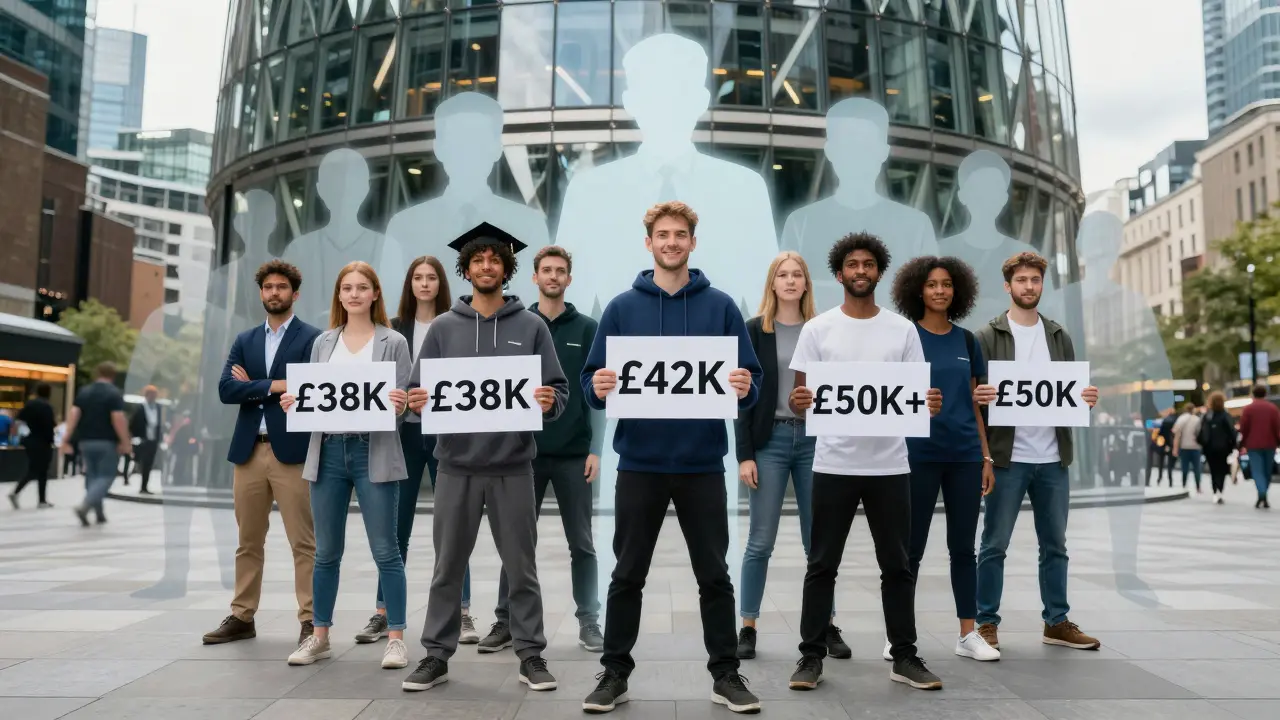
Let’s cut through the hype. Bootcamp graduates don’t all become £80,000 engineers overnight. The real numbers? According to the 2025 UK Bootcamp Outcomes Report from TechSkills UK, the median starting salary for bootcamp grads in software development is £38,000. That’s up from £27,000 for people switching from non-tech roles like retail, admin, or hospitality.
That’s a £11,000 jump - and it happens within six months of graduation. For someone who was earning £24,000 as a customer service rep, that’s a 46% increase. In London, the median starts at £42,000. In Manchester or Glasgow, it’s closer to £35,000. The gap isn’t huge, but it’s consistent.
And here’s the kicker: 73% of graduates land a full-time job within 90 days. Only 12% remain unemployed after six months. Compare that to university computer science grads, where 28% are still job hunting after six months. Bootcamps are faster. More targeted. Less theoretical. More hiring-ready.
Breakdown: Is the ROI worth it?
Let’s run a real example. Meet Sarah. She was a receptionist in Edinburgh, earning £22,000 a year. She saved £8,000 over 18 months and enrolled in a 14-week full-stack bootcamp. Total cost: £8,000 tuition + £1,500 for gear and tools = £9,500.
She graduated in January 2026. By March, she had a job offer as a junior developer at a fintech startup: £39,000 base salary. That’s £17,000 more than before.
Here’s the math:
- Cost: £9,500
- Annual salary increase: £17,000
- Payback period: £9,500 ÷ £17,000 = 0.56 years (about 7 months)
After 7 months of her new job, she’s already earned back everything she spent. After one year? She’s £17,000 ahead. After three years? She’s over £50,000 ahead - and that’s before bonuses, raises, or promotions.
That’s not just a good investment. That’s a life-changing one.

Who doesn’t benefit from a bootcamp?
Not everyone wins. The biggest red flag? If you’re switching into a field with no local demand. I’ve seen people spend £10,000 on a UX design bootcamp, only to realize there are only 3-4 junior roles a year in their city. Bootcamps work best when there’s a pipeline. Check job boards. Look at LinkedIn. Search for "junior developer" in your city. If you see fewer than 10 openings in the last month, the market might be too thin.
Another trap: choosing a bootcamp with no job support. Some programs brag about their curriculum but offer zero career coaching. Others have dedicated recruiters, company partnerships, and mock interviews. Ask: "How many companies have hired your grads in the last year?" If they can’t name five, walk away.
And don’t underestimate the mental toll. Full-time bootcamps are brutal. 60-70 hour weeks. No weekends. Burnout is real. If you have kids, a mortgage, or health issues, part-time might be safer - even if it takes longer.
What makes a bootcamp worth your money?
Not all bootcamps are created equal. Here’s what separates the winners from the fluff:
- Job placement rate: Look for 70%+ within 90 days. Anything below 60% is risky.
- Employer partnerships: Do they work with companies like Skyscanner, Barclays, or ScottishPower? If yes, they’ve got credibility.
- Curriculum relevance: Does it teach React, Node.js, and AWS? Or is it stuck on jQuery and PHP from 2015? Check GitHub repos of past student projects.
- Post-grad support: Do they help with LinkedIn profiles? Resume reviews? Interview prep?终身支持 (lifetime support)? That’s gold.
- Payment options: ISAs are great if you’re unsure. But read the fine print: Is there a salary cap? A time limit? What happens if you don’t land a job?
CodeClan (Scotland’s largest bootcamp) and Makers (London) both publish their outcomes publicly. You can see their graduate salaries, job titles, and employer names. That transparency matters.
Alternatives: Are there cheaper paths?
Yes. You could self-study. FreeCodeCamp. The Odin Project. YouTube tutorials. It’s free. But here’s the catch: 87% of self-taught developers never land their first job. Why? Lack of structure. No mentorship. No portfolio review. No network.
Bootcamps give you all three: a structured path, feedback from industry pros, and a cohort of peers who become your first professional network. That’s not something a GitHub repo can replicate.
Another option: apprenticeships. In the UK, tech apprenticeships are funded by the government. You earn while you learn. Starting salaries are around £22,000-£26,000, and you graduate with a degree-level qualification. But they’re competitive. You need to apply months in advance. And they take 3-4 years. Slower. Less risky. Less dramatic.
Bootcamps are the middle path: faster than university, more supported than self-study.
Final verdict: Is it worth it?
If you’re serious about switching into tech - and you’re willing to grind for 12-16 weeks - then yes. The numbers don’t lie. The average bootcamp grad in the UK recovers their investment in under a year. After that, they’re earning more than 50% of people with computer science degrees.
It’s not magic. It’s not a lottery ticket. It’s a career accelerator. And like any accelerator, it only works if you put in the fuel.
Don’t do it because you think it’s "the future." Do it because you’ve checked the data, researched local job demand, picked a program with real outcomes, and you’re ready to work harder than you ever have before.
Because the ROI isn’t just financial. It’s emotional. It’s the confidence that comes from building your first app. The pride in saying, "I’m a developer." And the freedom that comes when your old job no longer defines you.
Are bootcamps worth it if I’m over 35?
Absolutely. The average age of a UK bootcamp graduate is 32. Many are career changers in their 40s. Employers care more about skills than age. One graduate from CodeClan was 47 when she switched from nursing to frontend development. She’s now earning £41,000 and says it was the best decision of her life. Age doesn’t matter if you can code.
Do bootcamps guarantee a job?
No. But top programs come close. The best ones have placement rates above 80% and offer free retakes if you don’t land a job. If a bootcamp says "guaranteed job," that’s a red flag. No legitimate program can guarantee hiring. Look for transparency: published graduate data, employer names, and clear timelines.
Can I do a bootcamp while working full-time?
Yes - but it’s tough. Part-time bootcamps run 15-20 hours a week on top of your job. That’s like having a second full-time job. Most people burn out within 6 weeks unless they have strong time management, support at home, and a flexible employer. If you can’t reduce your hours, consider saving up and going full-time instead.
What if I can’t afford a bootcamp upfront?
Look for income share agreements (ISAs). Programs like Makers and CodeClan offer them: you pay nothing until you earn over £30,000. Then you pay 10-15% for 2 years. It’s risk-free for you. But read the fine print - some ISAs have payment caps or time limits. Avoid programs that charge interest or require a co-signer.
Which bootcamp has the best ROI in Scotland?
CodeClan, based in Edinburgh, has the highest reported ROI in Scotland. Their 2025 outcomes show 82% of graduates hired within 90 days, with a median starting salary of £38,500. They’ve partnered with over 150 Scottish employers, including Skyscanner, Lloyds Banking Group, and NHS Scotland. Their ISA option and free career support make them the safest bet for Scottish residents.

Comments (11)
Tina van Schelt March 22 2026
Let me tell you - I went from retail manager to frontend dev in 8 months. No loans, no fancy bootcamp. Just FreeCodeCamp, 3 a.m. coding sessions, and a stubborn refusal to quit. But honestly? I wish I’d done the bootcamp. The network alone? Priceless. My first job came from a classmate’s referral. That’s not luck - that’s infrastructure.
Ronak Khandelwal March 23 2026
Brooo 🤯 this is the kind of post that makes me wanna hug a stranger. Life isn’t about the numbers - it’s about the *shift*. That moment you type your first working function and realize… you’re not the same person anymore. 🌱✨ The salary? Yeah, cool. But the *identity*? That’s the real ROI. You didn’t just change jobs - you changed your soul. Keep going, you legends. 💪
Jeff Napier March 24 2026
bootcamps are a pyramid scheme disguised as educationSibusiso Ernest Masilela March 25 2026
You call this analysis? This is a glorified ad for CodeClan. Real tech talent doesn’t need bootcamps. Real devs learn from RFCs, build from scratch, and contribute to open source - not memorize React hooks while sipping overpriced lattes in Edinburgh. Your ‘ROI’ is a marketing brochure written by someone who’s never touched a real legacy system. Pathetic.
Daniel Kennedy March 26 2026
Sibusiso, you’re right that bootcamps aren’t magic - but you’re wrong to dismiss them entirely. I’ve hired 12 bootcamp grads in the last 2 years. 10 of them outperformed our CS grads in practical coding tests. Why? Because they’re hungry. They’ve coded for 60 hours a week. They’ve built 3 portfolios. They show up. That’s not fluff - that’s grit. The system’s broken, sure. But bootcamps are a workaround, not a scam.
Taylor Hayes March 26 2026
I’m a 41-year-old former teacher who did a part-time bootcamp while raising two kids. It was exhausting. I cried a lot. I almost quit. But now I’m a junior dev at a nonprofit, and my salary lets me pay off my student loans AND save for college. This isn’t about prestige. It’s about dignity. The bootcamp didn’t change my life - I did. The program just gave me the tools to believe I could.
Sanjay Mittal March 27 2026
For anyone in India: don’t waste money on UK bootcamps. The job market here is exploding. Learn Python + Django + AWS on YouTube. Build 3 projects. Apply to startups. I went from ₹2.5L to ₹12L in 10 months. No bootcamp. No visa. Just discipline. The real ROI is learning how to learn - not paying £10K for a certificate.
Mike Zhong March 28 2026
Let’s be real. The median salary increase is meaningless because it’s skewed by London tech hubs. In rural Ohio? You’ll make $45k and be the only dev in a 50-mile radius. Meanwhile, you’re $10K in debt. The real question isn’t ROI - it’s whether you’re willing to become a tech serf in a market that’s already glutted with bootcamp grads. The hype is a distraction. The market is correcting. And you? You’ll be the one holding the bag.
Jamie Roman March 29 2026
One thing nobody talks about: the emotional toll of being the oldest person in the room. I was 43 when I started. My classmates were 22. I didn’t feel dumb - I felt invisible. Until one day, I helped a guy debug his API auth. He said, ‘Dude, you’re a wizard.’ And I realized - I wasn’t just learning code. I was reclaiming my worth. The bootcamp didn’t give me a job. It gave me back my identity. That’s worth more than any salary.
Salomi Cummingham March 30 2026
I’m a single mom in Glasgow. I did CodeClan’s part-time program while working nights at a call center. My son was 5. I missed bedtime. I cried in the shower. I almost quit. But I didn’t. And now? I’m a junior dev at a fintech startup. My son says, ‘Mum, you’re a computer wizard.’ And you know what? He’s right. Not because I’m brilliant - but because I showed up. Every. Single. Day. This isn’t about money. It’s about proving to yourself - and to your kids - that you’re capable of more than you ever believed. So if you’re hesitating? Just start. Even if it’s one line of code. Just one. Then another. And another. That’s how revolutions begin.
Johnathan Rhyne April 1 2026
Correction: The 2025 report says median salary is £38,000 - but that’s *after* inflation. In 2020, it was £36,000. So really? You’re up £2,000. And that’s before taxes. Also - ‘73% hired in 90 days’? That’s because they’re counting temp gigs and contract roles. Full-time, permanent positions? Closer to 52%. And don’t get me started on the ISA fine print - ‘you pay 15% until you hit £150K’? That’s a 10-year indenture. Wake up. The bootcamp industry is a well-funded Ponzi scheme. I’ve seen the spreadsheets.