
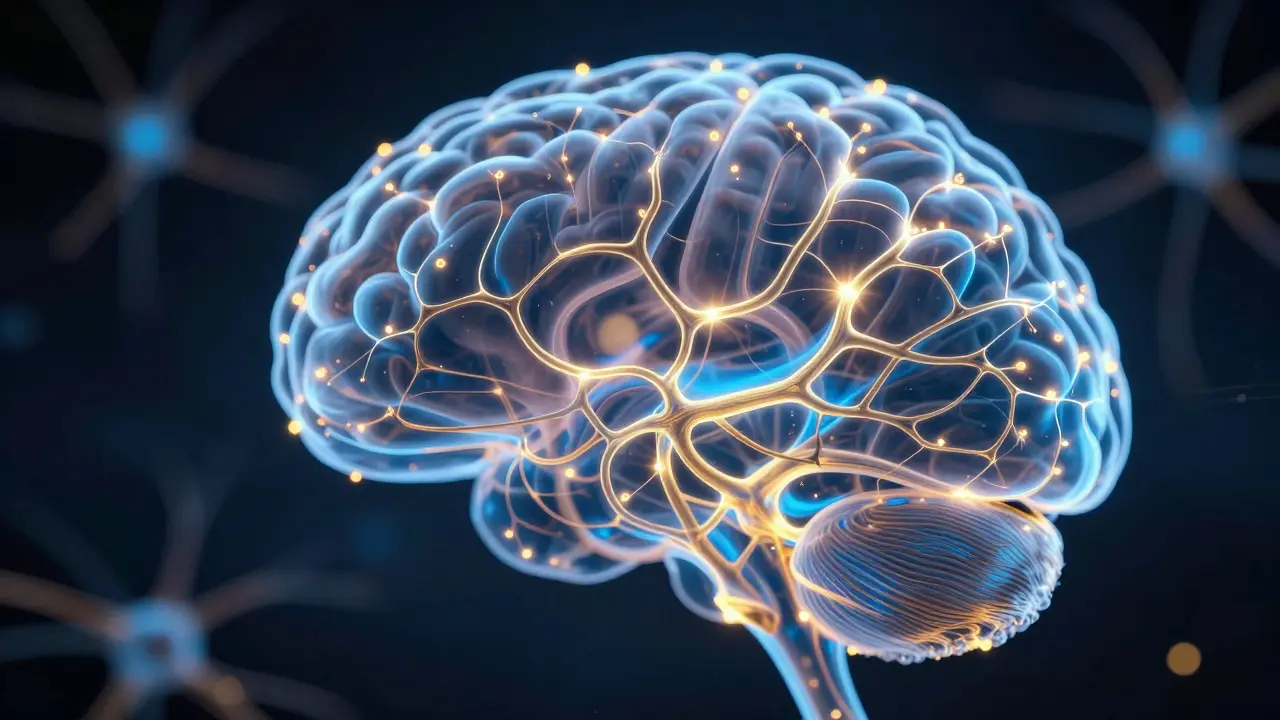
Most of us treat our brains like a hard drive that just fills up over time. We assume that forgetting where we put the keys or struggling to recall a name is just part of getting older. But your brain isn't static; it's dynamic, responsive, and capable of change at any age. The question isn't whether you can improve your cognitive training results, but how you structure the effort to make those gains stick.
If you're looking to build a course plan for yourself or your team, you need more than a list of apps. You need a structured approach that combines neuroscience with practical daily habits. This guide breaks down exactly how to design a program that actually works, moving beyond vague advice into actionable steps.
The Science Behind Brain Plasticity
Before diving into the schedule, you need to understand the engine driving the changes. Neuroplasticity is the brain's ability to reorganize itself by forming new neural connections throughout life. It’s not just about preserving what you have; it’s about building new pathways.
When you learn a new skill, like playing the piano or speaking a foreign language, your brain physically changes. Areas responsible for those tasks grow denser. The problem with most casual attempts at "brain health" is that they lack novelty. Doing the same crossword puzzle every day doesn't challenge the brain enough to trigger significant plasticity. To see real results, your course plan must prioritize novelty, which is the introduction of new stimuli that forces the brain to adapt and create new neural networks.
This means your training needs to evolve. If a task becomes easy, it stops being effective. You have to constantly raise the difficulty bar. This principle applies whether you are targeting memory, attention, or processing speed.
Core Pillars of an Effective Course Plan
A robust cognitive training program rests on three main pillars: mental stimulation, physical support, and social engagement. Ignoring any one of these creates a weak link in the chain.
- Mental Stimulation: This includes puzzles, learning new skills, and focused attention exercises. It directly challenges neural pathways.
- Physical Support: Your brain consumes about 20% of your body's energy. Without proper blood flow, oxygen, and nutrients from exercise and diet, mental training hits a ceiling.
- Social Engagement: Human interaction is complex. It requires reading cues, listening, responding, and empathy all at once. Isolation is a known risk factor for cognitive decline.
Your course plan should integrate these elements rather than treating them as separate checkboxes. For example, joining a book club combines social engagement with mental stimulation. Taking a walking meeting adds physical support to professional communication.
Designing the Weekly Schedule
Consistency beats intensity when it comes to brain health. A short, daily practice is far more effective than a marathon session once a week. Here is a sample weekly structure that balances different types of cognitive loads.
| Day | Activity Type | Specific Exercise | Duration |
|---|---|---|---|
| Monday | Memory & Focus | Learn 5 new vocabulary words in a new language | 15 minutes |
| Tuesday | Physical + Mental | Brisk walk while listening to an educational podcast | 30 minutes |
| Wednesday | Problem Solving | Solve a Sudoku or logic puzzle without distractions | 10 minutes |
| Thursday | Social Connection | Have a meaningful conversation with a friend or colleague | 20 minutes |
| Friday | Creative Expression | Doodle, write a short poem, or sketch something | 15 minutes |
| Saturday | New Skill Practice | Practice a musical instrument or learn a magic trick | 30 minutes |
| Sunday | Rest & Reflection | Meditation or mindful breathing | 10-20 minutes |
Notice that the activities vary. This variety prevents boredom and ensures different parts of the brain are engaged. Monday focuses on verbal memory, Wednesday on logical reasoning, and Friday on creative visualization. The key is to keep the brain guessing.

Integrating Nutrition and Sleep
You cannot out-train a bad diet or poor sleep. These factors are foundational to brain health, which is the state of optimal cognitive function supported by biological maintenance including nutrition, sleep, and stress management.
Omega-3 fatty acids, found in fatty fish like salmon and walnuts, are crucial for maintaining the structural integrity of brain cells. Antioxidants from berries and leafy greens help reduce inflammation, which can impair cognitive function over time. Hydration also plays a surprisingly large role; even mild dehydration can lead to noticeable drops in concentration and short-term memory.
Sleep is when the brain consolidates memories. During deep sleep, the glymphatic system clears out metabolic waste products that accumulate during the day. If you are cutting sleep short to fit in more training, you are actually undermining the benefits of that training. Aim for seven to eight hours of quality sleep each night as part of your non-negotiable routine.
Measuring Progress and Adjusting
How do you know if the course plan is working? Subjective feelings of "sharpness" are helpful but unreliable. You need objective metrics.
Start by establishing a baseline. Use simple tests like the digit span test (recalling numbers backward) or a timed word search. Record your scores at the beginning of the program. Repeat these tests every four weeks. Look for trends, not daily fluctuations.
If your scores plateau, it’s time to adjust. Increase the difficulty of the puzzles. Switch from learning Spanish to learning French. Change the route you walk. The moment an activity feels automatic, it has lost its training value. Replace it with something that makes you feel slightly uncomfortable or challenged.

Common Pitfalls to Avoid
Many people fail because they set unrealistic expectations. They expect dramatic improvements in weeks. Cognitive training is a marathon, not a sprint. Small, consistent efforts compound over months and years.
Another mistake is relying solely on digital brain games. While some apps offer valid exercises, they often lack the real-world application that makes skills transferable. Learning to navigate a new city using a map is more beneficial than playing a virtual navigation game because it involves spatial reasoning, decision-making, and environmental awareness.
Finally, don't neglect stress management. Chronic stress releases cortisol, a hormone that can damage the hippocampus, the area of the brain responsible for memory. Incorporate mindfulness or relaxation techniques into your plan to protect your progress.
Building Long-Term Habits
The goal of this course plan is not just temporary improvement but lifelong cognitive resilience. To achieve this, you must embed these practices into your identity. Instead of saying "I am trying to do brain exercises," start thinking "I am someone who values mental fitness."
This shift in mindset makes adherence easier. When you view cognitive training as essential self-care, similar to brushing your teeth, you are less likely to skip sessions when life gets busy. Start small, stay consistent, and gradually expand your repertoire of challenging activities.
Your brain is your most valuable asset. Investing in its health through a structured, varied, and sustainable course plan is one of the best decisions you can make for your future quality of life. Start today, track your progress, and enjoy the process of becoming sharper, faster, and more resilient.
How long does it take to see results from cognitive training?
Most people begin to notice subtle improvements in focus and mental clarity within 4 to 6 weeks of consistent practice. However, significant, measurable gains in memory and processing speed typically require 3 to 6 months of dedicated effort. Consistency is more important than intensity.
Are brain training apps effective?
Some brain training apps can be effective tools for specific skills like working memory or attention. However, they work best when combined with real-world activities like learning a new language or instrument. Relying solely on apps may limit the transferability of skills to daily life.
Can cognitive training prevent dementia?
While no single intervention can guarantee prevention, studies suggest that maintaining high levels of cognitive reserve through continuous learning and mental stimulation can delay the onset of symptoms associated with dementia and Alzheimer's disease. It is part of a broader strategy that includes physical health and social engagement.
What is the best age to start cognitive training?
The best age to start is now. Neuroplasticity exists throughout the entire lifespan. While starting young builds a strong foundation, adults and seniors can still form new neural connections and improve cognitive function significantly with targeted training.
How does exercise impact brain health?
Aerobic exercise increases blood flow to the brain, delivering oxygen and nutrients essential for cell health. It also stimulates the release of brain-derived neurotrophic factor (BDNF), a protein that supports the growth of new neurons and synapses, enhancing learning and memory.

Comments (15)
Jennifer Kaiser May 20 2026
The idea that we can simply 'train' our way out of cognitive decline is a bit naive, don't you think? It ignores the systemic issues that affect brain health, like pollution and chronic stress from modern living. We treat the brain like a muscle to be flexed, but it's more like an ecosystem that needs balance. If you're constantly in fight-or-flight mode, no amount of Sudoku is going to save your hippocampus.
Angelina Jefary May 21 2026
Have you noticed how all these 'brain training' apps are owned by the same tech giants who profit from your attention span shrinking? It's a closed loop. They sell you the problem and then sell you the solution. The 'novelty' they talk about is just a new algorithm designed to keep you engaged on their platform, not actually making you smarter. Wake up people.
Aimee Quenneville May 21 2026
I mean... isn't this just common sense wrapped in fancy words?? Like, go for a walk, eat some fish, sleep. Why do we need a whole course plan for basic human maintenance?? It feels so corporate trying to monetize breathing air. But hey, if buying a subscription makes you feel productive, I guess that's valid??
Cynthia Lamont May 22 2026
This article is practically useless because it lacks specific neurochemical markers. You cannot discuss neuroplasticity without mentioning BDNF levels and synaptic pruning rates. It's vague, unscientific drivel. I have a PhD in neuroscience and this reads like a blog post written by someone who watched one TED Talk. Disappointing.
Dmitriy Fedoseff May 23 2026
In my culture, we do not isolate mental health from physical or spiritual well-being. This Western approach of compartmentalizing 'mental stimulation' from 'social engagement' is flawed. In Russia, we understand that the mind is part of the whole body. You cannot train the brain in a vacuum while ignoring the soul. This schedule is too rigid and lacks the necessary holistic integration.
Jasmine Oey May 23 2026
Omg this is literally everything! I've been doing the crossword puzzles every day and I feel like such a genius now lol. But seriously, the part about novelty is so true. I started learning French last month and my brain feels different, like it's buzzing. Who knew eating walnuts could make you feel so elite?? I'm definitely adding more berries to my smoothies. Thank you for this life-changing advice!
James Winter May 24 2026
Bullshit. Real men don't need brain games. You get smart by working hard and surviving. This soft focus on 'cognitive training' is why everyone is weak now. Go outside and chop wood instead of solving Sudoku. That builds character and actual intelligence. Stop wasting time on these digital distractions.
Morgan ODonnell May 25 2026
I think this is a really nice guide. It's good to see something that encourages taking care of yourself. I try to meditate every morning and it helps me stay calm. Maybe I'll try the walking meetings idea. It sounds like a low-pressure way to get moving and thinking at the same time.
Liam Hesmondhalgh May 26 2026
Grammar police here. 'Your brain isn't static; it's dynamic.' Semicolon usage is correct, but the tone is overly simplistic. Also, 'I am someone who values mental fitness' is a terrible sentence structure. It should be 'I value mental fitness.' Why complicate simple statements with pseudo-philosophical identity shifts? Typical American self-help nonsense.
Meghan O'Connor May 27 2026
I tried this exact schedule for three weeks and saw absolutely zero improvement. In fact, I felt more tired. The author clearly hasn't done any real research into individual differences in cognitive load. Some people are just not wired for this kind of structured routine. It's lazy writing to suggest a one-size-fits-all approach works for everyone. Don't waste your time.
Patrick Tiernan May 28 2026
ugh another listicle pretending to be science. i read the first paragraph and already wanted to throw my phone out the window. 'neuroplasticity' is such a buzzword. everyone uses it now to sound smart but nobody actually knows what it means in practical terms besides 'your brain changes when you learn stuff'. duh. thanks captain obvious.
TIARA SUKMA UTAMA May 29 2026
I dont know why people make this so complicated. Just learn something new. Thats it. You dont need a table. You dont need apps. Just pick up a book or talk to someone. Its not rocket science.
Kirk Doherty May 30 2026
i usually ignore these kinds of posts but the part about sleep resonates. i cut back on naps and noticed my focus dropped. maybe its worth trying the walking podcast thing. seems easy enough.
Marissa Martin May 31 2026
I feel like society puts too much pressure on us to optimize every second of our lives. Rest is also important. The Sunday meditation suggestion is good, but I worry that turning rest into a 'task' defeats the purpose. We should just allow ourselves to be still without needing to measure the benefits.
Patrick Bass May 31 2026
The weekly schedule provided is a reasonable starting point for individuals seeking to establish consistent habits. However, it is important to note that individual baseline capabilities vary significantly. One should adjust the difficulty level based on personal comfort and progress rather than adhering strictly to the suggested durations.