
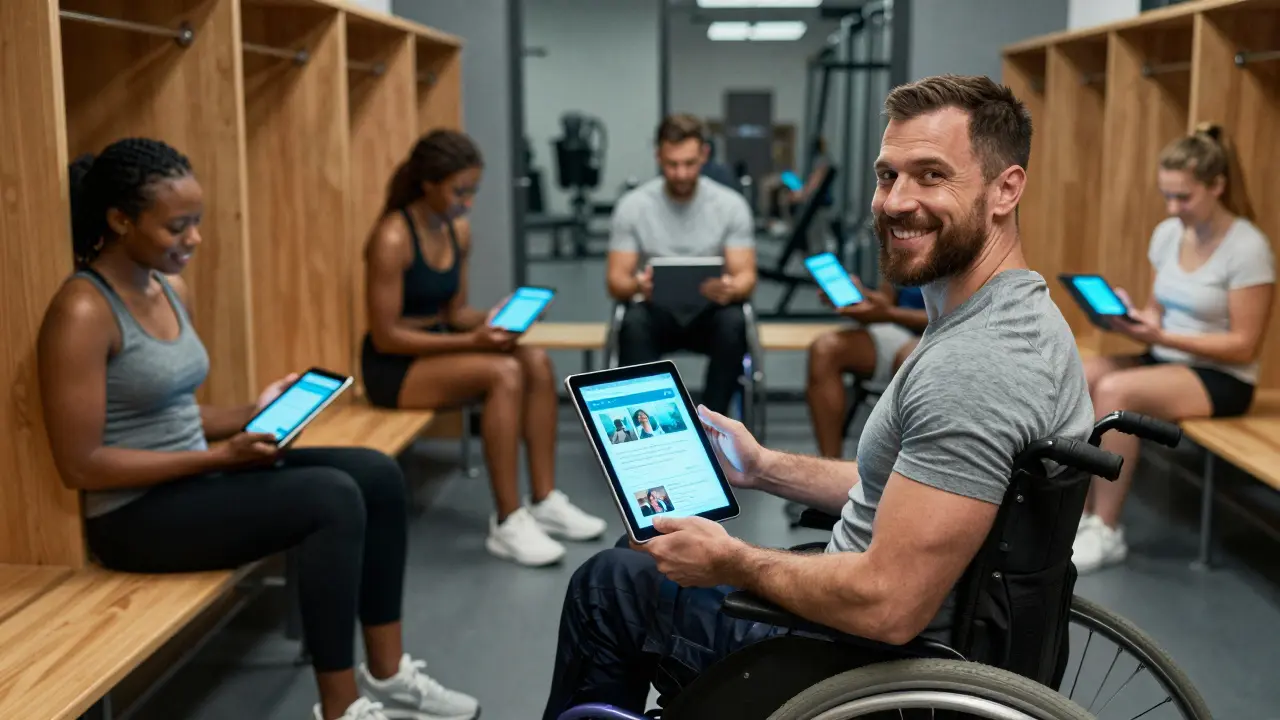
Imagine a star player missing a crucial game because they failed to understand the league's new compliance rules. Or worse, imagine an entire team losing their funding due to a preventable safety violation. These aren't just hypotheticals; they are real risks that plague sports organizations today. The solution isn't always about better physical training-it's often about better online athlete education.
For coaches, administrators, and support staff working with special populations-whether that means athletes with disabilities, older competitors, or youth teams-the traditional classroom model is often broken. Travel costs, scheduling conflicts, and varying learning speeds make in-person workshops inefficient. Digital platforms have changed the game, allowing teams to deliver consistent, compliant, and engaging education from anywhere.
The Shift from Physical to Digital Learning
The landscape of sports education has moved rapidly away from static binders and mandatory seminars. Why? Because attention spans are short, and logistics are expensive. When you look at how major leagues handle concussion protocols or anti-doping regulations, you see a clear trend: micro-learning modules delivered via mobile apps or web portals.
This shift is particularly vital for special populations. An athlete with visual impairments might struggle with printed manuals but thrive with screen-reader-compatible audio courses. An elderly competitor in masters athletics might prefer self-paced video tutorials over rushing through a crowded lecture hall. By moving online, you remove physical barriers and allow each individual to learn at their own pace.
Consider the concept of Asynchronous Learning, which allows students to access course materials and complete assignments on their own schedule rather than at specific times. In sports, where training schedules vary wildly, this flexibility is not a luxury-it's a necessity. It ensures that education doesn't interfere with performance but supports it.
Designing Content for Special Populations
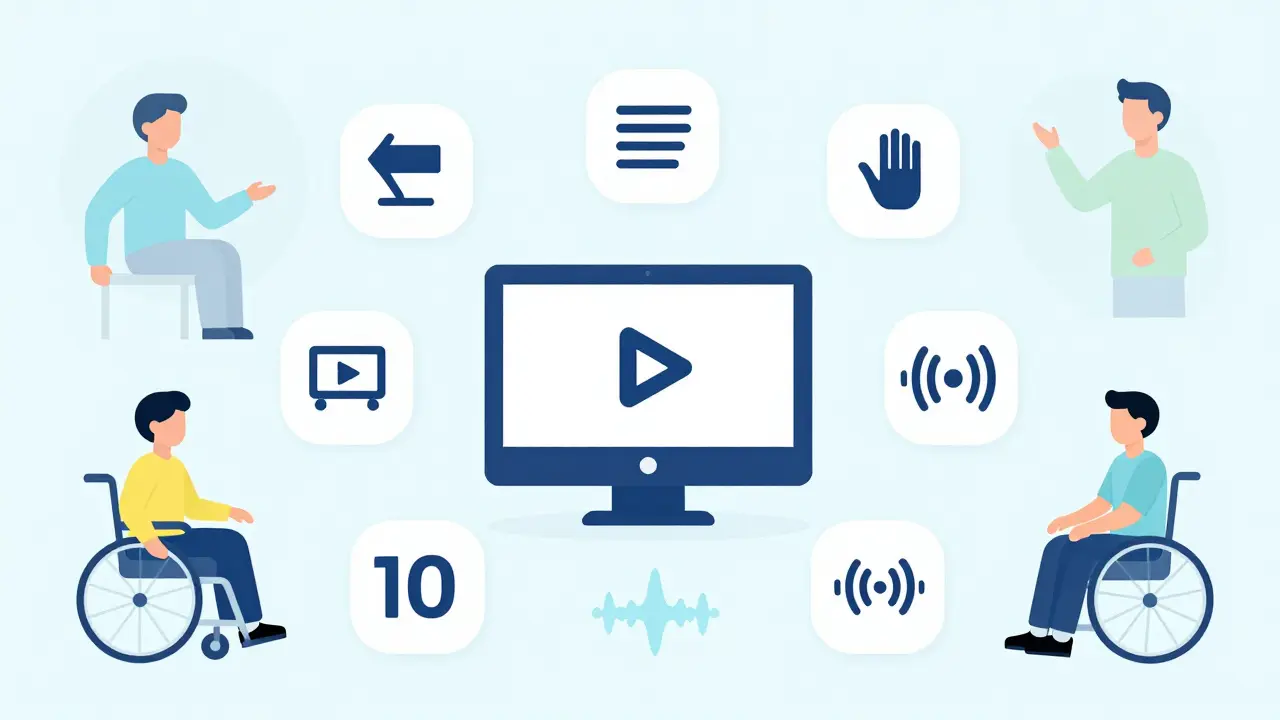
Not all athletes learn the same way, and "one size fits all" is a recipe for failure. When designing Inclusive Educational Content, which is material created to be accessible and understandable by individuals with diverse abilities, backgrounds, and learning styles, you need to focus on accessibility first.
- Visual Impairments: Ensure all videos have accurate captions and transcripts. Use high-contrast text and avoid relying solely on color to convey information (e.g., don't say "the red button" if someone can't see red).
- Hearing Impairments: Provide sign language interpreters in key videos or use clear, large-font subtitles. Avoid background music that drowns out narration.
- Cognitive Differences: Break complex topics into bite-sized chunks. Use simple language, visuals, and interactive quizzes to reinforce learning. For athletes with ADHD, shorter, more engaging modules work better than hour-long lectures.
- Language Barriers: Offer content in multiple languages or use plain English with visual aids to ensure understanding across diverse teams.
For example, a program teaching hydration strategies shouldn't just list facts. It should show a short video of an athlete checking urine color, followed by a quick quiz. This multi-sensory approach helps solidify knowledge regardless of the learner's primary strength.
Key Topics Every Online Program Should Cover
What exactly should you teach? While specific needs vary by sport, certain core areas are universal. Here are the critical components that every robust online athlete education program must include:
- Safety and Injury Prevention: Concussion recognition, proper warm-up routines, and equipment safety. This is non-negotiable for liability and health reasons.
- Mental Health Awareness: Recognizing signs of burnout, anxiety, and depression. Providing resources for help is increasingly important in modern sports culture.
- Nutrition and Hydration: Basic principles of fueling for performance. This doesn't need to be dietitian-level detail, but enough to prevent common mistakes.
- Ethics and Fair Play: Anti-doping rules, respect for officials, and handling conflict. These values build team cohesion and protect the organization's reputation.
- Digital Citizenship: How to behave on social media, protecting personal data, and avoiding cyberbullying. This is crucial for young athletes.
These topics form the backbone of a well-rounded athlete. By covering them online, you create a standardized baseline of knowledge that every team member shares.
Choosing the Right Platform
You don't need to build a custom app from scratch. Several existing platforms offer robust features for delivering educational content. The key is choosing one that aligns with your budget, technical capacity, and audience needs.
| Platform Type | Best For | Pros | Cons |
|---|---|---|---|
| Learning Management Systems (LMS) | Large organizations with many teams | High customization, detailed analytics, scalable | Steeper learning curve, higher cost |
| Video Hosting Services | Teams focused on visual instruction | Easy to produce, familiar interface for users | Limited interactivity, less tracking capability |
| Mobile Apps | Athletes who are always on their phones | High engagement, push notifications, offline access | Requires app development or subscription, smaller screen space |
| Web-Based Microlearning | Budget-conscious small teams | Low cost, easy to update, no install required | Lower retention rates without gamification |
If you're a small club, a simple web-based platform might suffice. For a national governing body, a full LMS provides the necessary oversight and reporting. Always check for accessibility features like WCAG 2.1 compliance before signing any contracts.
Engagement Strategies That Work
The biggest challenge with online education is completion rates. If athletes don't finish the course, the investment is wasted. To keep them engaged, you need to make the experience active, not passive.
Gamification is a powerful tool here. Add points for completing modules, badges for perfect quiz scores, and leaderboards for friendly competition. People love rewards, and tying education to achievement taps into the same competitive spirit that drives athletic performance.
Another effective strategy is social learning. Allow athletes to comment on lessons, share tips, or discuss scenarios in a forum. When a teammate explains a concept in their own words, it often resonates more than a formal lecture. This builds community and reinforces the idea that education is a team effort.
Finally, keep it short. Research shows that attention drops significantly after six minutes of continuous video. Break your content into 3-5 minute clips. Use clear headings, bullet points, and images to break up text. Make it easy to digest.

Measuring Success and Compliance
How do you know if your program is working? You need data. Most good platforms provide dashboards showing who has completed what, when they did it, and how they scored on assessments.
Use this data to identify gaps. If everyone struggles with the concussion module, maybe the explanation was too technical. Revise it. If completion rates drop off after week two, maybe the content became too dry. Add a case study or a video interview with a pro athlete to re-engage them.
Compliance is another critical metric. For many sports organizations, proving that athletes have received certain training is a legal requirement. Digital records provide an audit trail that paper signatures cannot match. In the event of an incident, having proof of education can protect your organization from liability.
Remember, the goal isn't just to check a box. It's to create safer, smarter, and more resilient athletes. Regularly review your metrics and adjust your content to ensure it remains relevant and effective.
Future Trends in Sports Education
The field is evolving quickly. Virtual Reality (VR) is emerging as a tool for immersive training, allowing athletes to practice decision-making in simulated environments without physical risk. Artificial Intelligence (AI) can personalize learning paths, adapting difficulty based on individual progress.
However, technology should never overshadow the human element. The best online programs still involve coaches and mentors guiding the process. Technology handles the delivery; humans handle the inspiration and nuanced feedback.
As we move further into 2026, expect to see more integration between performance analytics and educational platforms. Imagine a system that automatically suggests a nutrition module when an athlete's biometric data indicates fatigue. That level of personalization is the next frontier.
How much does it cost to set up an online athlete education program?
Costs vary widely. Simple web-based solutions can start under £100 per year for small teams. Comprehensive Learning Management Systems (LMS) may cost thousands annually depending on user count and features. Many platforms offer free trials, so test before committing. Factor in content creation costs if you're producing original videos or quizzes.
Can online education replace face-to-face coaching entirely?
No. Online education is excellent for theory, compliance, and foundational knowledge. However, practical skills, tactical execution, and emotional support require human interaction. Think of online programs as a supplement that frees up face-to-face time for higher-value activities like skill drills and team bonding.
What are the best practices for ensuring accessibility for athletes with disabilities?
Follow WCAG 2.1 guidelines. This includes providing captions for all videos, ensuring keyboard navigability, using high-contrast colors, and offering text alternatives for images. Test your content with assistive technologies like screen readers. Consult with athletes with disabilities during the design phase to identify potential barriers early.
How can I encourage athletes to actually complete the online courses?
Make it engaging and rewarding. Use gamification elements like badges and leaderboards. Keep modules short and visually appealing. Integrate the education into regular team meetings by discussing key takeaways. Show relevance by connecting lessons directly to performance improvements or injury prevention.
Is my data safe if I use a third-party education platform?
Reputable platforms comply with GDPR and other data protection laws. Check their privacy policy and security certifications. Look for encryption in transit and at rest. Avoid platforms that sell user data. For sensitive health information, consider platforms with HIPAA compliance if applicable in your region.

Comments (15)
Albert Navat May 11 2026
Look, the LMS integration is fine for corporate overhead but let's talk about the actual pedagogical framework here. You're ignoring the cognitive load theory implications of asynchronous micro-learning modules in high-stress athletic environments. The retention rates drop because there is no immediate feedback loop for skill acquisition.
Pamela Tanner May 12 2026
I completely agree that accessibility needs to be front and center when we design these programs. It is not just a nice-to-have feature; it is an ethical imperative for inclusive mentorship. When we ensure that athletes with visual impairments have screen-reader-compatible audio courses, we are validating their place in the sport equally.
We must also consider how language barriers affect comprehension. Offering content in multiple languages or using plain English with visual aids ensures that no athlete is left behind due to linguistic differences. This approach fosters a more cohesive team environment where everyone feels respected and understood. Let us commit to making our educational materials truly accessible for all participants.
Tia Muzdalifah May 12 2026
hey guys i think this is pretty cool stuff but like honestly do we really need another app? my phone is already full of useless notifications lol
michael T May 14 2026
Oh, I see you've gathered here on this dark day. The digital leash tightens around the necks of the innocent, does it not? You speak of 'compliance' as if it were a virtue, but it is merely the shackle of the conformist mind. The athlete who questions the rules is the one who breaks them, and the system fears nothing more than the unbroken spirit. Your online modules are but whispers in a hurricane of apathy.
Rae Blackburn May 16 2026
theyre watching us through the cameras in the phones anyway so why bother with the quizzes its all part of the big control grid to keep us docile and obedient while they harvest our biometric data for the elites
King Medoo May 17 2026
It is fundamentally wrong to reduce human development to mere data points and compliance checkboxes 📉. We must remember the sanctity of the individual soul in sports ⚽️. When we prioritize efficiency over empathy, we lose the very essence of what makes athletics noble 🏆. The moral decay begins when we treat athletes as units rather than persons 👤. We should focus on character building through direct interaction instead of cold screens 💻. True education comes from the heart, not the algorithm ❤️.
Robert Byrne May 18 2026
You are absolutely delusional if you think a video tutorial replaces the grit of real coaching! I have seen teams crumble because they relied on these soft, digital crutches instead of drilling fundamentals until their lungs burned! It is weak, it is lazy, and it is insulting to every athlete who has ever bled on the field! Stop coddling them with badges and leaderboards and make them earn their sweat!
Zoe Hill May 20 2026
omg robert please chill out a bit 😅 i think both sides have valid points tho! like yeah online learning is great for theory but you cant teach someone how to tackle via zoom right? but also imagine if we could use vr to practice decision making without getting hurt that sounds kinda awesome actually! maybe we can find a happy medium where tech helps but humans still lead the way 🙌
LeVar Trotter May 21 2026
While Mr. Byrne raises a passionate point regarding physical rigor, we must acknowledge the scalability benefits of digital platforms for foundational knowledge dissemination. The synergy between asynchronous learning modules and synchronous tactical drills creates a holistic training ecosystem. By offloading theoretical compliance to the cloud, coaches can maximize face-to-face engagement for high-value skill acquisition. This bifurcation of labor enhances overall team efficiency and allows for personalized attention during critical performance windows.
Aafreen Khan May 22 2026
haha typical western obsession with tracking everything 🙄 in india we just learn by doing and watching seniors no need for fancy apps or badges lol but hey if it works for your culture then go ahead and measure your pee color for science i guess 🧐
Christina Kooiman May 24 2026
The grammatical structure of this article is acceptable, yet the tone is excessively dry and lacks the dramatic flair necessary to engage the modern reader. One cannot simply list bullet points and expect the audience to feel inspired or motivated to change their behavior. The narrative arc is flat, and the emotional resonance is entirely absent, which is a tragedy for such an important topic. We must infuse these educational materials with passion and urgency, lest they fall into the abyss of ignored notifications. The stakes are life and death, literally, so write with fire in your belly and precision in your syntax!
Pamela Watson May 25 2026
:) well i know a lot about this since i manage three teams and trust me none of them read the emails so dont matter what platform u use they wont do it unless u force them at gunpoint basically lol :)
Stephanie Serblowski May 26 2026
Oh, look at Pamela Watson, acting like she has the secret sauce to human motivation because she once forced a kid to watch a video. How quaint. The reality is that gamification isn't just 'fun'; it's behavioral psychology leveraged for compliance. If you want engagement, you need to hack the dopamine reward system, not threaten people with imaginary guns. But sure, keep pretending that fear is the only tool in your managerial toolbox, darling. 🙄
Tyler Durden May 28 2026
Wait... hold on!!! Did someone say VR??? That changes EVERYTHING!!! Imagine practicing a penalty kick in zero gravity!!! Or simulating a crowd noise level of 120 decibels to test mental fortitude!!! This is not just education; this is EVOLUTION!!! We must embrace the future before it embraces us!!! Are you ready to level up???!!!
Renea Maxima May 30 2026
Is the digital mirror reflecting truth or merely our own desire for control? We build these cages of code and call them freedom, believing that if we can quantify the athlete, we can perfect them. But perfection is a myth, and the pursuit of it is a hollow echo in the void. Perhaps the best lesson is not in the module, but in the silence between the clicks. 🤔