

Imagine hiring a team of lawyers, developers, or designers who work together without a boss, get paid automatically in crypto, and publish every decision on a public ledger. That’s not science fiction - it’s what Service DAOs are doing right now. These aren’t companies in the traditional sense. No HR departments. No office leases. No middle managers. Just skilled professionals from around the world collaborating through smart contracts, voting on proposals, and splitting revenue transparently. And they’re growing fast.
What Exactly Is a Service DAO?
A Service DAO is a decentralized organization built to deliver professional services - think legal advice, smart contract audits, marketing campaigns, or design work - without a central authority. Members join by holding governance tokens, vote on which projects to take on, and get paid when work is completed and verified on-chain. The whole process runs on blockchain technology, mostly Ethereum or its faster, cheaper Layer 2 networks like Polygon and Optimism. Unlike Investment DAOs that pool money to buy crypto assets, or Community DAOs that organize events and discussions, Service DAOs actually make money by doing work. They act like freelance agencies, but without the platform fees. Traditional firms like McKinsey or Deloitte take 20-30% off the top as overhead. Service DAOs keep that money in the hands of the people doing the work. On average, 70-85% of client payments go directly to contributors. The rest goes into a shared treasury for operations, marketing, or future projects.How Do Service DAOs Actually Work?
There are three core parts to every Service DAO: governance, treasury, and delivery.- Governance happens through voting. Members propose projects, set rates, or change rules using tools like Snapshot.org for off-chain polls or Aragon for on-chain votes. Voting power usually matches how many governance tokens you hold - one token, one vote. Some DAOs, like Raid Guild, use quadratic voting to prevent wealthy members from dominating decisions.
- Treasury is the DAO’s bank account. It holds client payments in ETH, USDC, or other tokens. Most use multi-signature wallets (like Gnosis Safe) that require 3-5 members to approve withdrawals. This prevents one person from stealing funds. Larger DAOs might have 15+ signers for extra security.
- Delivery is where the work gets done. Contributors use tools like Notion, Linear, or GitHub to manage tasks. But unlike traditional teams, every milestone is tied to a smart contract. Once a client confirms delivery, payment is automatically released. No invoices. No delays. No chasing.
Why Are Service DAOs Growing So Fast?
In 2022, Service DAOs made up just 18% of all DAOs. By Q3 2023, that number jumped to 32%. Why? Because they solve real problems. Traditional consulting firms are slow. Clients wait 30-60 days for payment. Service DAOs pay in 7 days - sometimes even 48 hours. Clients get full transparency: every dollar spent, every decision made, is public. There’s no guessing who’s doing the work or whether you’re being overcharged. For freelancers, it’s even better. You’re not stuck bidding on Upwork gigs for $15/hour. In a Service DAO, you’re part of a collective that can charge $150/hour or more. You get access to enterprise clients you’d never reach alone. And you keep most of the revenue. Raid Guild, one of the biggest Service DAOs, has delivered over $200 million in services since 2020. Their contributors are top-tier developers and auditors from over 40 countries. They don’t need a headquarters. They don’t need to hire recruiters. They just need a good reputation system.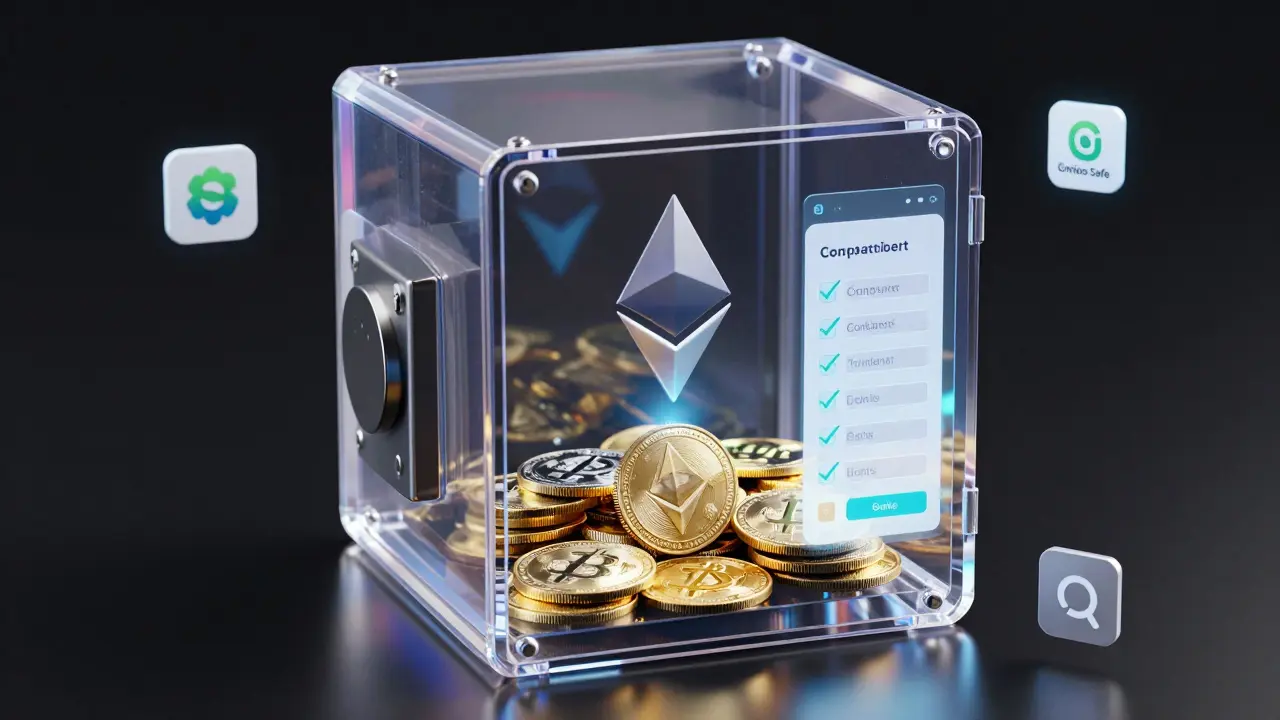
Where Do Service DAOs Shine - And Where Do They Struggle?
Service DAOs dominate in areas where trust and transparency matter most: blockchain development, DeFi audits, tokenomics design, and NFT strategy. In fact, 92% of clients in these fields report higher satisfaction than with traditional firms. But they struggle outside crypto. Need a certified accountant? A licensed architect? A physical product tested in a lab? Service DAOs can’t do that. They’re digital-first. Their strength is in code, contracts, and consensus - not paperwork or in-person inspections. Also, getting clients isn’t easy. Traditional firms have websites, sales teams, and decades of brand trust. Service DAOs rely on word-of-mouth, Twitter threads, and GitHub portfolios. Only 12% of Fortune 500 companies have hired a Service DAO - mostly for blockchain-specific tasks. And there’s a learning curve. New contributors often spend 40-60 hours just learning how to vote, submit proposals, and use DAO tools before they land their first paid gig. Documentation varies wildly. Raid Guild’s guide is 147 pages long. Others? Barely a wiki.Legal Risks and Regulatory Gray Zones
This is the biggest hurdle. Most Service DAOs have no legal status. They’re just code and community. If a client sues because a smart contract had a bug, who’s liable? The contributor who wrote it? The DAO treasury? Nobody knows for sure. Professor Primavera De Filippi from Harvard warned the EU Parliament in 2023 that this creates serious liability risks. Contributors could be personally on the hook for mistakes. That’s why many Service DAOs avoid working with clients in strict jurisdictions like the EU or Australia unless they’re structured under a legal entity - like a Wyoming DAO LLC or a German GmbH. The SEC hasn’t given clear guidance either. In 2023, they started treating some DAOs as unregistered securities offerings. That’s a red flag for anyone thinking of investing in or joining a DAO without legal advice.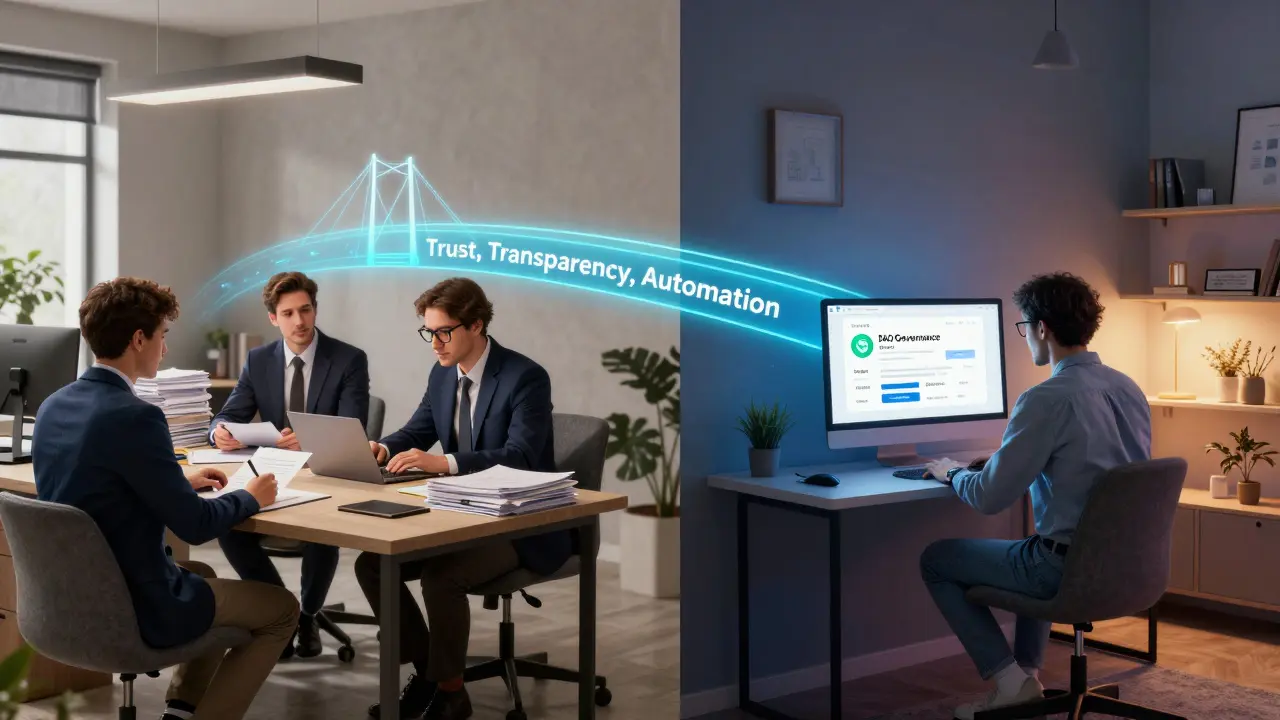
Real Success Stories and Cautionary Tales
LexDAO’s success is well-documented. They delivered legal services to 47 blockchain projects with 94% client satisfaction. Their model proved that decentralized teams can handle complex, high-stakes work. But not all stories end well. TaskForce, a Service DAO that offered marketing and design services, collapsed in January 2023 after $387,000 in payments were disputed. The DAO’s governance system couldn’t resolve the conflict. Votes stalled. Contributors left. The treasury froze. It was a classic case of too much democracy and not enough structure. On Reddit, users report mixed experiences. One contributor said they got paid in ETH within 48 hours after delivering a smart contract audit - a dream for any freelancer. Another complained about spending weeks waiting for a simple proposal to pass because of endless debates and low voter turnout.What’s Next for Service DAOs?
The next wave is about scaling and integration. Raid Guild just launched smart contract SLAs (service level agreements) that auto-penalize late delivery or auto-pay for early completion. That’s cutting payment disputes by 41%. The DAO Alliance is building cross-DAO networks so contributors can move their reputation from one DAO to another. Imagine having a “DAO resume” that follows you everywhere - like LinkedIn, but on-chain. And some Service DAOs are branching out. In 2023, 43% of new DAOs started targeting non-blockchain industries: real estate documentation, freelance writing, even mental health coaching. They’re using the same model - transparent, automated, community-run - but applying it to traditional services.Should You Join or Hire a Service DAO?
If you’re a freelancer in tech, design, or law - and you’re tired of middlemen taking half your pay - a Service DAO could be your next move. Start by joining Raid Guild, LexDAO, or IndieDAO. Contribute to a small project. Learn the tools. Build your on-chain reputation. If you’re a business owner needing blockchain work done - smart contract audits, token launches, DeFi integrations - Service DAOs are often faster, cheaper, and more transparent than traditional firms. Just make sure you’re clear on the legal risks. Use a DAO that’s structured under a legal entity if you’re dealing with sensitive contracts. Service DAOs aren’t replacing consulting firms overnight. But they’re proving something important: work doesn’t need a boss to be done well. It just needs trust, transparency, and the right tools.What is the main difference between a Service DAO and a traditional consulting firm?
A Service DAO has no central leadership or hierarchy. Decisions are made by community vote using blockchain-based governance. Payments are automated through smart contracts, and revenue is distributed directly to contributors - typically keeping 70-85% of client payments in their hands. Traditional firms have managers, HR departments, and take 20-30% in overhead fees before paying employees.
Can Service DAOs legally operate in all countries?
No. Many Service DAOs avoid jurisdictions with unclear or hostile crypto regulations. In the U.S., some register as Wyoming DAO LLCs. In Europe, many use German GmbH structures. Countries like China, Russia, and parts of the EU have restrictions that make it risky or illegal to operate without a legal entity. Around 68% of Service DAOs limit their client base to regions with clear blockchain laws.
How do Service DAOs prevent fraud or poor work quality?
They use on-chain reputation systems like SourceCred and Guild.xyz, which track contributions, client feedback, and project outcomes. Contributors earn reputation points over time, which increase their voting power and access to better projects. Many also use decentralized arbitration platforms like Kleros.io to resolve disputes over work quality or payment.
What skills do you need to join a Service DAO?
You need strong domain expertise - like smart contract development, legal knowledge, or marketing strategy - plus basic blockchain literacy. You must know how to manage an Ethereum wallet, interact with DAO tools like Snapshot or Aragon, and understand how voting and token economics work. Most DAOs require new members to complete 40-60 hours of training before contributing to paid projects.
Are Service DAOs profitable for contributors?
Yes - if you’re skilled and consistent. Top contributors in DAOs like Raid Guild earn between $100,000 and $250,000 annually, often working part-time. Since there’s no boss or corporate overhead, you keep a much larger share of what you earn. But income isn’t guaranteed. You need to actively participate in governance, build your reputation, and deliver high-quality work consistently.

Comments (12)
Yashwanth Gouravajjula January 18 2026
Service DAOs are the future. No middlemen. No bureaucracy. Just skilled people getting paid fairly. Simple.
Janiss McCamish January 19 2026
I joined Raid Guild last year. Paid in 48 hours for my first audit. No invoices. No waiting. I’ve never worked faster or gotten paid more. Seriously, try it.
Kendall Storey January 19 2026
DAOs are the ultimate flex for freelancers. You’re not just a gig worker-you’re a co-owner. The treasury, the voting, the reputation points-it’s like Web3 meets startup culture. And the SLAs? Genius. Auto-penalties for late work? That’s next-level accountability.
Kevin Hagerty January 20 2026
So you're telling me a bunch of crypto bros with no licenses can do legal work better than actual lawyers? Yeah right. Next they'll be doing brain surgery with a Discord vote.
Akhil Bellam January 21 2026
Most DAOs are just poorly organized collectives with delusions of grandeur. LexDAO? Cute. But without legal standing, you’re one lawsuit away from becoming a cautionary meme. Real professionals need structure-not a blockchain voting system.
Megan Blakeman January 23 2026
I love how this feels like a new kind of community… like we’re building something real together… 🌱✨ It’s not just work-it’s a movement. And the transparency? So beautiful. I cried reading about the on-chain payments…
Meredith Howard January 23 2026
I’ve worked with both traditional firms and DAOs and the difference in autonomy is staggering. I used to spend half my time chasing payments and explaining scope. Now I deliver, the contract pays me, and I move on. No drama. No ego. Just work. I wish more professionals would try it.
michael T January 23 2026
Everyone’s so hyped about DAOs but nobody talks about how 80% of contributors are burnt out from constant voting and governance fatigue. It’s not freedom-it’s unpaid management labor. And don’t get me started on the 3am Discord debates about whether to use USDC or DAI
Tyler Durden January 24 2026
Look, I used to think DAOs were just crypto nonsense. Then I did a project with IndieDAO. Got paid in ETH before I even finished the deliverable. The client saw every line of code, every vote, every payout. No lies. No hidden fees. I didn’t just do work-I helped build trust. That’s rare. And yeah, the learning curve sucks. But once you get past the first 50 hours? You’ll never go back.
Also, the reputation systems? They’re the real innovation. Your work speaks for you. No resume. No cover letter. Just a public ledger of what you’ve done. That’s powerful.
And before you say ‘but what about legal risk?’-yeah, it’s a problem. But so was Uber in 2010. Regulation follows adoption. The tools are getting better. Kleros, SourceCred, Guild.xyz-they’re solving this as we speak.
Don’t dismiss it because it’s new. Dismiss it because it doesn’t work. And right now? It’s working better than most firms.
Join a DAO. Do a small gig. See for yourself. You’ll be surprised.
Amber Swartz January 24 2026
I tried joining a Service DAO and it was like being in a cult where everyone talks in smart contract jargon and no one ever turns off their notifications. I spent 3 weeks trying to vote on whether to accept a $500 gig. The DAO collapsed before I even got paid. I’m done. I miss my old boss. At least he gave me a raise and a birthday cake.
Richard H January 26 2026
USA built the modern economy. We don’t need some anonymous blockchain group from India or Estonia telling us how to do business. If you want to work, get a real job with a W2. DAOs are just a tax loophole for crypto bros.
Kendall Storey January 27 2026
Actually, that’s the point. The W2 system is broken. DAOs are the upgrade. You’re not fighting for a raise-you’re earning equity in your output. And if you’re mad about foreign contributors? Then you’re mad about globalization. DAOs just made it transparent.