
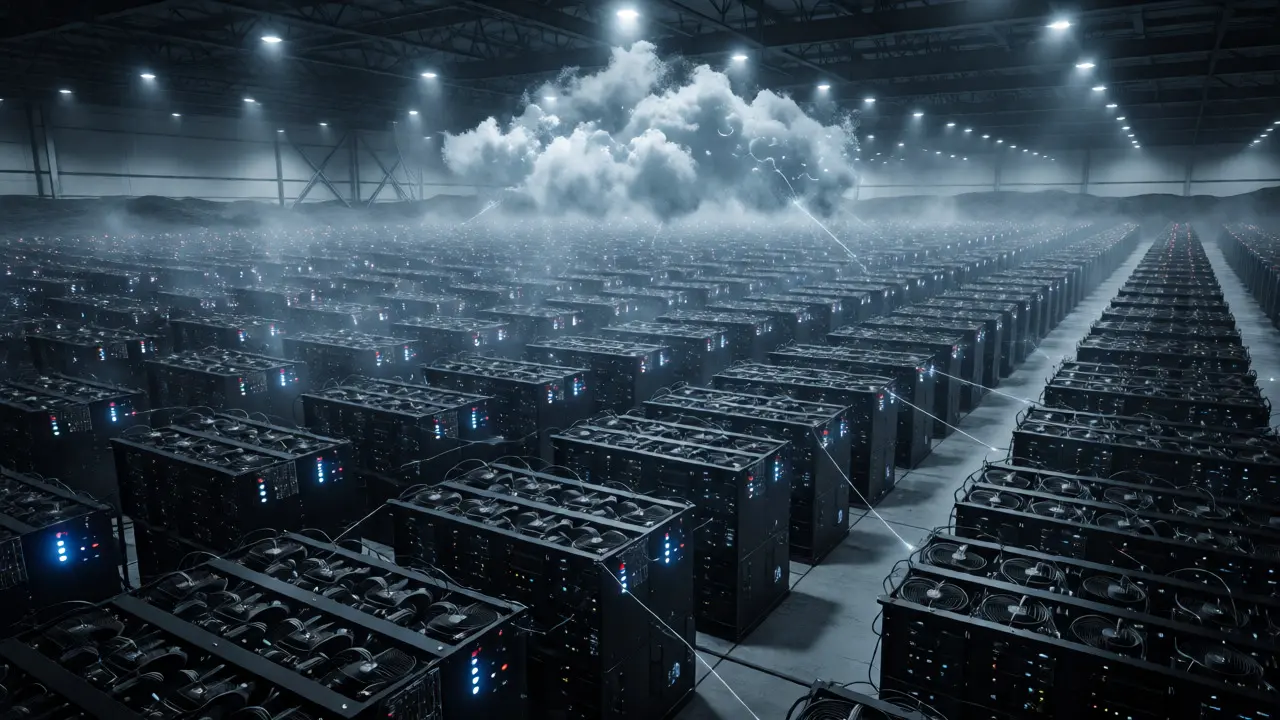
You want to mine Bitcoin. You’ve seen the charts, you understand the halving cycles, and you’re tired of watching others make money while you sit on the sidelines. But when you look at the hardware required-those roaring ASIC miners like the Bitmain Antminer S19 Pro-you see a wall of noise, heat, and electricity bills that could bankrupt your savings account before you mine your first block. The solution many people turn to is cloud mining. It promises the profits of mining without the headache of owning the gear. But does it actually work, or is it just another way for platforms to keep your cash?
Key Takeaways
- Cloud mining lets you rent computational power (hashrate) from remote data centers instead of buying physical machines.
- It eliminates upfront hardware costs ($2,000-$15,000+) and electricity management but introduces service fees (10-25%).
- Profitability is highly sensitive to market conditions; contracts often become unprofitable during bear markets or after halvings.
- Scam risk is significant; only about 37% of services pass rigorous transparency audits according to industry standards.
- Best suited for beginners with limited capital or those in regions with high electricity costs (> $0.15/kWh).
What Exactly Are You Buying When You "Mine" Clouds?
Let’s strip away the marketing jargon. When you sign up for a cloud mining contract, you aren’t buying a computer. You are renting hash power, which is simply the speed at which a machine can solve complex mathematical puzzles required to verify transactions on a blockchain. This metric is measured in hashes per second. To give you a sense of scale, modern contracts might offer you 10 terahashes per second (TH/s). That sounds impressive, but remember that the entire Bitcoin network operates at over 600 exahashes per second (EH/s). Your tiny slice of that pie is what determines your share of the rewards.
The fundamental trade-off here is convenience versus control. In traditional mining, you buy an Application-Specific Integrated Circuit (ASIC). You plug it in, point it at a pool, and pay your electric bill directly. In cloud mining, a provider buys thousands of these ASICs, places them in massive warehouses in places like Kazakhstan or Texas where electricity is cheap, and leases slices of their computing power to you. You pay them a fee, they handle the noise and the heat, and they send you the mined coins minus their cut.
The Math: Why Most Contracts Lose Money
Here is the uncomfortable truth: most retail cloud mining contracts are designed to be barely profitable, if at all, under average market conditions. Dr. Alex de Vries, founder of Digiconomist, noted in his research that hidden fees and unfavorable terms make profitability elusive for roughly 85% of retail customers. Why? Because the economics are tight.
Consider a typical scenario based on recent market data. If you buy a contract for 100 TH/s, you might expect to generate around $0.85 per day in net revenue after maintenance fees, assuming Bitcoin stays near $42,000. At that rate, it takes 117 days just to break even on a $100 investment. Now, factor in volatility. If Bitcoin drops to $16,000-as it did during the 2022-2023 bear market-that same contract might yield only pennies per day. One Reddit user reported earning just $42 over seven months on a $320 investment because the price collapse wiped out the margins.
| Feature | Cloud Mining | Traditional Mining |
|---|---|---|
| Upfront Cost | Low ($100-$500 entry) | High ($2,000-$15,000+ per ASIC) |
| Maintenance | None (Provider handles it) | High (Cooling, repairs, noise) |
| Electricity | Included in fees (often marked up) | Paid directly by user |
| Fees | 10-25% of revenue + maintenance | Pool fees only (~1-2%) |
| Risk Profile | Counterparty risk (provider scams/failures) | Hardware failure, local power outages |
| Control | Low (Fixed contracts) | High (Choose hardware, location, strategy) |
Who Actually Benefits From Cloud Mining?
If the math looks grim, why does this industry exist? It thrives because it solves specific problems for specific types of people. First, it’s great for beginners who want exposure to mining economics without risking five figures on hardware that might become obsolete in two years. Second, it works well for people living in areas with expensive electricity. If your local rate is above $0.15 per kWh, you are likely losing money mining at home. A cloud provider in a region with subsidized energy rates can operate more efficiently than you can.
There is also the psychological aspect. Owning a rig means dealing with constant fan noise, heat generation, and the anxiety of hardware failures. For many, paying a premium to avoid these hassles is worth the reduced profit margin. Nic Carter of Castle Island Ventures argues that reputable services provide legitimate exposure for non-technical investors, especially when combined with hedging strategies. However, this only holds true if you choose a transparent provider.

The Scam Problem and How to Spot It
The history of cloud mining is littered with bodies. The collapse of companies like HashOcean, which settled with the SEC for $2.4 million, shows that regulators view some contracts as unregistered securities. More recently, issues with withdrawal delays and unexpected contract modifications plague the industry. According to Trustpilot reviews, nearly 30% of negative feedback involves unexpected changes to terms, and 41% cite withdrawal delays.
How do you protect yourself? Look for providers with verifiable proof of operations. Does the company publish real-time hashrate monitoring dashboards? Do they have a clear breakdown of fees? Reputable players like BitFuFu or NiceHash have established track records, but even they face criticism. Only 37% of surveyed cloud mining services passed rigorous transparency audits. If a site promises fixed daily returns regardless of Bitcoin’s price, run. That is usually a Ponzi structure, not mining.
Regulatory Landscape and Future Trends
The regulatory environment is tightening. In the USA, the SEC has clarified that cloud mining services handling customer cryptocurrency may need to register as money services businesses. This compliance burden is forcing smaller, fly-by-night operators out of the market. Meanwhile, countries like Kazakhstan are actively promoting mining infrastructure with tax incentives, attracting large-scale operations that feed into cloud platforms.
We are also seeing innovation in how hash power is sold. Genesis Mining, for example, launched "Hash Power Tokens," allowing fractional ownership of physical rigs. This hybrid model attempts to bridge the gap between the liquidity of tokens and the tangible assets of hardware. J.P. Morgan predicts cloud mining will capture 15-20% of the market share by 2027, driven by retail participation. However, the Cambridge Centre for Alternative Finance warns that only 22% of current operations have sustainable economics beyond 2026 without changing their business models.

Step-by-Step: Getting Started Safely
If you decide to try cloud mining, treat it like any other high-risk investment. Here is a practical checklist to minimize your downside:
- Calculate Break-Even Points: Don’t trust the homepage calculator. Use external tools to model profitability at different Bitcoin prices ($20k, $40k, $60k). Assume the worst-case scenario.
- Check Contract Length: Shorter contracts (6-12 months) are safer during volatile periods. Longer contracts lock you in, potentially leading to losses if difficulty spikes.
- Verify Provider Transparency: Look for public audits, real-time dashboard access, and clear fee structures. Avoid sites that don’t disclose who runs the data center.
- Start Small: Invest an amount you can afford to lose entirely. Many users start with $100-$500 to test the platform’s reliability before scaling up.
- Understand Tax Implications: In many jurisdictions, mined crypto is taxed as income upon receipt, plus capital gains when you sell. Keep detailed records of every payout.
Final Verdict: Is It Worth Your Time?
Cloud mining is not a get-rich-quick scheme. It is a tool for accessing mining yields without the operational overhead. For the casual investor in Edinburgh or London paying high residential electricity rates, it offers a reasonable entry point. But for serious miners seeking maximum ROI, direct hardware ownership still wins during bull markets. The key is realism. If you enter expecting passive income similar to a savings account, you will be disappointed. If you enter understanding that you are renting speculative exposure to network security, you might find value in the convenience.
Is cloud mining profitable in 2026?
Profitability depends heavily on Bitcoin's price and network difficulty. As of late 2025/early 2026, many contracts struggle to break even unless Bitcoin remains above $40,000. Post-halving dynamics in April 2024 significantly increased difficulty, making older contracts less viable. Always check current calculators before signing up.
What happens if the cloud mining provider goes bankrupt?
You typically lose your remaining contract balance. Unlike bank deposits, there is rarely insurance. Some providers offer early termination options, but these often come with penalties. Choosing established companies with audited financials reduces this risk.
Do I need to pay taxes on cloud mining earnings?
Yes, in most countries including the UK and US. Earnings are generally treated as miscellaneous income at the time of receipt, valued at the fair market price of the cryptocurrency then. Capital gains tax applies when you eventually sell or spend the coins.
Can I withdraw my earnings anytime?
Most reputable platforms allow withdrawals once you reach a minimum threshold (e.g., 0.001 BTC). However, some contracts have vesting periods or require you to wait until the contract ends. Check the terms carefully; "instant withdrawal" claims are often misleading.
Is cloud mining better than buying Bitcoin directly?
For pure speculation, buying Bitcoin directly is cheaper and simpler. Cloud mining adds value only if you believe mining rewards will outperform simple holding due to compounding effects or if you want to support network security without managing hardware. Generally, direct purchase offers higher expected returns with lower complexity.
