

Imagine sitting in your bedroom, laptop open, taking a psychology class that counts for both your high school diploma and your future university degree. You aren’t just checking a box; you’re building a head start. This is the reality of dual credit online programs. For students who feel stuck in traditional classroom settings, or those juggling work, family, or health challenges, these digital pathways offer a lifeline. They bridge the gap between secondary education and higher learning without the usual barriers.
The landscape of education has shifted dramatically since 2025. What was once a niche option for honor students is now a mainstream solution for diverse learners. But not all programs are created equal. Understanding the difference between concurrent enrollment and dual credit, and how to navigate them online, is crucial for making the most of this opportunity.
Understanding the Core Concepts
Before diving into the logistics, let’s clear up the terminology. It’s easy to get confused because schools use different labels for similar concepts. At its heart, we are talking about earning college credit while still in high school.
Dual Credit is a program where high school students take college-level courses and earn credit that applies to both their high school diploma and a postsecondary institution. Think of it as killing two birds with one stone. You finish high school requirements and start your college transcript at the same time.
Concurrent Enrollment is a specific type of dual credit where the student is enrolled simultaneously in high school and college courses, often taught by a qualified high school teacher approved by the college. In many states, these terms are used interchangeably, but technically, concurrent enrollment emphasizes the simultaneous nature of the registration.
Why does this distinction matter? Because funding models differ. Some state legislatures pay for dual credit through public universities, while others rely on community college partnerships. Knowing which model your state uses can save you thousands of dollars in tuition fees later.
Who Benefits Most? Special Populations and Accessibility
While straight-A students have long been the face of dual enrollment, the real revolution is happening among "special populations." These are students who face unique barriers to traditional education. Online formats remove physical and social hurdles, creating space for success.
- Students with Disabilities: For students with mobility issues, anxiety disorders, or chronic illnesses, the physical act of going to school can be exhausting or impossible. Online dual credit allows them to learn at their own pace, use assistive technologies like screen readers more easily, and avoid the sensory overload of crowded campuses.
- Working Teens and Young Parents: Many students need to support their families. Rigid class schedules clash with shift work or childcare duties. Asynchronous online courses-where you log in whenever you have time-offer the flexibility they desperately need.
- Rural Learners: If you live miles from the nearest community college, transportation is a major barrier. Online programs eliminate the commute, giving rural students access to the same curriculum as their urban peers.
- Gifted and Talented Students: Sometimes, the standard high school pace is too slow. Online college courses provide the academic rigor and challenge these students crave, preventing boredom and disengagement.
For these groups, an online dual credit program isn’t just a convenience; it’s an equity issue. It levels the playing field by removing structural obstacles.
How to Find and Choose the Right Program
Finding a legitimate program requires some detective work. Not every online course labeled "college prep" actually grants transferable credit. Here is how to vet your options.
- Check Accreditation: The college offering the course must be regionally accredited. This ensures that the credits will transfer to other universities later. If the school is only nationally accredited, your credits might not be accepted elsewhere.
- Verify State Approval: Look for programs approved by your state’s Department of Education. Many states have lists of approved dual credit providers on their official websites.
- Talk to Your Counselor: Your high school counselor knows which local colleges have agreements with your district. They can tell you if there are any hidden costs or prerequisites.
- Review Transfer Policies: Even if a course is dual credit, the university you plan to attend later might not accept it. Check the articulation agreements (transfer guides) between the dual credit provider and your target college.
Be wary of private companies selling "easy" college credits. Legitimate dual credit programs require real work, real assignments, and real exams. If it sounds too good to be true, it probably is.

Financial Implications: Saving Money vs. Hidden Costs
One of the biggest draws of dual credit is cost savings. Traditional college tuition in the UK and US has skyrocketed. By taking classes early, you reduce the number of semesters you need to pay for later.
| Expense Category | Traditional College (Per Credit Hour) | Dual Credit Online (Per Credit Hour) |
|---|---|---|
| Tuition | $300 - $1,500+ | $0 - $150 (often subsidized) |
| Textbooks/Materials | $100 - $300 | $0 - $50 (often digital/open source) |
| Transportation/Housing | $500+ (if commuting/living off-campus) | $0 (learn from home) |
| Technology Fees | $50 - $100 | $0 - $20 |
However, don’t assume it’s always free. Some programs charge a fee per course. Others require you to buy specific software. Always ask about:
- Application fees for the dual credit program.
- Costs for proctored exams (some online courses require in-person final exams).
- Reimbursement processes if you fail the course (do you still pay?).
For low-income families, look for scholarships specifically designed for dual enrollment participants. Organizations like the Bill & Melinda Gates Foundation and various state grants often cover these costs entirely.
Academic Rigor and Student Readiness
Online dual credit is not easier than regular high school classes. In fact, it’s often harder. College professors expect adult-level writing, critical thinking, and time management. High school teachers hold your hand; college instructors expect you to read the syllabus and show up prepared.
Are you ready? Ask yourself these questions:
- Can I sit and focus for 2-3 hours without distractions?
- Do I know how to cite sources properly (APA, MLA)?
- Am I comfortable emailing professors for help?
- Can I meet deadlines without a teacher reminding me daily?
If you answered no to any of these, don’t panic. You can build these skills. Start with one course. Take a general education class like Introduction to Sociology or English Composition rather than a heavy STEM lab course. Use the first semester as a trial run to see if the online format works for you.
Navigating Technical and Logistical Challenges
Even the best-laid plans can hit snags. Technology fails, internet connections drop, and life happens. Here is how to stay ahead.
Internet Access: Reliable broadband is non-negotiable. If you live in a dead zone, check with your local library or community center for hotspots. Some districts even lend Wi-Fi routers to students in need.
Proctoring: Many online college courses require final exams to be proctored to prevent cheating. This means you might need to travel to a testing center. Schedule these well in advance. Some programs allow remote proctoring via webcam, but verify this option early.
Communication: Don’t wait until the night before a deadline to email your professor. Build a relationship early. Introduce yourself in the first week. Let them know you are a high school student so they understand your context. Most professors appreciate the initiative and are happy to offer guidance.
Future Outlook: Trends in Dual Credit for 2026 and Beyond
The trend toward online dual credit is accelerating. Policymakers recognize that workforce readiness starts earlier. We are seeing more partnerships between high schools and industry-specific bootcamps, not just traditional universities.
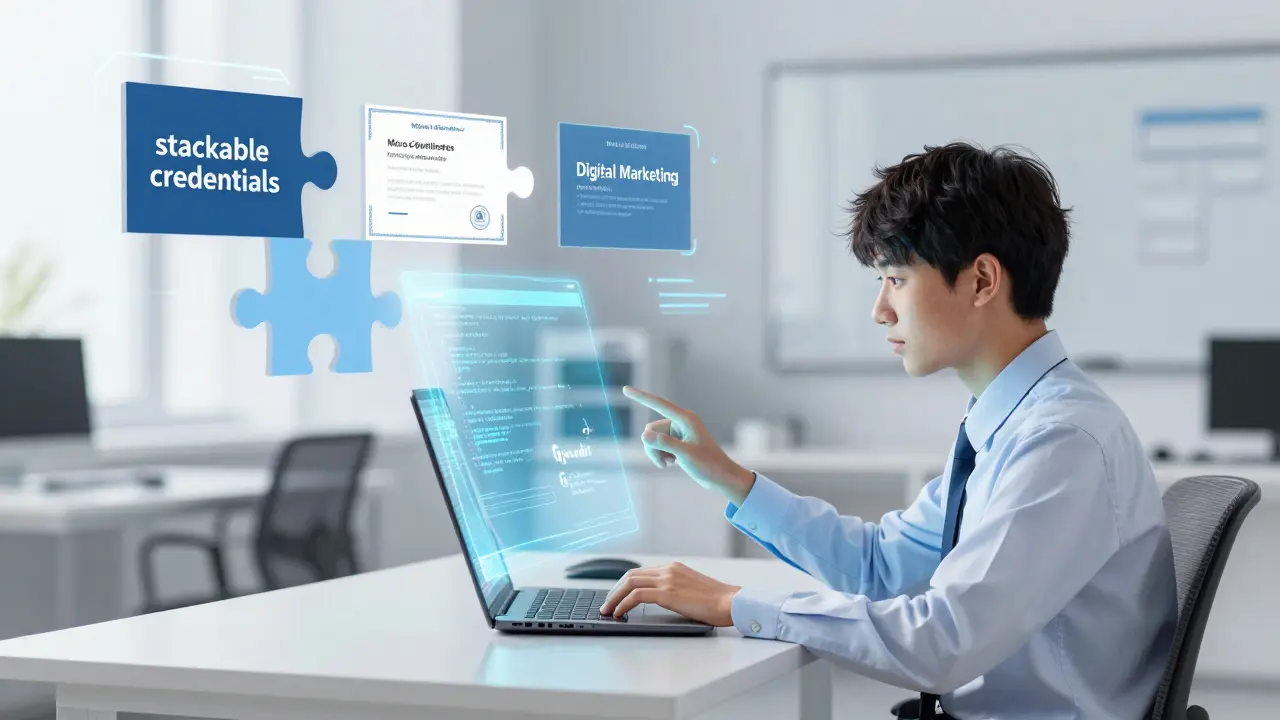
In 2026, we are also seeing a push for "stackable credentials." Instead of just getting generic college credits, students can earn micro-credentials in coding, digital marketing, or healthcare that stack toward a certificate or degree. This makes the education more relevant to immediate job markets.
Additionally, AI tools are being integrated into online platforms to provide personalized tutoring. Imagine having an AI assistant that helps you debug code or outline essays 24/7. This support system makes independent online learning much more accessible for struggling students.
Is dual credit the same as AP (Advanced Placement)?
No, they are different. AP courses are standardized tests administered by the College Board. You take the exam in May, and colleges decide whether to grant credit based on your score. Dual credit guarantees college credit upon passing the course itself, regardless of a separate national exam. Dual credit is often cheaper and less stressful than preparing for an AP exam.
Will colleges respect dual credit from online programs?
Yes, provided the course is from a regionally accredited institution. Top-tier universities may have stricter transfer policies, but most state universities and community colleges accept dual credit seamlessly. Always check the specific transfer guide of your target university before enrolling.
Can I take dual credit courses if I have a low GPA?
It depends on the program. Many dual credit programs require a minimum GPA (often 2.5 or 3.0). However, some alternative pathways exist for students with lower GPAs who demonstrate strong potential. Talk to your counselor about conditional enrollment or remedial options.
What if I fail a dual credit course?
Failing a dual credit course usually means you do not get the college credit, and it may appear on your college transcript. However, it typically does not affect your high school GPA if it was taken for elective credit. Retaking the course is often possible, but you may have to pay again. Treat every assignment seriously.
Are online dual credit courses self-paced?
Not necessarily. Many follow a semester schedule with weekly deadlines, similar to a traditional college term. Truly self-paced options are rarer and often come from private institutions. Always check the course syllabus for the delivery format before signing up.
