
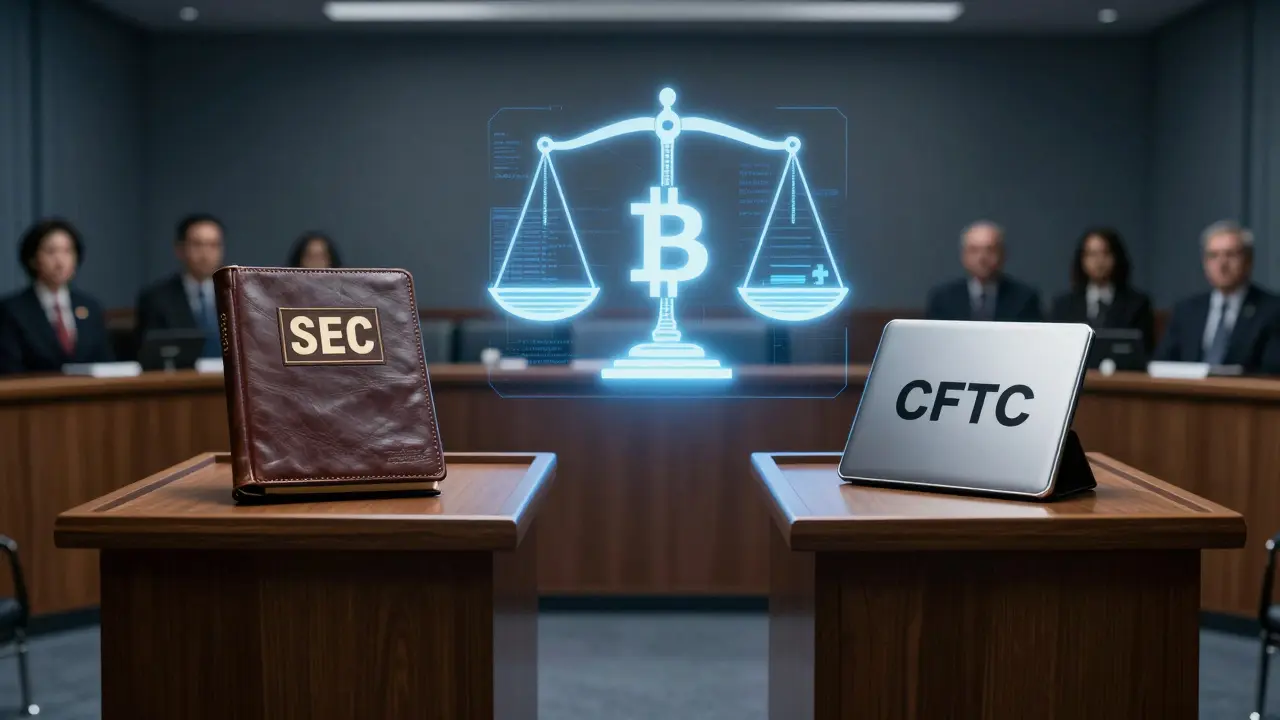
For years, the crypto industry has lived in a state of regulatory limbo. If you launched a token, you never quite knew if you were building a technology company or running an unregistered securities offering. That uncertainty ended-or at least shifted dramatically-on March 17, 2026. On that date, the Securities and Exchange Commission (SEC), joined by the Commodity Futures Trading Commission (CFTC), issued a comprehensive interpretive release that finally drew a line in the sand. This 68-page document didn't just offer vague guidance; it explicitly classified 16 major cryptocurrencies as digital commodities. For founders, investors, and traders, this distinction between securities and commodities is no longer academic-it dictates where your money can go, who watches over it, and what happens if things go wrong.
The Core Distinction: What Defines a Crypto Asset?
To understand why this matters, we have to look at the legal definitions that have governed American finance for decades. Under U.S. law, a "security" is broadly defined by the Securities Act of 1933 and the Securities Exchange Act of 1934. It includes stocks, bonds, and crucially, "investment contracts." A "commodity," on the other hand, is defined under the Commodity Exchange Act of 1936 to include tangible goods like wheat or gold, but also extends to "all services, rights, and interests" traded via futures contracts.
The critical question for crypto has always been: which bucket does a token fall into? The answer determines your regulator. If it's a security, the SEC is in charge. They demand rigorous disclosure, registration, and strict rules on who can buy and sell. If it's a commodity, the CFTC takes the lead. Their focus is primarily on derivatives markets and preventing fraud and manipulation in spot trading, with far fewer requirements for the issuers themselves.
Before 2026, this boundary was blurry. The SEC, led by Chair Gary Gensler, argued that most tokens were securities because they functioned as investment contracts. The CFTC, however, maintained that virtual currencies like Bitcoin were commodities. This tug-of-war created a jurisdictional gray zone where projects operated in fear of enforcement actions rather than clear rules.
The Howey Test: The Legal Litmus Test
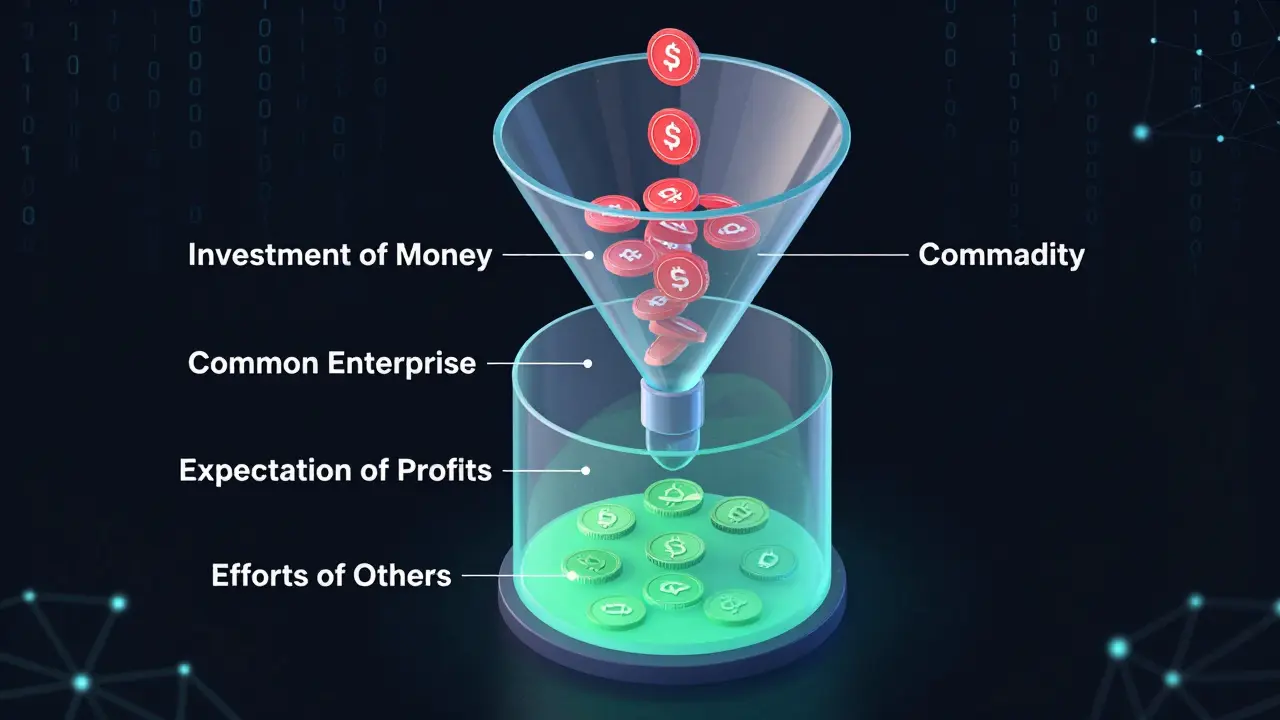
The tool regulators use to decide if something is a security is the Howey test. Established by the Supreme Court case SEC v. W.J. Howey Co. in 1946, this test asks four questions:
- Is there an investment of money?
- Is there a common enterprise?
- Is there a reasonable expectation of profits?
- Are those profits derived from the efforts of others?
If the answer to all four is yes, you have a security. In the context of crypto, the fourth prong-"efforts of others"-is usually the deciding factor. If you buy a token hoping its value will rise because a central team is developing the network, marketing the project, and managing partnerships, you are likely buying a security. You are relying on their managerial efforts.
Conversely, if the network is fully decentralized, and the token's value is driven by supply and demand dynamics within a functional protocol rather than a specific team's work, it leans toward being a commodity. The 2026 joint guidance emphasizes this "economic substance" over form. It states that digital commodities are those "intrinsically linked to and deriving their value from the programmatic operation of a functional crypto system."
The 2026 Framework: Clarity for Major Tokens
The March 2026 release broke new ground by naming names. It explicitly identified 16 major assets as digital commodities. This list includes:
- Bitcoin (BTC)
- Ethereum (ETH)
- Solana (SOL)
- XRP
- Cardano (ADA)
- Chainlink (LINK)
- Avalanche (AVAX)
- Polkadot (DOT)
- Hedera (HBAR)
- Stellar (XLM)
- Litecoin (LTC)
- Dogecoin (DOGE)
- Shiba Inu (SHIB)
- Tezos (XTZ)
- Bitcoin Cash (BCH)
- Aptos (APT)
By classifying these tokens as commodities, the regulators signaled that they do not meet the Howey test's expectation-of-profits prong in their current state. Their value comes from their utility in decentralized networks, not from the promotional efforts of a central issuer. This provides immediate relief for exchanges and institutional investors dealing in these assets, reducing the risk of sudden delistings or enforcement actions based on securities claims.
However, the framework also introduced five categories for digital assets: digital commodities, digital securities, stablecoins, digital collectibles, and digital tools. Importantly, only one category-digital securities-falls squarely under SEC jurisdiction. The other four are largely outside the core securities regime, though they may still face oversight from other agencies or general anti-fraud laws.
Jurisdictional Boundaries: SEC vs. CFTC
Understanding who regulates what is crucial for compliance. The SEC has broad authority over securities issuance, trading venues, and intermediaries. They require registration of public offerings, periodic reporting, and strict licensing for broker-dealers and exchanges.
In contrast, the CFTC's authority is more limited. They regulate commodity futures, options, and swaps. While they have anti-fraud and anti-manipulation powers over spot transactions involving commodities, they lack comprehensive authority to supervise all spot crypto exchanges in the same way the SEC supervises stock exchanges.
| Feature | Digital Securities (SEC) | Digital Commodities (CFTC) |
|---|---|---|
| Primary Regulator | SEC | CFTC |
| Disclosure Requirements | High (Registration, Periodic Reports) | Low (No mandatory issuer disclosure) |
| Trading Venues | National Securities Exchanges, ATS | Futures Exchanges, Unregulated Spot Markets |
| Retail Access | Restricted (Licensed Brokers Only) | Wider (Direct Spot Trading) |
| Enforcement Focus | Fraud, Misrepresentation, Unregistered Offers | Market Manipulation, Fraud in Derivatives/Spot |
This split creates a practical reality: if your token is a commodity, you have more freedom in how you distribute and trade it, but investors have fewer statutory protections regarding transparency. If it's a security, access is harder, but the framework is designed to protect capital through rigorous oversight.
Practical Impacts for Projects and Investors
For project founders, the path to commodity status is clear but demanding: achieve genuine decentralization. As noted by legal experts at Katten and AlixPartners, tokens can transition from securities to commodities over time. If a project starts with a centralized team selling tokens to fund development, it may initially be a security. But once the network launches, control is distributed to community validators, and the token is used for gas fees or governance rather than profit-sharing, it may shed its security label.
Investors need to be cautious. Just because a token is classified as a commodity doesn't mean it's risk-free. The CFTC's oversight of spot markets is less comprehensive than the SEC's. There is no requirement for commodity issuers to file quarterly reports or audited financial statements. You are buying into a protocol, not a company with fiduciary duties to disclose every move.
Exchanges face a complex landscape. Listing a digital commodity allows for broader retail participation and simpler compliance hurdles compared to listing a security. However, they must still adhere to CFTC rules against manipulation and fraud. For tokens classified as securities, exchanges must be registered as national securities exchanges or alternative trading systems (ATS), a costly and time-consuming process.

The Ripple Case: A Nuanced Precedent
The ongoing saga of Ripple Labs and XRP illustrates the complexity of these boundaries. In July 2023, Judge Analisa Torres ruled that Ripple's institutional sales of XRP were securities transactions, while its programmatic sales on exchanges were not. This partial victory for Ripple highlighted that a single token can have different legal statuses depending on how it is sold. The 2026 guidance builds on this nuance, emphasizing that the "manner of sale" and "evolving use" determine classification. Even if XRP is now listed as a digital commodity in the 2026 framework, specific distribution methods could still trigger securities liability if they resemble investment contracts.
Looking Ahead: Legislative Gaps and Future Risks
Despite the clarity brought by the 2026 guidance, gaps remain. The U.S. House Committee on Agriculture noted in mid-2026 that there is still no comprehensive federal regulation for the trading of digital commodities. Proposed legislation aims to grant the CFTC clearer authority over digital commodity markets, but until then, spot markets operate in a regulatory vacuum regarding exchange supervision.
Furthermore, the SEC continues to scrutinize distribution mechanisms. Airdrops, staking rewards, and liquidity mining programs can themselves constitute securities offerings if they involve investment contracts, even if the underlying token is a commodity. Projects must design their incentive structures carefully to avoid inadvertently creating securities liabilities.
As the market matures, expect more tokens to seek commodity status through decentralization. However, any project that relies heavily on a central team for future development and profit generation will likely remain under the SEC's watchful eye. The era of ambiguity is ending, replaced by a structured, albeit complex, regulatory environment where economic substance reigns supreme.
What happened on March 17, 2026, regarding crypto regulation?
On March 17, 2026, the SEC and CFTC jointly issued a 68-page interpretive release that provided a coherent taxonomy for digital assets. It explicitly classified 16 major cryptocurrencies, including Bitcoin, Ethereum, and Solana, as digital commodities, placing them under CFTC jurisdiction rather than SEC securities regulation.
How does the Howey test apply to cryptocurrency?
The Howey test determines if an asset is a security by asking if there is an investment of money in a common enterprise with an expectation of profits derived from the efforts of others. In crypto, if a token's value depends on a central team's managerial efforts, it is likely a security. If it derives value from a decentralized protocol's operation, it is likely a commodity.
Which cryptocurrencies are classified as digital commodities in 2026?
The 2026 framework explicitly lists Bitcoin (BTC), Ethereum (ETH), Solana (SOL), XRP, Cardano (ADA), Chainlink (LINK), Avalanche (AVAX), Polkadot (DOT), Hedera (HBAR), Stellar (XLM), Litecoin (LTC), Dogecoin (DOGE), Shiba Inu (SHIB), Tezos (XTZ), Bitcoin Cash (BCH), and Aptos (APT) as digital commodities.
Can a crypto token change from a security to a commodity?
Yes. If a project achieves genuine decentralization and the token's value becomes driven by network usage and supply-demand dynamics rather than the efforts of a central issuer, it may transition from being treated as a security to a commodity. This is known as the "migration" theory supported by recent guidance.
What is the difference between SEC and CFTC regulation for crypto?
The SEC regulates securities, requiring strict disclosure, registration, and licensed trading venues. The CFTC regulates commodities, focusing on derivatives markets and anti-fraud measures in spot trading, but lacks comprehensive authority over spot crypto exchanges. Commodity classification generally means fewer disclosure obligations for issuers but wider trading access.
