
Teaching someone how to make money online sounds easy until you actually try to build the syllabus. You have students who want quick cash and instructors who promise overnight millions. The reality is that dropshipping and reselling are legitimate businesses that require supply chain management, customer service, and marketing strategy. If your course skips the boring parts, you aren’t teaching a business; you’re selling a dream.
The landscape has shifted dramatically since 2023. Platforms like Shopify and Amazon have tightened their rules. Algorithms favor established brands over random AliExpress listings. To create a course that actually works in 2026, you need to move away from 'get rich quick' tactics and focus on sustainable operations. This guide breaks down exactly what modules you need to include to give your students real value.
The Foundation: Mindset and Business Structure
Before showing anyone how to pick a product, you must teach them how to set up the legal and financial foundation. Many beginners fail because they treat their side hustle like a hobby, ignoring tax laws and liability issues.
- Legal Structures: Explain the difference between a sole proprietorship and an LLC (or Ltd company in the UK). Clarify when it makes sense to incorporate.
- Tax Obligations: Cover sales tax nexus, VAT registration thresholds, and income reporting. Use specific examples for US and UK markets since these are major hubs for ecommerce.
- Banking Setup: Teach students how to open a separate business bank account to keep finances clean. Recommend tools like Stripe or PayPal for payment processing.
This section sets realistic expectations. It filters out people looking for magic buttons and keeps those ready to do the work. You should also include a module on identifying scams. The dropshipping space is full of fake gurus promising secret hacks. Teaching students to spot red flags builds trust in your brand as an honest educator.
Sourcing Strategies: Dropshipping vs. Wholesale
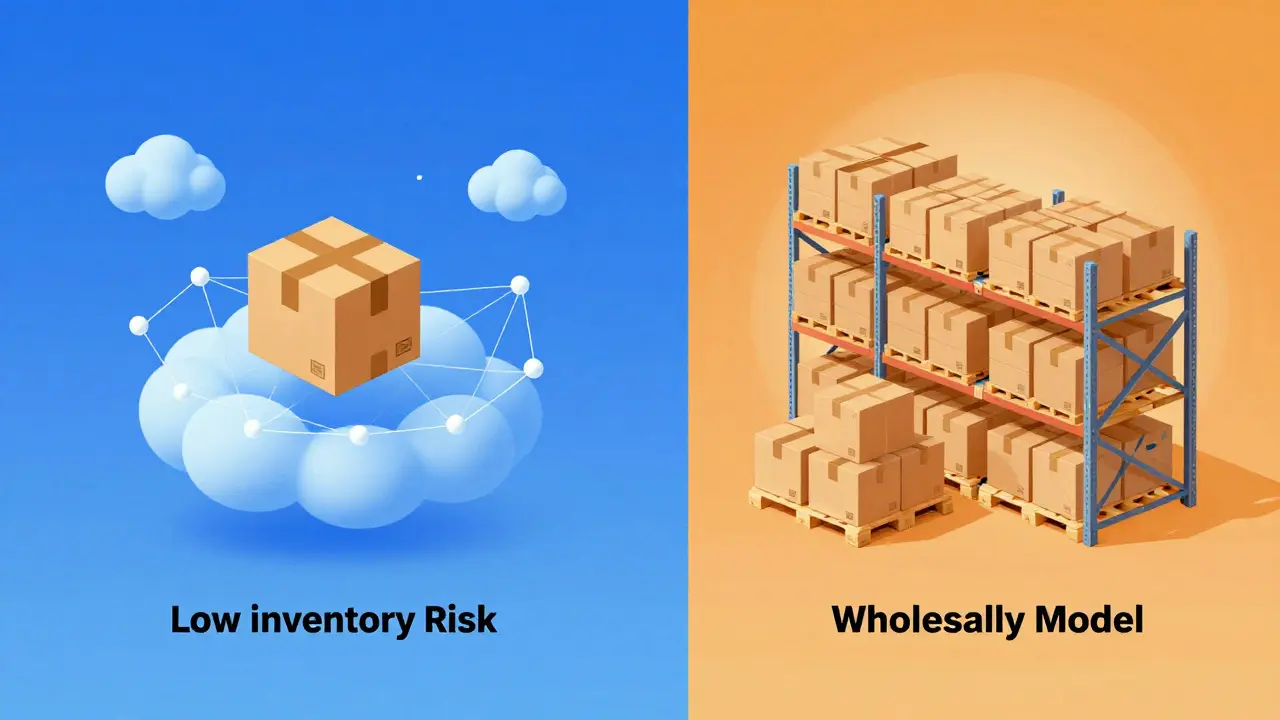
You need to clearly distinguish between two main models. They look similar but operate very differently.
| Feature | Dropshipping | Wholesale/Reselling |
|---|---|---|
| Inventory Risk | Low (no stock held) | High (must buy upfront) |
| Profit Margins | Lower (15-30%) | Higher (40-70%) |
| Control Over Shipping | Minimal | Full control |
| Startup Cost | Very Low | Moderate to High |
For dropshipping, teach students how to use platforms like Spocket or AliExpress alternatives that offer faster shipping times. Emphasize the importance of vetting suppliers. Show them how to order samples themselves. A course that doesn't require students to touch the product is incomplete.
For reselling, cover sourcing from liquidation auctions, thrift stores, and wholesale directories. Include lessons on using barcode scanners and apps like ScanSource to check profitability on the go. Teach them how to calculate profit margins after fees. Many beginners forget about platform commissions and shipping costs, leading to negative returns.
Platform Mastery: Where to Sell
Your students need to know where their customers live. In 2026, relying on one channel is risky. Diversification is key.
Start with Shopify as the standard for building independent ecommerce stores. Walk them through store setup, theme customization, and essential apps. Then, cover marketplaces. Amazon FBA remains powerful for high-volume sellers, but you must explain the strict compliance rules. eBay is still relevant for used goods and niche collectibles. Etsy is growing for handmade and vintage items, but also accepts some print-on-demand products if disclosed correctly.
Don't ignore social commerce. TikTok Shop and Instagram Shopping are changing how people discover products. Teach students how to integrate these channels with their main store. Show them how to automate inventory sync so they don't sell items they've already shipped elsewhere.
Marketing That Converts
Having a great product means nothing if no one sees it. This is where most courses fall short. They show flashy ads but don't explain the strategy behind them.
- Paid Advertising: Cover Facebook Ads and Google Shopping campaigns. Teach budget allocation, targeting options, and creative testing. Explain ROAS (Return on Ad Spend) and how to calculate break-even points.
- Organic Growth: Show how to use short-form video content on TikTok and Reels. Demonstrate how to create engaging product demos without expensive equipment.
- Email Marketing: This is often overlooked. Teach students how to build an email list from day one. Cover welcome sequences, abandoned cart recovery, and post-purchase follow-ups. Email has higher ROI than social media ads.
- Influencer Partnerships: Explain how to find micro-influencers in specific niches. Provide templates for outreach emails and negotiation strategies for commission-based deals.
Include case studies. Show real ad accounts with metrics. Break down why certain creatives worked while others failed. Students learn better from failures than successes because mistakes are relatable.
Customer Service and Operations
Bad customer service kills businesses faster than bad products. Teach students how to handle returns, refunds, and angry customers.
Create scripts for common scenarios. What do you say when a package is lost? How do you respond to a review complaining about slow shipping? Role-play these situations in your course. Show them how to turn a negative experience into a positive one by offering partial refunds or free replacements.
Cover automation tools. Use chatbots for initial queries but emphasize human oversight. People hate talking to robots when they have urgent problems. Balance efficiency with empathy.
Scaling and Optimization
Once a student hits their first $1,000 in sales, what next? This section addresses growth.
Teach them to analyze data. Use analytics dashboards to identify best-selling products and top traffic sources. Cut underperforming ads quickly. Double down on winners. Introduce concepts like Customer Lifetime Value (CLV) and Acquisition Cost (CAC).
Show them how to private label products. Once they find a winning item, contact manufacturers directly to create custom branding. This builds asset value rather than just generating monthly income. Discuss hiring virtual assistants for repetitive tasks like customer support and inventory updates.
Common Pitfalls to Avoid
Warn students about traps that waste time and money.
- Chasing Trends: Viral products often die within weeks. Focus on evergreen niches with consistent demand.
- Ignoring Cash Flow: Profit on paper isn't cash in the bank. Teach them to manage timing differences between paying suppliers and receiving payments.
- Overcomplicating Tech Stack: Start simple. Add tools only when necessary. Too many apps increase costs and complexity.
- Copying Competitors Blindly: Differentiation matters. Find unique angles or bundles instead of selling identical items at lower prices.
By addressing these issues proactively, you save students months of trial and error. Your credibility grows when you highlight risks honestly.
How long does it take to start making money with dropshipping?
It varies widely. Some see sales in the first week if they invest heavily in ads. Others take three to six months to optimize their store and find profitable products. Set realistic expectations of 90 days to achieve consistent revenue.
Is dropshipping still profitable in 2026?
Yes, but margins are tighter. Success now depends on strong branding, excellent customer service, and efficient marketing. Generic stores selling cheap items struggle against established brands.
What is the best platform for beginners to start reselling?
eBay is great for learning basics due to its large audience and straightforward listing process. For branded goods, Shopify offers more control but requires more marketing effort upfront.
Do I need inventory to start dropshipping?
No, that's the main advantage. Suppliers ship directly to customers. However, ordering samples for quality checks is highly recommended before launching any product.
How much should I charge for my course?
Pricing depends on depth and support. Basic video courses range from $50-$200. Cohort-based programs with mentorship can command $1,000+. Ensure your content delivers measurable results to justify higher prices.

Comments (8)
Kirk Doherty May 13 2026
finally someone talking sense about the legal stuff most gurus skip
Dmitriy Fedoseff May 14 2026
The distinction between dropshipping and wholesale is often blurred by those who have never held inventory. It is a philosophical error to treat them as identical because the risk profiles are fundamentally different. One requires capital upfront while the other relies on supplier trust. This article correctly identifies that margin compression in dropshipping is a feature not a bug of the model. You pay for convenience with lower profits. Wholesale demands higher initial outlay but rewards you with control over branding and shipping times. The table provided is accurate but lacks nuance regarding cash flow velocity. A business can be profitable on paper and still go bankrupt if cash flow is mismanaged. This is why the section on banking setup is critical. Many entrepreneurs fail because they commingle personal and business funds. It creates a mess during tax season and exposes personal assets to liability. The advice to incorporate early is sound for serious operators. Sole proprietorships leave you vulnerable to lawsuits from unhappy customers. In 2026 the legal landscape will only become more complex with digital services taxes and cross-border regulations. Ignoring these aspects is negligence not strategy.
Meghan O'Connor May 15 2026
You say 'commingle' but mean 'mix'. Also your sentence structure is atrocious. Who talks like this? The point stands though: separate accounts are mandatory. If you cannot afford an LLC you should not be starting a business period. The grammar in this post is acceptable which is rare for online guides. Most people write like teenagers. At least the author understands basic syntax. However the section on marketing is vague. ROAS is not enough. You need MER or Marketing Efficiency Ratio. Without tracking backend sales you are flying blind. Email marketing is indeed superior but most people set up broken automations. They send welcome emails to empty lists. It is pathetic really. Fix your punctuation next time.
Morgan ODonnell May 16 2026
i think the part about customer service is really important. people forget that angry customers can ruin your rating fast. having scripts helps but you have to be genuine too. it feels fake if you just copy paste responses. maybe add some tips on how to sound human when using chatbots. also the bit about ordering samples makes sense. you cant trust a product if you havent seen it yourself. good luck everyone trying this out
Liam Hesmondhalgh May 16 2026
This is all well and good for the US and UK markets but what about Ireland? We have our own VAT rules and shipping costs that are absurdly high due to our location. The guide ignores local nuances entirely. Irish entrepreneurs face specific challenges with courier reliability that are not mentioned. It is frustrating to see generic advice that assumes a flat continent. We are an island with limited logistics options. You cannot simply plug into Spocket and expect smooth sailing here. The customs delays alone will kill your conversion rate. I have tried dropshipping from China to Dublin and the experience is terrible. Customers complain about three week delivery times. You need local suppliers or at least EU based ones. The article fails to address this geographic bias. It is arrogant to assume one size fits all. Support local businesses instead of relying on overseas giants.
Patrick Tiernan May 18 2026
oh please another guru guide pretending to be helpful. its all so pretentious. you talk about 'sustainable operations' but really its just grinding harder for less money. the margins are razor thin now. unless you have deep pockets for ads you will burn through cash in weeks. i tried this last year and lost everything. the platforms change their algorithms every day. today you are fine tomorrow you are banned. it is a circus. stop selling dreams to desperate people. they want easy money not a job managing supply chains. the whole industry is built on hype and fear. nobody wants to hear about taxes and legal structures they want to know which product goes viral next. you are boring and frankly irrelevant to the real hustle culture.
Patrick Bass May 20 2026
I appreciate the detailed breakdown of sourcing strategies. It is refreshing to see a comparison that includes profit margins and startup costs. Many resources gloss over the financial realities. The emphasis on vetting suppliers is crucial. I have seen too many stores damaged by poor quality control. Ordering samples is non-negotiable. It builds confidence in the product and allows for better marketing content. The section on email marketing is also spot on. Building a list from day one provides long-term value. Social media platforms can change overnight but email remains stable. Thank you for sharing this comprehensive guide.
Tyler Springall May 20 2026
The notion that one must 'teach' this is laughable. True entrepreneurship cannot be taught in a course. It is innate. Those who succeed do so despite the advice not because of it. This syllabus is for the mediocre masses who need hand-holding. The elite operate outside these constraints. They build empires not side hustles. The focus on 'customer service' is weak. Real power lies in brand dominance and market saturation. If you are worrying about refunds you are already losing. Scale aggressively and ignore the noise. The details matter only to those who lack vision. Keep your eyes on the prize not the process.