
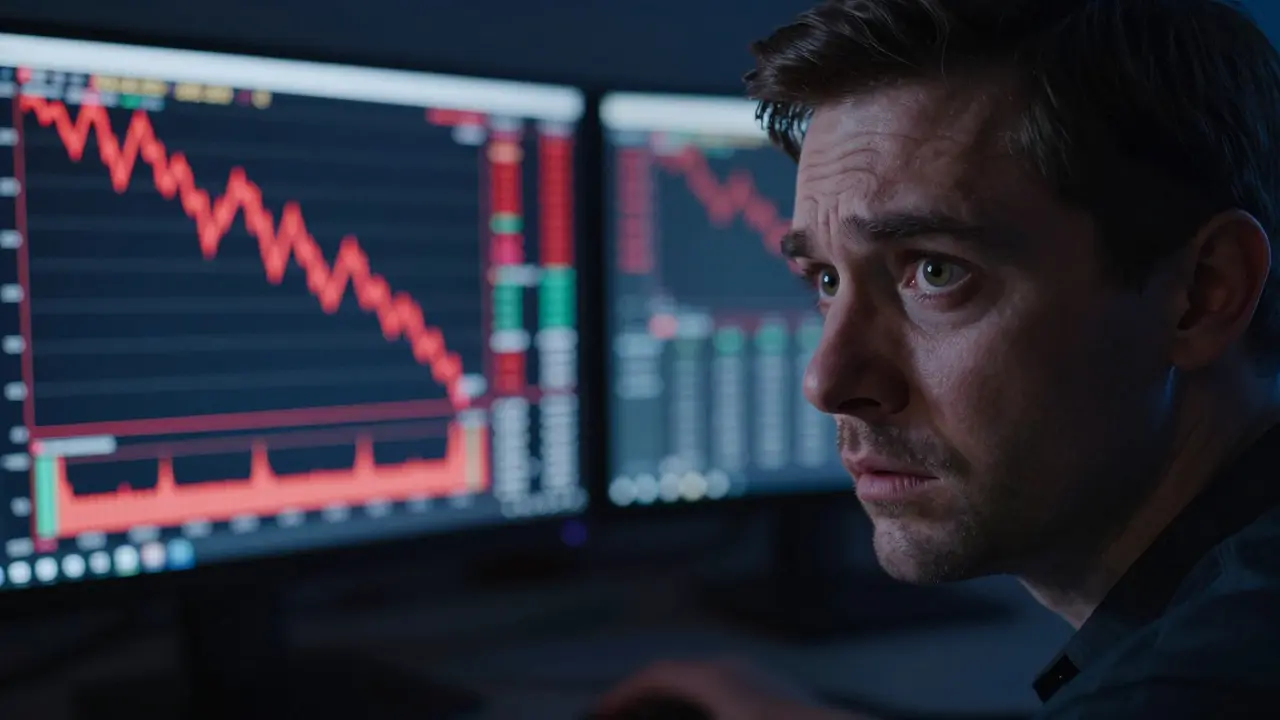
Imagine you're watching a Bitcoin chart. It's been a sea of red for six days straight. You tell yourself, "It has to bounce back tomorrow. It's’ due for a green day." You double your position, convinced that the universe needs to balance the scales. Then, day seven hits, and the price drops another 10%. You didn't just lose money; you fell for a psychological trap that has bankrupt people for centuries.
This is the Gambler's Fallacy is the mistaken belief that if an event happens more frequently than normal during a given period, it will happen less frequently in the future (or vice versa). Also known as the Monte Carlo Fallacy, it's the brain's attempt to find order in total chaos. In the world of Cryptocurrency, where volatility is the only constant, this bias can be a fast track to a liquidated account.
The Monte Carlo Lesson: Why Patterns Lie
To understand why your brain tricks you, look back at 1913 in Monaco. At the Monte Carlo Casino, a roulette ball landed on black 26 times in a row. Gamblers lost millions of dollars betting on red, certain that the streak had to end. They believed red was "due." But the roulette wheel doesn't have a memory. Each spin is a fresh start with the exact same odds.
Crypto markets often feel like that roulette wheel. Whether you're trading Ethereum or a random meme coin, a string of losses doesn't make a win more likely. In probability, this is called Statistical Independence, which means the outcome of one event doesn't change the probability of the next. If you flip a coin and get heads ten times, the chance of the eleventh flip being tails is still exactly 50%.
The Brain's Glitch: Why We Seek Patterns
Why do we do this? Humans are evolved to be pattern-recognition machines. Thousands of years ago, noticing a pattern-like "rustle in the grass usually means predator"-saved our lives. Today, that same instinct misfires in the face of algorithmic randomness. We see a "pattern" in a series of red candles and mistake it for a law of nature.
Several other mental shortcuts make this worse:
- The Availability Heuristic: Your brain relies on the most recent, vivid memories. If you remember three huge wins last week, you overestimate the chance of winning today, ignoring the thousands of hours of flat trading in between.
- The Illusion of Control: You might believe that by using a specific indicator or "gut feeling," you can influence a random outcome. In reality, you're just projecting order onto a chaotic system.
- Dopamine Loops: The anticipation of a win triggers a rush of dopamine. This chemical reward makes the act of betting feel good, even when the math says you're likely to lose.
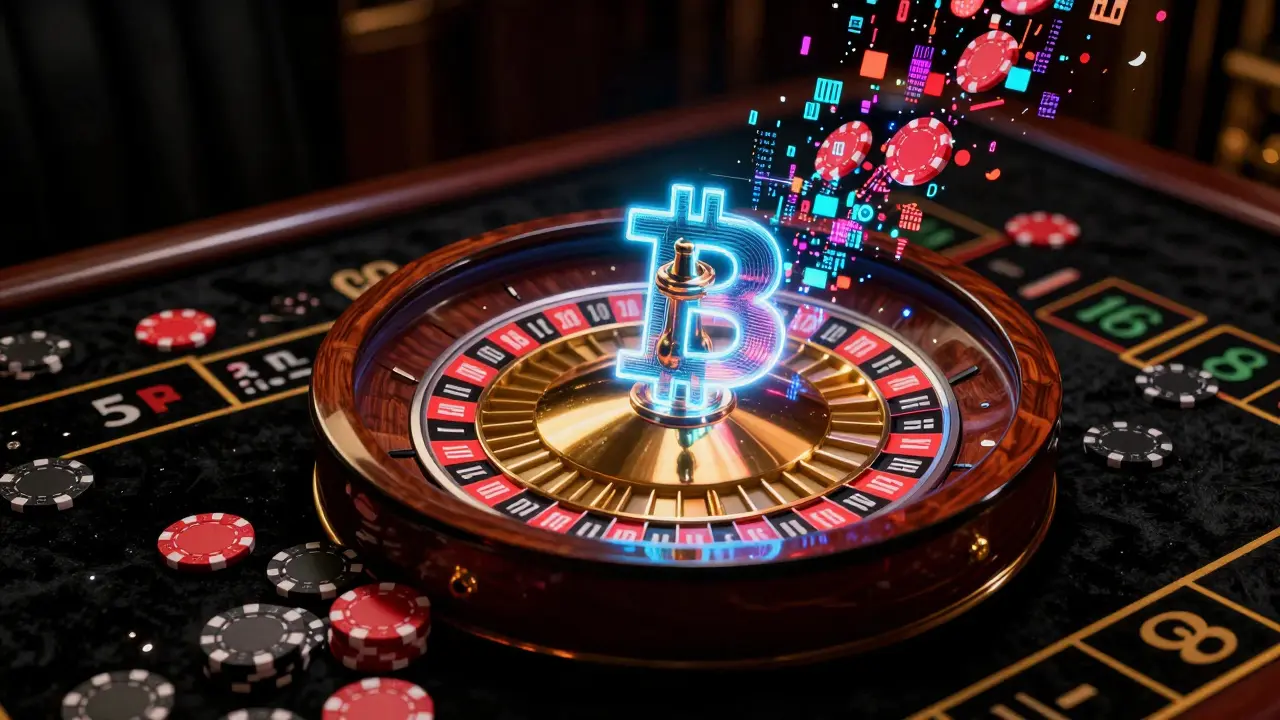
Crypto Trading vs. True Randomness
Here is where it gets tricky: Not everything in crypto is a coin flip. There is a big difference between the Gambler's Fallacy and legitimate market analysis. You'll often hear pros talk about Mean Reversion-the idea that prices eventually return to their average. While mean reversion is a real statistical phenomenon based on value and sentiment, the Gambler's Fallacy is a psychological error based on a sequence of random events.
| Feature | Gambler's Fallacy | Mean Reversion |
|---|---|---|
| Core Belief | "It's due for a change because it happened too much." | "The price has deviated too far from its fundamental value." |
| Basis | Psychological bias / False pattern | Statistical averages / Market fundamentals |
| Event Type | Independent events (coin flips, dice) | Correlated systems (asset prices) |
| Outcome | Usually leads to larger, irrational losses | Used as a legitimate (though risky) strategy |

The High Cost of 'Doubling Down'
When traders succumb to this fallacy, they often employ a dangerous strategy: increasing their bet size after a loss. They think, "I've lost four trades in a row, so the fifth must be a winner." This is a recipe for a total account wipeout.
They are essentially treating a small sample size as if it follows the Law of Large Numbers. In a million coin flips, you'll get roughly 50% heads. But in ten flips, you could easily get ten heads in a row. The "balance" only happens over a massive number of trials, not over your last few trades on a Tuesday afternoon.
In the crypto space, this is magnified by the 24/7 nature of the market. The speed of transactions and the constant flow of data create an environment where the dopamine-driven cycle of "just one more trade to break even" happens in seconds, not hours.
How to Kill the Bias in Your Trading
You can't completely delete these instincts from your brain, but you can build systems to bypass them. The goal is to move from emotional reacting to evidence-based acting.
- Hard Stop-Losses: Use automated Stop-Loss orders. If the trade hits a certain price, you're out. No matter how much you feel a reversal is "due," the machine doesn't care about your feelings.
- Keep a Trade Journal: Write down why you are entering a trade. If your reason is "it's been red for too long," flag it as a Gambler's Fallacy trade and stop yourself.
- Focus on Probability, Not Sequences: Stop looking at the sequence of wins and losses. Instead, ask: "What is the actual probability of this setup working based on historical data?"
- Embrace the Randomness: Accept that you can do everything right and still lose. A loss isn't a sign that a win is coming; it's just a loss.
Is the Gambler's Fallacy the same as the 'Hot Hand' fallacy?
No, they are opposites. The Gambler's Fallacy is the belief that a streak will end (e.g., "I've lost five times, so I'm due for a win"). The Hot Hand fallacy is the belief that a streak will continue (e.g., "I've won five times, I'm on fire and can't lose"). Both are wrong because they assume past independent events dictate future ones.
How does this apply to DeFi and algorithmic gambling?
Many decentralized apps use cryptographic randomness to determine winners. Because these are purely algorithmic, they are perfectly independent. There is no such thing as a "cold" or "hot" smart contract. The math is absolute, making the Gambler's Fallacy even more dangerous here than in physical casinos.
Can I use mean reversion to fight the Gambler's Fallacy?
Mean reversion is a tool for analyzing assets, not a cure for a cognitive bias. If you use mean reversion as an excuse to bet against a trend simply because "it's gone up too much," you're actually just practicing the Gambler's Fallacy with a fancy name.
Why do I feel more confident after a series of losses?
This is the fallacy in action. Your brain is trying to protect your ego by creating a narrative that a win is "inevitable." This false confidence often leads to larger bets and higher risk, which is why people often blow their accounts shortly after a losing streak.
Does the Law of Large Numbers mean I'll eventually win?
Only if you have a positive expected value. If the odds are stacked against you (like in a casino or a bad trade), the Law of Large Numbers actually guarantees that you will lose more money the longer you play. It doesn't "force" a win to happen to balance your personal history.

Comments (15)
Patrick Sieber April 24 2026
This is a spot-on breakdown of the psychological traps we all fall into. Keeping a trade journal is definitely the way to go to keep emotions in check.
Kieran Danagher April 24 2026
Oh wow, someone finally figured out that gambling your life savings on a random coin because it's 'due' is a bad idea. Groundbreaking stuff.
Shivam Mogha April 25 2026
Very helpful perspective.
poonam upadhyay April 25 2026
Absolute madness!!! Just pure, unadulterated chaos in these markets... people are just sheep following a glitchy algorithm that's designed to bleed them dry!!!!
sampa Karjee April 26 2026
The sheer lack of basic probabilistic understanding in the general trading public is staggering. Most of you aren't trading; you're simply indulging in a sophisticated form of delusions.
Sheetal Srivastava April 26 2026
The heuristic cognitive dissonance here is palpable. We're seeing a systemic failure in risk mitigation where the retail demographic ignores the stochastic nature of volatility in favor of anecdotal evidence.
ujjwal fouzdar April 28 2026
We are all just prisoners of our own biological wiring. The red candles aren't just price drops; they are the bleeding wounds of our collective hope. We dance in the rain of a crash and call it a strategy.
Anand Pandit April 29 2026
It's really important to remember that losses are just part of the journey. If you stick to a disciplined system and manage your risk, you can definitely overcome these mental hurdles and find success.
Eka Prabha April 30 2026
This is just a distraction. The 'randomness' is a facade created by institutional whales who manipulate the order books using high-frequency trading algorithms to trigger the very biases mentioned here.
OONAGH Ffrench May 1 2026
the human mind seeks symmetry in a universe that provides none. we project our need for equilibrium onto the market and wonder why the void does not answer back. it is a fascinating study of cognitive longing
mani kandan May 3 2026
Quite an exquisite explanation. The distinction between mean reversion and the gambler's fallacy is a nuanced point that many often overlook in the heat of a trade.
Sheila Alston May 3 2026
It's honestly disappointing that people need to be told not to gamble with their money. Some of you treat your portfolios like a slot machine and then act surprised when you lose everything. It's just irresponsible.
Reshma Jose May 3 2026
Stop-losses are the only thing that actually work. Everything else is just guesswork and hope, and hope isn't a trading strategy.
Bhavishya Kumar May 5 2026
The author should be mindful of the punctuation in the table section. Furthermore, the distinction between independent and correlated events is logically sound though phrased with excessive informality
Rahul Borole May 5 2026
I strongly encourage everyone to implement the trade journal method immediately. By documenting the rationale behind every single entry, you transform a chaotic gambling habit into a professional disciplined practice. This is the only sustainable path to long-term capital growth in these volatile markets. Consistency is the hallmark of a true professional, and removing the emotional element is the first step toward that goal. Please, prioritize your risk management over your intuition. The math does not lie, whereas the gut feeling frequently does. Focus on the data, refine your edge, and never bet more than you are willing to lose. This is how you survive and thrive. Let us all strive for a more evidence-based approach to our financial futures. It is the only way to ensure longevity in the crypto space. Discipline is not a restriction; it is the ultimate freedom from the anxiety of uncertainty. Start today and see the difference in your performance.