
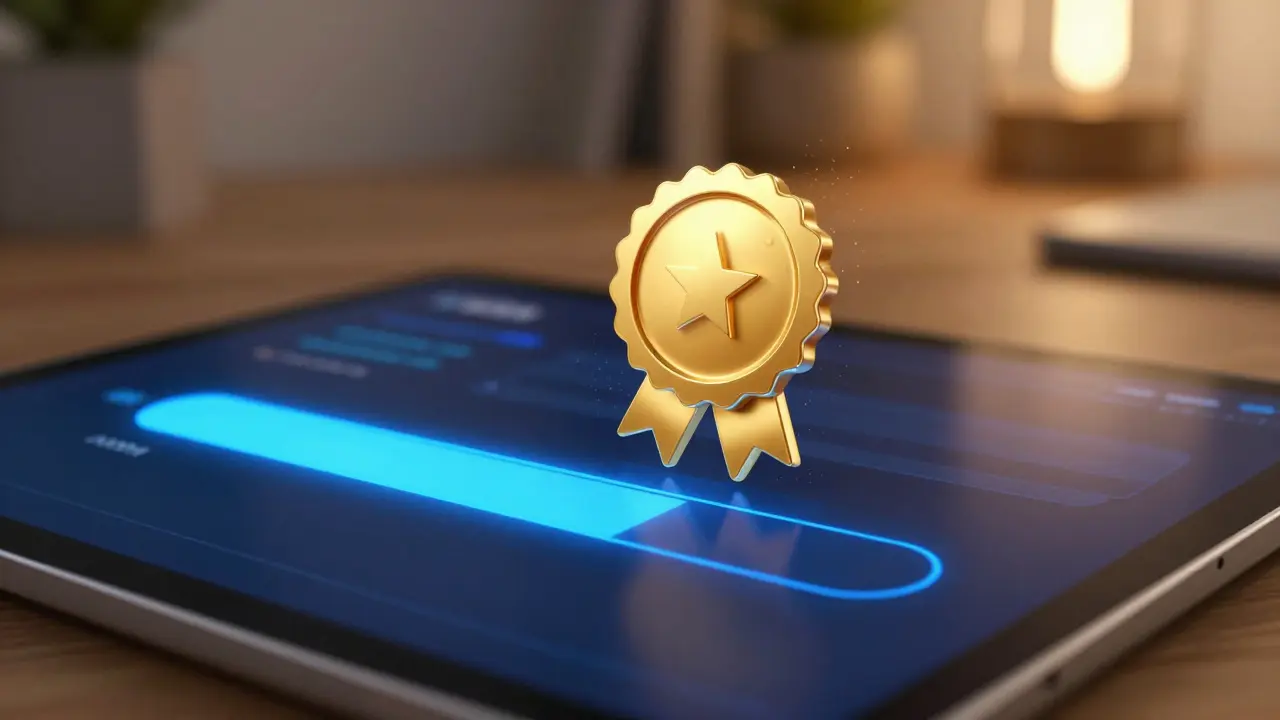
Imagine logging into your favorite online forum or learning platform. Instead of a blank wall of text, you see a progress bar filling up as you read. You earn a shiny digital badge for answering three questions correctly. Suddenly, the mundane task of participating feels like leveling up in a game. This is the power of gamification. It’s not just about making things fun; it’s about tapping into human psychology to drive consistent action.
In 2026, attention is the scarcest resource in the digital economy. Communities-whether they are customer support hubs, employee training portals, or hobbyist forums-are struggling to keep users active. The old model of "post and hope" is dead. Users expect immediate feedback, clear progression, and a sense of achievement. By integrating badges and points systems, you transform passive observers into active contributors. But if you do it wrong, you’ll annoy them instead. Let’s look at how to build a system that actually works.
The Psychology Behind Why Badges Work
Before you design a single icon, you need to understand why people care about virtual rewards. It comes down to two core psychological drivers: intrinsic motivation and extrinsic motivation.
Extrinsic motivation is simple: you want the reward. In a community context, this might be points that can be redeemed for discounts, merchandise, or premium features. It’s transactional. If I give you $10 to pick up trash, you pick up trash. When you stop paying, they stop picking up. This works for short-term bursts of activity but fails for long-term retention.
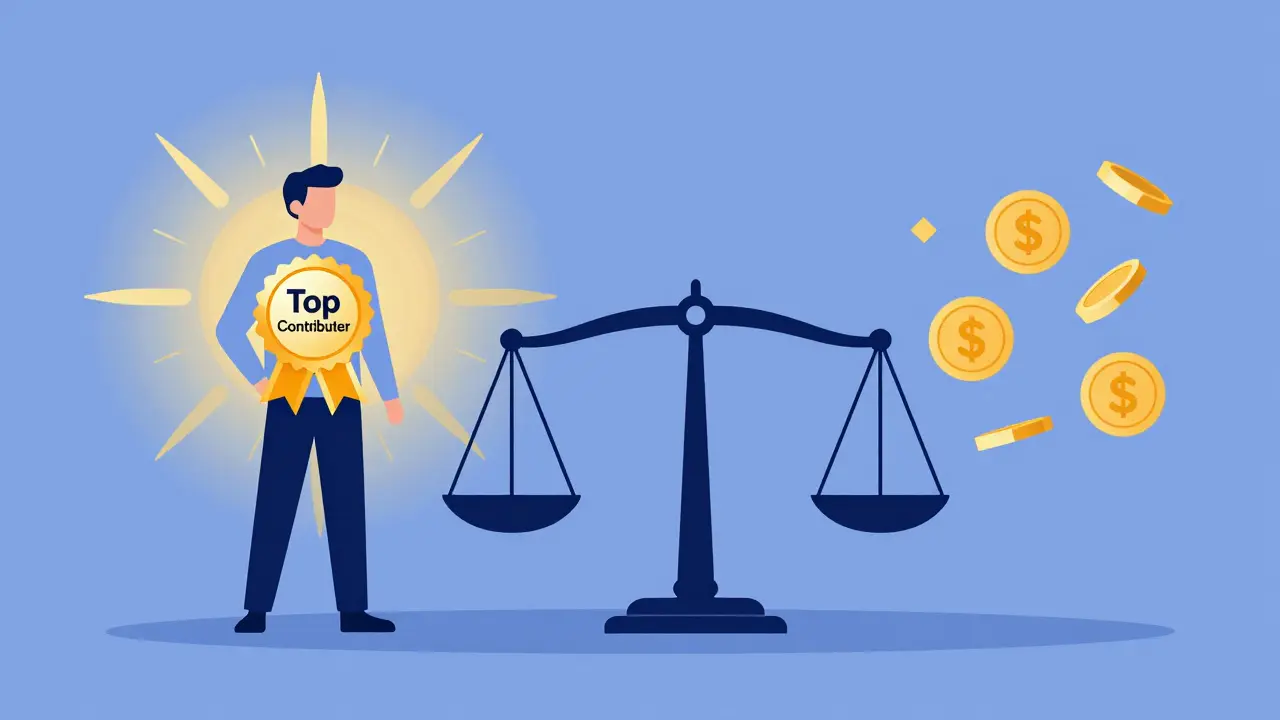
Intrinsic motivation is deeper. It’s the satisfaction you feel from mastering a skill, helping others, or being recognized by peers. Badges excel here because they signal status and competence. When someone displays a "Top Contributor" badge next to their name, they aren’t just showing off; they’re communicating expertise. This triggers a dopamine release associated with social validation. The key is balancing these two. Too many points make your community feel like a casino. Too few tangible rewards make it feel like unpaid labor. Aim for a ratio where intrinsic pride drives 70% of the behavior, and extrinsic rewards handle the remaining 30% of friction-heavy tasks.
Designing a Point System That Doesn’t Break
Points are the currency of your community. If inflation gets out of control, your entire economy collapses. You’ve seen this happen on forums where early adopters have millions of points while new users can barely afford to post. Here is how to structure a sustainable economy:
- Define Clear Actions: Assign point values to specific behaviors. For example, posting a comment might be worth 5 points, while writing a detailed guide could be worth 50. Upvoting helpful content might earn 1 point. Be explicit. Ambiguity kills engagement.
- Implement Decay or Reset Mechanisms: Consider resetting points annually or using a "decay" model where unused points lose value over time. This encourages continuous participation rather than hoarding. Alternatively, use tiers (Bronze, Silver, Gold) that reset yearly, giving everyone a fresh start.
- Create Sinks for Points: Points must have an exit strategy. Allow users to spend points on things like custom avatar frames, voting power in polls, or exclusive access to webinars. If points only accumulate, they become meaningless numbers. They need utility.
A common mistake is rewarding low-effort actions too heavily. If liking a post gives 10 points and writing a tutorial gives 10 points, you will flood your community with empty likes and zero substance. Always weight quality higher than quantity. Use manual review or AI moderation tools to ensure high-point awards go to genuinely valuable contributions.
Crafting Badges That Inspire Action
A badge is more than a graphic; it’s a narrative milestone. People don’t just want a sticker; they want the story behind it. When designing badges, think about the journey.
| Badge Type | Purpose | Example Criteria | Psychological Trigger |
|---|---|---|---|
| Onboarding | Reduce initial friction | Complete profile setup | Completion bias |
| Milestone | Encourage long-term retention | Post 100 comments | Progress tracking |
| Expertise | Highlight authority | Answer 10 questions marked as 'Solved' | Social proof |
| Secret/Easter Egg | Drive exploration | Visit a hidden page or solve a puzzle | Curiosity |
| Social | Foster connection | Mention 5 different users in posts | Community building |
Notice the "Secret" category. These are powerful because they create buzz. When one user discovers a hidden badge, they tell others. This organic marketing spreads faster than any announcement email. However, avoid making badges too easy to earn. If everyone has the "Superstar" badge, no one has it. Scarcity creates value. Limit certain badges to the top 1% of users or make them time-limited, such as a "Holiday Helper" badge available only during December.
Also, ensure your badges are visually distinct. Use color coding to indicate difficulty. Green for easy, gold for medium, and platinum or black for elite achievements. Visual hierarchy helps users instantly understand their standing relative to others.
Integrating Gamification into Social Learning
If your community is focused on education or professional development, gamification becomes a tool for social learning. This is where peer-to-peer knowledge transfer happens. Traditional e-learning is often solitary and forgettable. Social learning thrives on interaction.
Use points to incentivize teaching behaviors. For instance, award bonus points when a user’s answer is accepted as the solution. This reinforces the idea that helping others is valued. You can also create "Study Group" badges for users who collaborate on projects or co-author articles. This shifts the dynamic from competition to collaboration.
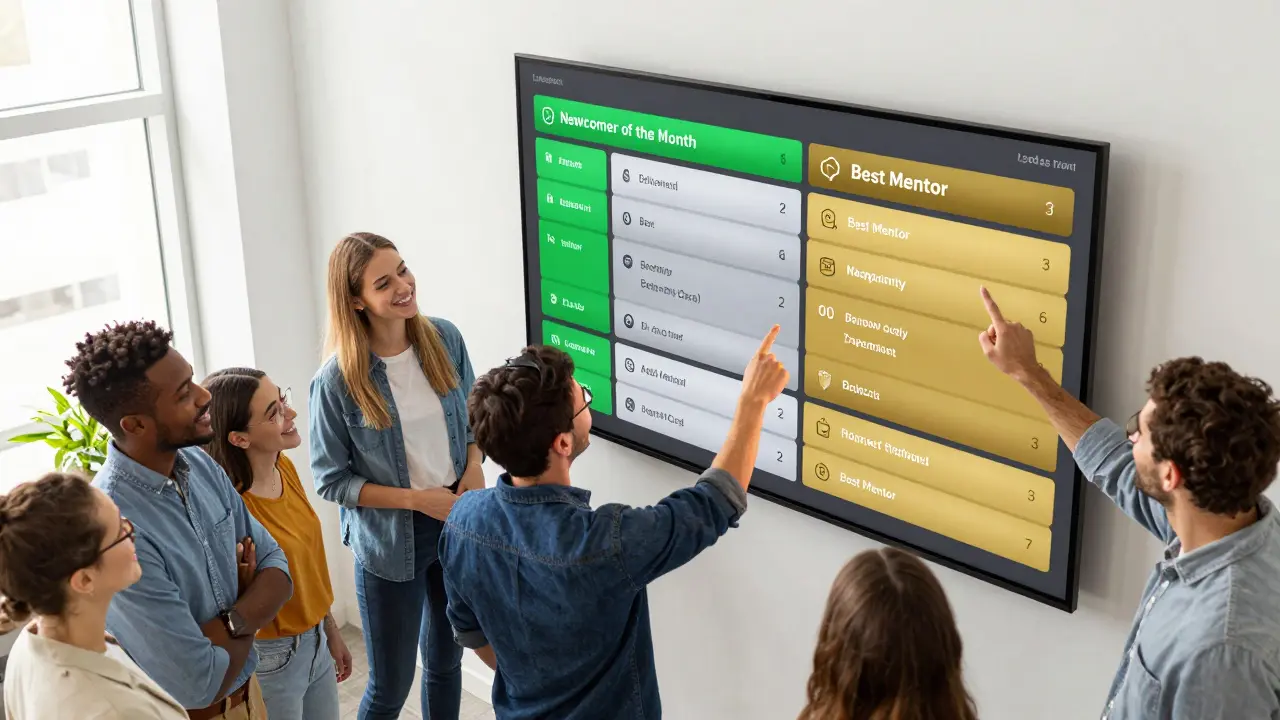
Consider implementing leaderboards, but with caution. Global leaderboards often discourage average users because they feel they can never catch up to the top players. Instead, use segmented leaderboards: "Most Active This Week," "Newcomer of the Month," or "Best Mentor." This gives multiple people a chance to win and keeps the competitive spirit healthy without crushing morale.
Common Pitfalls to Avoid
Even well-intentioned gamification strategies can backfire. Here are the most frequent mistakes:
- Gaming the System: Users will find loopholes. If you reward post length, they will write fluff. If you reward login streaks, they will use bots. Monitor analytics closely and adjust rules regularly. Implement anti-spam filters and require minimum engagement thresholds (e.g., a post must have 50 characters to earn points).
- Over-Saturation: Don’t bombard users with notifications every time they earn a point. Save the big alerts for significant milestones like earning a rare badge or reaching a new level. Minor points should update silently in the UI.
- Ignoring Non-Competitive Users: Not everyone wants to compete. Some users prefer quiet consumption. Ensure your gamification doesn’t penalize lurkers. Offer "Observer" badges for those who read extensively but rarely post, validating their presence without forcing them to speak.
- Lack of Feedback Loops: Users need to know *why* they didn’t get a badge. If someone thinks they qualified but didn’t receive it, frustration sets in. Provide clear criteria tooltips so users always know what’s required.
Measuring Success Beyond Vanity Metrics
It’s tempting to celebrate a spike in points awarded or badges earned. But these are vanity metrics. They don’t tell you if your community is healthier. Focus on behavioral outcomes:
- Retention Rate: Are users coming back after 30 days? Gamification should increase stickiness.
- Content Quality: Is the signal-to-noise ratio improving? Are there more helpful answers and fewer spam posts?
- User Acquisition Cost: Are existing users bringing in new ones through referrals triggered by shared achievements?
Run A/B tests. Try one cohort with a points-based system and another with a badge-only system. See which group produces higher quality interactions. Data will guide your refinements better than guesswork ever will.
Building Your Roadmap
Start small. Launch with five core badges and a simple point structure. Gather feedback for two weeks. Then iterate. Add complexity only when the foundation is stable. Remember, the goal isn’t to build the most complex game in town. The goal is to build a community where people feel valued, recognized, and motivated to contribute. When you align your system with genuine human desires for mastery and belonging, gamification stops being a gimmick and becomes the engine of your community’s growth.
What is the difference between badges and points in gamification?
Points are quantitative measures of activity, acting as a currency that accumulates over time. They track volume and frequency. Badges are qualitative markers of achievement, representing specific milestones or skills. While points show how much you did, badges show what you accomplished. Points drive repetition; badges drive aspiration.
How do I prevent users from gaming my point system?
To prevent gaming, implement quality controls rather than just quantity metrics. Require minimum character counts for posts, use AI moderation to detect spam patterns, and manually review high-value point awards. Additionally, introduce decay mechanisms or annual resets to prevent hoarding and encourage consistent, genuine participation.
Are leaderboards effective for all types of communities?
Global leaderboards can demotivate average users who feel they cannot compete with top performers. They work best in highly competitive environments like sales teams or gaming clans. For educational or support communities, use segmented leaderboards (e.g., "Newcomer of the Month") to provide attainable goals for diverse user groups.
Can gamification work without monetary rewards?
Yes, absolutely. In fact, relying solely on monetary rewards can undermine intrinsic motivation. Most successful community gamification relies on social recognition, status, and the inherent satisfaction of contributing. Digital badges, public acknowledgment, and exclusive access to content are powerful non-monetary incentives.
How often should I update my gamification system?
You should review your system quarterly. Look for stagnation in point distribution, identify badges that no one is earning, and check for emerging spam tactics. Introduce seasonal badges or limited-time challenges to keep the experience fresh and maintain user interest throughout the year.

Comments (12)
Emmanuel Sadi May 8 2026
Oh look, another article pretending to understand human psychology while it's just a Skinner box for adults. You think giving people shiny digital stickers makes them smarter? It makes them sheep who wait for the dopamine hit instead of actually caring about the content. The 'intrinsic motivation' part is pure BS because once you introduce points, everything becomes transactional. People aren't stupid; they know they're being manipulated. And don't get me started on the 'decay' mechanism which is just corporate speak for stealing your effort so you have to work harder for less. This whole gamification trend is just capitalism finding new ways to exploit our need for validation. I've seen communities die because everyone was too busy farming points to actually talk to each other.
Nicholas Carpenter May 10 2026
I really appreciate this balanced view! It’s true that attention is hard to come by these days. I’ve implemented something similar in my team’s Slack channel and it has helped us keep things engaging without feeling forced. The key is definitely keeping the intrinsic rewards strong so people feel good about helping out rather than just chasing numbers. Great read!
Chuck Doland May 11 2026
One must consider the philosophical implications of reducing human interaction to mere data points. While the utility of badges is undeniable in fostering a sense of accomplishment, we must be wary of creating a society where worth is quantified solely by external validation. The distinction between intrinsic and extrinsic motivation is not merely semantic but foundational to ethical community design. If we prioritize the metric over the meaning, we risk cultivating a hollow engagement that lacks genuine connection. Therefore, any system designed must prioritize the dignity of the participant above all else.
Madeline VanHorn May 11 2026
This is basic stuff. Anyone who knows how to run a community already knows this. You don't need a guide to tell you that people like getting rewarded. It's obvious. Most people reading this probably still think posting a link is enough to build a community. Wake up. Real engagement comes from exclusivity and status, not cheap points. If you have to explain why badges work, you're doing it wrong.
Glenn Celaya May 12 2026
points are useless if the community is dead. i tried this on my forum and everyone just spammed low quality posts to get points. then the admins banned half of them. now its quiet again. maybe just let people talk without tracking every move they make. it feels creepy anyway. why do you need to know how many times i logged in?
Chris Atkins May 14 2026
hey guys! i love this idea especially the secret badges part. in my country we have a lot of traditional festivals and i think making a badge for learning about local culture could be really cool. it helps bring people together and share stories. also the visual hierarchy tip is great because colors mean different things everywhere. thanks for sharing this helpful info
Jen Becker May 15 2026
Boring. Everyone hates leaderboards. They just make people feel bad. I quit three forums because of them. Just let me lurk in peace. Why does everyone have to compete? It’s exhausting. I’d rather pay for premium access than play games with strangers.
Ryan Toporowski May 16 2026
This is super helpful! 😊 I’m trying to set up a study group for my students and this gives me some great ideas. The 'Study Group' badge sounds perfect for encouraging collaboration. 🎓✨ I’m going to try the segmented leaderboards too so no one feels left behind. Thanks for the tips! 👍
Samuel Bennett May 17 2026
You're missing the point entirely. Gamification is just a tool for surveillance capitalism. Every point earned is a data point collected. They want to track your behavior patterns to sell ads or manipulate your political views. Don't fall for it. The 'dopamine release' mentioned is just neurochemical conditioning designed to keep you docile and productive for the corporation. Read up on the dark patterns used in UX design before you implement this garbage.
Rob D May 19 2026
America doesn’t need more fake internet trophies. We need real jobs and real skills. But sure, give a kid a digital badge for clicking a button and pretend he’s learned something. Meanwhile, our schools are failing and our infrastructure is crumbling. This is what happens when you focus on vanity metrics instead of substance. Keep your points, I’ll keep my integrity.
Franklin Hooper May 20 2026
The orthography in this post is acceptable though the tone is somewhat pedestrian. One might argue that the concept of 'decay' is inherently flawed as it devalues past contributions. However, if implemented correctly, it may serve a purpose. Do not expect praise for obvious observations. Most people here likely do not understand the deeper implications of behavioral economics.
Jess Ciro May 21 2026
they are watching you. every click every like every badge is recorded. you think you are playing a game but you are the product. the badges are just distractions to keep you scrolling while they harvest your data. wake up sheeple. stop giving them your attention. it is a trap.