

You're running a vibrant online course or a student forum, and suddenly, a thread erupts. Maybe it's a heated debate about a political crisis, a personal disclosure of trauma, or a clash over cultural values. Your heart sinks because you know that if you ignore it, the community turns toxic, but if you shut it down too harshly, you kill the very spirit of open inquiry. The reality is that educational communities are not sterile bubbles; they are collections of humans with diverse histories and deep-seated beliefs. The goal isn't to avoid these "difficult" conversations, but to build a container where they can happen without causing permanent harm.
Quick Takeaways for Community Leads
- Establish clear, value-based guidelines before the conflict starts.
- Prioritize psychological safety over "winning" a debate.
- Use a "tiered response" strategy: from gentle nudges to direct moderation.
- Focus on the learning objective, not the personal opinion.
- Acknowledge the emotional weight of a topic before diving into the logic.
The Foundation of Psychological Safety
Before a single word is typed in a forum, you need to establish Psychological Safety is a shared belief held by members of a team or group that the environment is safe for interpersonal risk-taking . In a learning environment, this means students feel they can admit they are wrong, ask a "dumb" question, or share a marginalized perspective without being shamed. If your community feels like a courtroom where every mistake is documented for later ridicule, people will either clam up or become hyper-aggressive.
Think about it: why do people lash out when discussing sensitive topics? Usually, it's because they feel their identity is under attack. When someone says, "That's a wrong way to look at this historical event," they aren't just debating a fact; they are often telling the other person that their lived experience is invalid. To counter this, you have to move the conversation from "Who is right?" to "What can we learn from these different perspectives?"
Defining Your Community Guardrails
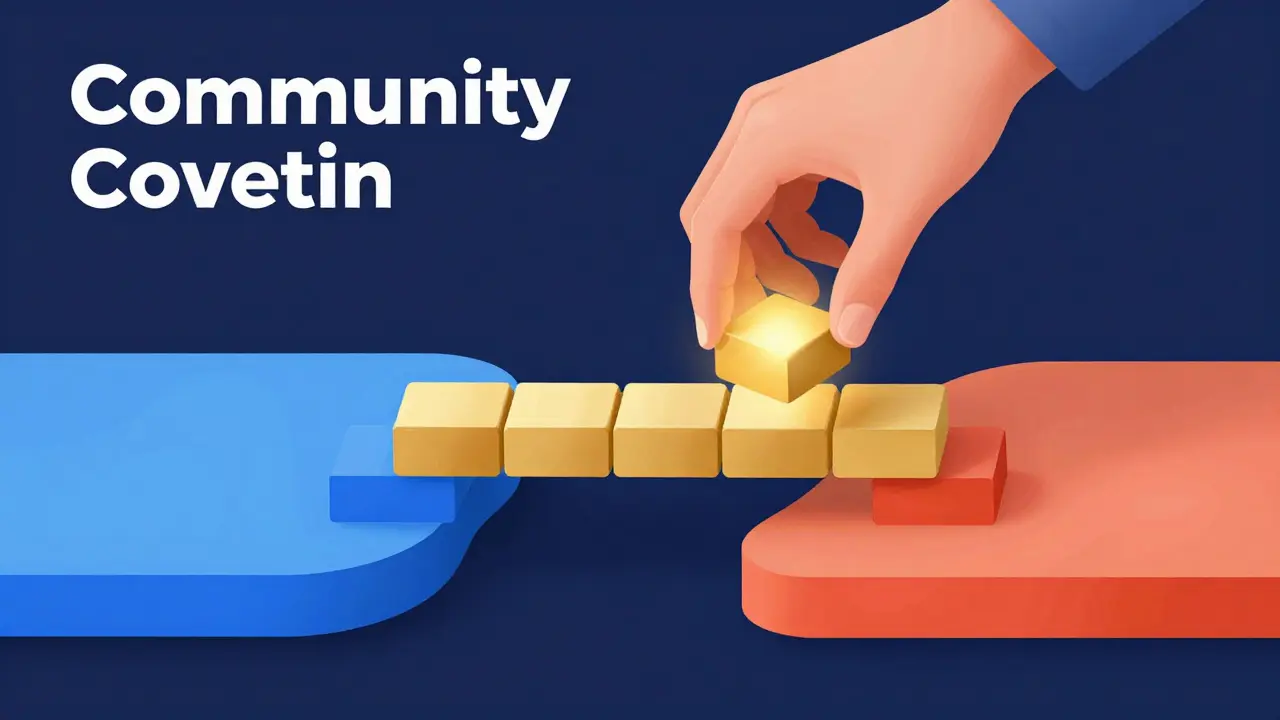
You can't moderate a community based on your own mood or a vague sense of "be nice." You need a concrete set of rules. However, most communities make the mistake of writing a list of "Don'ts" (e.g., Don't be rude, Don't spam). Instead, frame your guidelines as a Community Covenant is a collaborative agreement that defines the shared values and behavioral expectations of a group . This shifts the focus from policing to partnership.
For example, instead of saying "No arguing," try "We engage in curious disagreement." This encourages members to ask, "Can you help me understand why you see it that way?" rather than "You're wrong because X." When a sensitive topic arrives, you refer back to the covenant. It's not you as the "boss" telling them to stop; it's the community reminding itself of the rules it agreed to follow.
| Style | Approach | Best For... | Risk |
|---|---|---|---|
| Authoritarian | Immediate deletion and banning | Hate speech, harassment | Stifles honest discussion; creates resentment |
| Laissez-faire | Let the community fight it out | Low-stakes debates | Toxic environment; members leave |
| Facilitative | Guiding the conversation with questions | Nuanced social/political topics | Requires high moderator effort/time |
Navigating the "Heat of the Moment"
When a thread starts spiraling, your first instinct might be to delete the whole thing. Stop. Unless it violates safety laws or extreme hate speech policies, deletion often fuels the fire. It creates a "censorship" narrative that can alienate members. Instead, use a tiered intervention strategy.
Start with a Gentle Pivot. This is where the moderator enters the thread not to judge, but to re-center. Try something like: "I see a lot of passion here, which shows how important this is. Let's bring it back to our course goal: how does this specific issue relate to the theory we're studying?" This reminds everyone that they are in a learning space, not a political rally.
If the heat persists, move to Direct Intervention. This involves tagging specific users and asking them to move to a private channel or to rephrase their point. For instance, "@User123, your point about X is interesting, but the tone here is becoming aggressive. Could you rephrase that to focus on the idea rather than the person?" This holds the individual accountable while keeping the public space safe for others.
The Role of Social Learning in Conflict
The most successful communities treat conflict as a Teachable Moment is an unplanned opportunity to provide a valuable lesson based on a real-life situation . This is the heart of Social Learning is a theory that people learn from one another via observation, imitation, and models . If you can model a healthy way to disagree, the students will imitate that behavior.
When a sensitive topic is handled well, it actually increases the bond between members. They realize that they can disagree fundamentally on a topic and still respect one another as peers. This is where real growth happens. It's the difference between a community that is "polite" (where everyone is afraid to say anything real) and one that is "brave" (where people are honest but kind).
Handling Trauma and Personal Disclosure
There is a big difference between a political debate and a member sharing a personal trauma. In an educational setting, you might encounter "over-sharing" or a crisis disclosure. The danger here is a Trauma Dump is the act of sharing an intense amount of emotional trauma with someone who is not equipped to handle it , which can trigger other members or overwhelm the moderator.
The rule of thumb here is: Acknowledge, Validate, Redirect.
- Acknowledge: "Thank you for sharing that with us, [Name]. I can hear how difficult this has been."
- Validate: "It takes a lot of courage to be this open."
- Redirect: "Because this is a very deep topic and we want to make sure you get the right support, I'm going to send you a private message with some resources and we can talk more there."
Preventing Burnout in Moderators
Moderating sensitive topics is emotionally draining. You are essentially absorbing the tension of a group. To avoid burnout, community leads should implement a Moderation Rotation is a system where different team members take turns managing the community to prevent fatigue . No one person should be the sole "emotional sponge" for a thousand users.
Establish a "debrief" process. After a particularly nasty thread is resolved, the moderation team should talk about what happened, what worked, and how they are feeling. If you don't process the stress, you'll start reacting with irritability or avoidance, which is the fastest way to lose the trust of your community.
Should I ban anyone who expresses a controversial opinion?
No, unless the opinion crosses into hate speech or harassment. Banning people for "wrong' opinions creates an echo chamber and makes the community fragile. Instead, challenge the way they express the opinion. If they are being disrespectful, moderate the behavior, not the belief.
How do I stop a thread from becoming a political battleground?
The best way is to pivot the conversation back to the learning objective. Ask the users to explain how their political point supports or contradicts the educational material being studied. If it's completely irrelevant to the course, you can politely lock the thread and suggest a separate "Off-Topic" channel for those discussions.
What if a student feels targeted by another member?
Move immediately to private communication. Let the targeted student know they are heard and safe. Then, address the other member privately to explain why their language was harmful. Publicly shaming the offender often makes them dig in their heels; private correction is more likely to lead to a genuine apology.
How do I write a community covenant that people actually follow?
Don't write it in a vacuum. Ask your members for input. Use a survey or a kickoff call to ask, "What does a safe learning environment look like to you?" When people help write the rules, they feel a sense of ownership and are far more likely to hold each other accountable.
When is it appropriate to lock a discussion thread?
Lock a thread when the conversation has become circular-meaning no new insights are being shared and the same arguments are repeating-or when the tone has deteriorated to the point that it is distracting other students from their learning. Always provide a brief explanation of why the thread was locked so members don't feel silenced.
Next Steps for Community Growth
If you're just starting out, don't try to solve every conflict perfectly. Start by auditing your current guidelines. Are they a list of restrictions, or a set of values? Try rewriting one rule this week to be a "value statement" and see how it changes the way you moderate. For those managing larger groups, consider appointing "community ambassadors"-trusted members who can nudge peers toward better behavior before a moderator even needs to step in. This distributes the emotional labor and creates a self-regulating system that can survive almost any sensitive topic.

Comments (9)
Michael Jones April 7 2026
man this is exactly the energy we need right now because most people just want to shut everything down instead of actually growing from the friction
Addison Smart April 8 2026
I really appreciate the emphasis on moving from a culture of correctness to a culture of curiosity, because in my own experience managing diverse groups, I've found that when people feel their core identity is being questioned, they stop listening to the logic and start fighting for their survival, so establishing that baseline of psychological safety isn't just a nice-to-have but is actually the only way to ensure that the marginalized voices in the room feel safe enough to contribute without fear of being steamrolled by the loudest person in the thread.
David Smith April 10 2026
Sure, this looks great on paper, but let's be real, most mods are just power-tripping bureaucrats who love the ban button way too much to actually 'facilitate' anything meaningful. It's all just a fancy way of saying 'please don't yell at me while I try to manage this disaster.'
Lissa Veldhuis April 10 2026
honestly this is some basic level stuff like imagine thinking a little 'covenant' is gonna stop some chaotic troll from absolutely nuking a thread with their unhinged energy lol total fantasy land vibes here
Gabby Love April 12 2026
The point about the 'Trauma Dump' is particularly useful for those of us in asynchronous learning environments where boundaries often get blurred between professional and personal support.
Michael Thomas April 14 2026
Wrong. Just ban the trolls and move on.
Abert Canada April 14 2026
stop babying people. if someone is being a total jerk, you don't 'pivot' the conversation, you just tell them to get lost or grow up, otherwise the actual students just get annoyed by the fluff
allison berroteran April 16 2026
I find it so interesting how the concept of a collaborative agreement can shift the power dynamic from a top-down hierarchy to a shared responsibility, and I wonder if this approach could be scaled to even larger institutional settings where the rules often feel arbitrary and disconnected from the actual lived experiences of the students who are just trying to navigate their education in a supportive way.
Jen Kay April 16 2026
Oh, absolutely. Because nothing says 'effective leadership' like spending three hours gently nudging a troll to be a better person while the rest of the class just watches the train wreck in real time. Truly a masterclass in efficiency.