
You just woke up to an alert. Your company’s Bitcoin treasury moved overnight. Not because a hacker broke in, but because one employee with the private key decided to quit and take their share of the funds. Or worse, they lost their hardware wallet in a taxi on the way to the airport. Single-key wallets are fragile. They rely entirely on one person’s memory, one device’s integrity, and one moment of luck. That is why Multi-Signature Wallets, often called multisig, have become the gold standard for serious crypto custody. But owning a multisig setup isn’t enough. Without rigorous policies and procedures, you’re just building a more complicated way to lose money.
Multisig technology requires multiple independent approvals before any transaction can execute. It eliminates the single point of failure. However, the complexity shifts from technical vulnerability to operational risk. If your team doesn’t know who holds which key, or if your emergency protocols are vague, you face lockouts, delays, and potential fraud. This guide breaks down exactly how to structure your multisig security framework so it protects your assets rather than hindering your operations.
The Core Mechanics: Understanding M-of-N Thresholds
At its heart, a multisig wallet operates on an "M-of-N" threshold scheme. "N" represents the total number of keys associated with the wallet, while "M" is the minimum number of signatures required to authorize a transaction. For example, a 2-of-3 setup means three keys exist, but any two must sign to move funds. This configuration tolerates the loss of one key without freezing assets, yet prevents any single individual from acting alone.
Choosing the right threshold is your first major policy decision. A 1-of-3 setup offers convenience but little security against insider theft. A 3-of-5 setup provides high security but risks fund lockout if too many keyholders are unavailable. The Security Alliance recommends maintaining at least two redundant signers (N-M ≥ 2) for critical treasuries. This ensures that if one signer is compromised or offline, the organization retains enough active keys to meet the quorum and rotate out the bad actor without panic.
| Configuration | Security Level | Best For | Risk Profile |
|---|---|---|---|
| 2-of-3 | Balanced | Small teams, family offices, partnerships | High tolerance for key loss; moderate collusion risk |
| 3-of-5 | High | Corporate treasuries, DAOs, exchanges | Low lockout risk; requires robust coordination |
| 4-of-6 | Very High | Institutional custody, large reserves | Complex management; minimal single-point failure |
Key Distribution and Role Separation
Policies fail when keys are concentrated. If your CFO holds two of the three keys in a 2-of-3 setup, you haven’t distributed control; you’ve just added friction. Effective governance mandates separation of duties. Keys should be assigned to distinct roles, such as Operations, Compliance, and an External Auditor or Board Member. No single department should hold enough keys to unilaterally move funds.
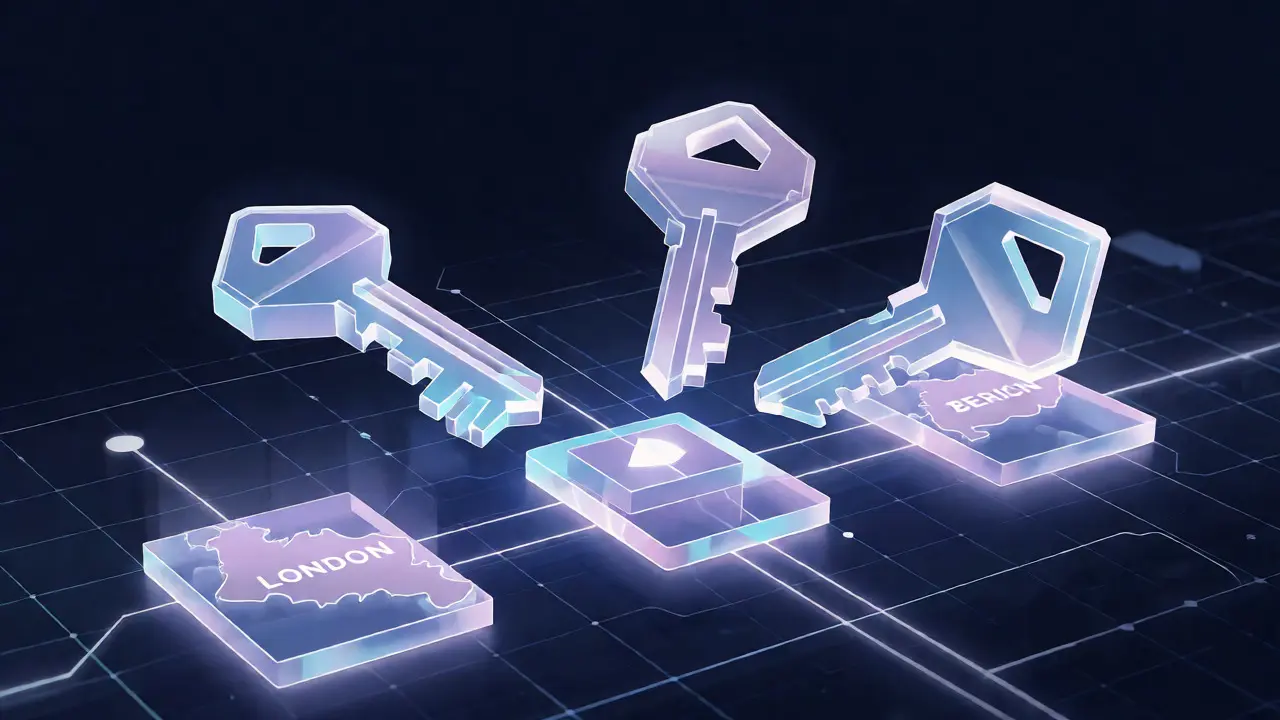
Physical distribution matters as much as logical assignment. Store signing devices-preferably Hardware Wallets like Ledger or Trezor-in different geographic locations. If all devices sit in the same office safe, a fire or burglary compromises the entire wallet. In Edinburgh, where I live, we see this often with local startups; they keep everything in one server room. Don’t do that. One key might stay with the CEO in London, another with the CTO in Berlin, and a third in a secure vault in Zurich.
Never reuse keys. A common mistake is taking a private key from a hot wallet used for daily transactions and adding it to a multisig cold storage setup. That key has already been exposed to online environments. Generate fresh keys on clean, air-gapped hardware for every new multisig address. Document which key belongs to which role immediately upon generation. Ambiguity here leads to disaster during emergencies.
Operational Procedures: The Daily Workflow
How does a transaction actually happen? You need a standardized workflow. Randomness breeds errors. Start by defining transaction tiers. Routine withdrawals under a certain value, say $10,000, might require only two operational signers. Large transfers, policy changes, or adding new whitelisted addresses should trigger a higher threshold, perhaps requiring compliance approval as well.
Implement a "proposal" phase. Before signing, one party creates the transaction proposal, specifying the destination address and amount. Other signers review this data independently. Do not trust the interface blindly. Verify the recipient address on the hardware wallet screen itself, not just on the computer monitor. Malware can spoof the display on your PC, showing a correct address while sending funds elsewhere. Each signer must physically confirm the details on their device.
Use real-time monitoring tools. Platforms like Safe (formerly Gnosis Safe) for Ethereum or BitGo for Bitcoin provide dashboards that log every action. Set up automated alerts for unusual patterns. If a transaction attempts to send 90% of the balance to a new, unrecognized address, flag it immediately. These logs create an immutable audit trail, essential for both internal accountability and external regulatory compliance.
Incident Response and Emergency Protocols
What happens when things go wrong? You need a playbook. Assume compromise will occur. Maybe a laptop is stolen, or a keyholder leaves the company unexpectedly. Your procedure should dictate immediate steps:
- Verify Quorum: Check if enough uncompromised keys remain to sign a migration transaction.
- Rotate Keys: Remove the compromised key from the active set. If possible, update the multisig script or smart contract to exclude the old key and include a new one.
- Migrate Funds: If updating the script is too complex or risky, generate a brand-new multisig address with fresh keys. Sign a transaction to move all assets from the old address to the new one using the remaining valid keys.
- Forensic Review: Analyze recent transactions. Did the compromised key sign anything suspicious? Who else signed?
Practice these scenarios. Conduct tabletop exercises twice a year. Simulate a situation where the primary signer is unreachable due to flight delays or illness. Can the backup signer access their device? Do they have the necessary software installed? Is their passphrase stored securely? Many organizations discover during a crisis that their backup keyholder forgot their PIN or lost their recovery seed. Test your backups.
Audits and Continuous Improvement
Security isn’t a one-time setup. It’s a maintenance cycle. Schedule annual external audits of your multisig configuration. Auditors should verify that signer lists match current staff, thresholds align with risk appetite, and hardware devices are still supported by manufacturers. They should also review your key rotation history. Are you rotating keys regularly? Even if no breach occurred, periodic rotation reduces the window of opportunity for long-term attackers.
Internal reviews should happen quarterly. Reconcile on-chain balances with internal ledgers. Check that all signers are still employed and authorized. If someone leaves, revoke their access immediately. On smart-contract platforms like Ethereum, removing a signer is straightforward via a governance vote. On Bitcoin, changing the script requires moving funds, so plan for these transitions carefully.
Keep documentation living. Update your policies when you hire new staff, change jurisdictions, or adopt new technologies. If you switch from a basic 2-of-3 setup to a multi-tiered governance model, rewrite your procedures. Stale documentation is worse than none, because it gives false confidence.

Multisig vs. MPC: Making the Right Choice
You might hear about Multi-Party Computation (MPC) wallets as an alternative. Both distribute control, but they work differently. Multisig requires multiple separate signatures broadcast on-chain. MPC splits the private key into shares held by different parties, who compute a signature together without ever reconstructing the full key.
| Feature | Multisig | MPC |
|---|---|---|
| Transparency | High (on-chain verification) | Lower (off-chain computation) |
| Auditability | Excellent (public ledger) | Good (requires provider logs) |
| Complexity | Higher (coordination needed) | Lower (seamless UX) |
| Regulatory View | Widely understood | Emerging standards |
For most institutions, multisig remains preferred because its rules are enforced transparently on the blockchain. Regulators and auditors understand multisig. They can see exactly who signed what. MPC is gaining traction for consumer apps where user experience matters more than public verifiability. Choose based on your need for transparency versus ease of use.
Frequently Asked Questions
What happens if I lose one key in a 2-of-3 multisig wallet?
You can still access your funds using the remaining two keys. However, you should immediately rotate the wallet configuration. Generate a new set of keys and migrate your funds to a new multisig address to ensure that the lost key cannot be found and used by an attacker in combination with a future compromised key.
Can a hacker steal funds if they compromise one signer's device?
No, not easily. In a properly configured multisig setup, compromising one device only gives the attacker one signature. They would need to compromise enough other devices to meet the M-of-N threshold. Since devices are typically stored in different physical locations and controlled by different people, simultaneous compromise is difficult.
Do I need hardware wallets for every signer?
Yes, for optimal security. Software-only keys are vulnerable to malware and phishing attacks. Hardware wallets isolate private keys from internet-connected devices, ensuring that even if a computer is infected, the key remains secure. Using hardware wallets for all signers significantly raises the barrier for attackers.
How often should I rotate my multisig keys?
There is no fixed rule, but best practices suggest rotating keys annually or after significant organizational changes, such as staff turnover. Regular rotation limits the exposure time of any potentially compromised key and ensures that the signer list reflects the current state of the organization.
Is multisig better than a traditional bank account for crypto?
It depends on your needs. Banks offer FDIC insurance and simple recourse. Multisig offers self-custody and protection against internal theft but places the burden of security on you. For large amounts, multisig provides superior control and transparency, but it requires disciplined operational procedures to manage effectively.
Next Steps for Implementation
Start small. Don’t move your entire treasury into a complex 4-of-7 setup on day one. Begin with a 2-of-3 configuration. Define your roles clearly. Assign one key to yourself, one to a trusted partner, and one to a secure backup location. Test the workflow with a small amount of funds. Send a test transaction, receive a test deposit, and simulate a key loss scenario. Only once you are comfortable with the mechanics should you scale up your holdings and complexity. Remember, the technology is only as strong as the humans managing it.

Comments (8)
Mithilesh Singh October 3 2026
Finally someone says it. Most people are too lazy to learn this and lose their money because they are stupid.
Shaina Silver-Baird October 5 2026
The reliance on human memory for private key management is fundamentally flawed, especially when considering the potential for state-level surveillance or coercion of individual signers. If a government can compel one signer in a 2-of-3 setup to reveal their seed phrase under duress, the security model collapses entirely. Furthermore, the assumption that hardware wallets provide absolute isolation ignores the possibility of supply chain compromises at the manufacturing stage, which could embed backdoors into the secure element itself.
Ian Mason-Laurence October 7 2026
It is worth noting that while multisig provides superior security against single points of failure, it introduces significant operational overhead that many small entities underestimate. The coordination costs associated with gathering multiple signatures can delay critical transactions during periods of high market volatility, potentially resulting in missed opportunities or increased slippage. Additionally, the complexity of managing geographically distributed keys requires robust communication infrastructure, which itself becomes a new vector for social engineering attacks if not properly secured.
Tommy Cahyadi October 7 2026
Oh great, another article telling us we're doing it wrong unless we follow your specific rules. I'm sure my simple 2-of-3 setup is fine, thanks. No need to complicate things just to feel important about 'procedures'. I'll keep my keys where I can see them, not in some imaginary vault in Zurich.
Anthony . October 8 2026
This is such a thoughtful breakdown! 🌟 It really highlights how technology alone isn't enough; we have to look at the human side of things too. I think the part about tabletop exercises is super valuable because it helps teams bond and understand each other's roles better. It’s like building a community around trust and safety. We should all strive to be more inclusive in our security practices, ensuring everyone feels responsible and empowered. 💪🔒
Marisa Marroquin October 9 2026
I find the juxtaposition between the cold, hard logic of cryptographic thresholds and the messy, unpredictable nature of human behavior quite poetic. There is something almost tragic about the idea that a lost taxi ride or a forgotten PIN code can unravel years of careful accumulation. It reminds me that even in the digital realm, we remain tethered to our fragile physical existence.
Ejike Ugwu October 10 2026
They don't want you to know this but the banks are scared of multisig. They push MPC because it's easier to control from off-chain. If you use multisig, they can't freeze your assets as easily. That's why the media never talks about the real risks of centralized custody. Wake up!
Kathy Mccoy October 11 2026
Great start, everyone! I think Mithilesh raises a valid point about the learning curve being a barrier for many. Maybe we can simplify the initial steps? For those just starting out, focusing on getting the basic 2-of-3 workflow right before worrying about complex audits might reduce anxiety. Let's support each other in taking these first safe steps rather than overwhelming ourselves with best practices immediately.