
You just bought a Bored Ape for 50 ETH. You own the token. But do you actually own the picture of the ape? Can you print it on a T-shirt and sell it? Can you use it in a movie? The answer is rarely "yes" by default. Most people confuse owning the NFT with owning the underlying artwork. They are two completely different things.
Think of it like buying a physical painting. If you buy a Picasso from an auction house, you own the canvas and the paint. You can hang it in your living room. You can even resell the physical object. But you do not automatically get the right to make posters of that painting or put it on coffee mugs. That requires a separate agreement with the artist’s estate. An NFT works the same way, but with code instead of paper receipts.
The Core Distinction: Token vs. Content
An NFT is essentially a unique entry in a database-specifically, a blockchain ledger. It proves who controls a specific digital identifier. It does not store the high-resolution image itself. Instead, it points to where that file lives. This pointer is called metadata. When you buy an NFT, you are buying the control over that identifier. You are not necessarily buying the intellectual property behind the file it points to.
This distinction matters because copyright law is strict. In the United States, under 17 U.S.C. §204(a), transferring copyright ownership requires a signed writing. A blockchain transaction record usually doesn’t count as that signed writing unless the smart contract explicitly incorporates those terms into a legally binding format. Without that explicit transfer, the artist keeps the copyright. You just hold the receipt.
What Does the Smart Contract Actually Grant?
Most creators don’t assign full copyright when they mint an NFT. They grant a license. And licenses vary wildly. One project might give you personal display rights only. Another might let you commercialize the art up to $100,000 in revenue. A third might give you nothing at all beyond bragging rights.
You need to read the license text. Not the tweet. Not the Discord announcement. The actual legal text linked in the metadata or on the marketplace page. Here is what you are typically looking for:
- Personal Use: Can you use the image as your profile picture on Twitter or LinkedIn? Usually yes.
- Commercial Merchandising: Can you print the image on shirts, mugs, or posters and sell them? Often no, unless specified.
- Derivative Works: Can you edit the image, create animations, or make new art based on it? Check for "derivative rights."
- Transferability: If you sell the NFT, does the license go to the next buyer? Or does it die with your sale?
If the license is silent, assume the creator kept the rights. Silence favors the copyright holder, not the token buyer.
Case Study: Bored Ape Yacht Club vs. Standard Projects
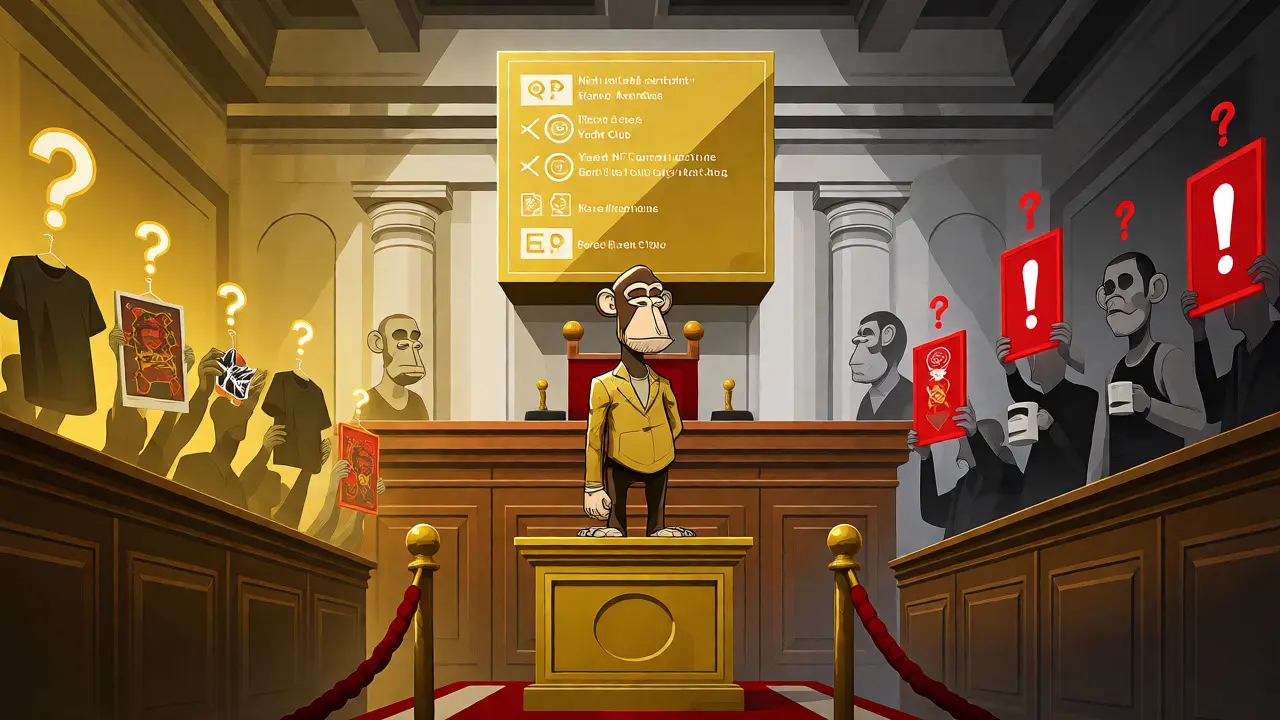
Bored Ape Yacht Club (BAYC) is famous partly because its license was unusually generous. Yuga Labs granted holders a worldwide, royalty-free license to use, copy, and display their specific ape for both personal and commercial purposes. This meant if you owned an Ape, you could start a clothing line featuring that exact ape image. The Ninth Circuit Court of Appeals confirmed this broad scope in July 2025, noting that Yuga’s terms conferred rights to the underlying art "completely."
But don’t generalize this. Most projects aren’t BAYC. Many newer collections have restrictive licenses. Some explicitly forbid commercial use. Others allow it only while you hold the token. If you sell the NFT, your right to use the image commercially vanishes. This creates a "use-it-or-lose-it" dynamic that affects resale value. Always check if the license is perpetual or tied to token possession.
Marketplace Terms Don’t Help You
Buyers often think OpenSea or Rarible grants them extra rights. They don’t. Marketplace platforms are intermediaries. Their terms of service usually state that they do not grant ownership of content. They simply facilitate the trade. OpenSea, for example, obtains a broad license to display your content for platform operations, but that doesn’t transfer copyright to you. It just lets them show your NFT on their website.
Be careful with marketing programs too. Some marketplaces offer features like "Feature My NFTs." These often require you to grant the platform additional rights to modify, animate, or sublicense your image for promotional purposes. Read the fine print before clicking "accept." You might be giving away more than you realize.
Taxonomy of NFT Licenses
Not all licenses are created equal. Here is a breakdown of common structures you will encounter in 2026:
| License Type | What You Can Do | Typical Restrictions |
|---|---|---|
| Personal Display Only | Use as profile pic; display in virtual galleries. | No printing, no merchandise, no derivatives. |
| Non-Commercial License | Create fan art; share on social media; non-profit use. | No selling products; no advertising revenue. |
| Commercial Limited | Sell merch up to a revenue cap (e.g., $100k/year). | Must attribute creator; no exclusive branding. |
| Full Commercial | Sell unlimited merch; create games; use in ads. | Rare. Often requires holding the token. |
| Copyright Assignment | You own the IP entirely. Can sue infringers. | Very rare. Requires written contract. |
Hidden Risks: Trademarks and Publicity Rights
Copyright isn’t the only issue. What if the NFT features a celebrity? Or a branded logo? Owning the NFT doesn’t clear trademark or publicity rights. If an NFT shows LeBron James dunking, the photographer owns the copyright. The NBA owns the team logos. LeBron owns his likeness. Buying the NFT might give you a copyright license, but it won’t stop the NBA or LeBron from suing you if you print it on energy drinks without permission.
The case of Yuga Labs v. Ripps highlighted that NFTs can be protected as trademarks themselves. However, holding an NFT doesn’t mean you own the brand name associated with it. You might own the token for "CryptoPunk #3100," but you don’t own the word "CryptoPunks" as a trademark.
Due Diligence Checklist Before You Buy
Don’t just look at the floor price. Look at the legal foundation. Here is how to vet an NFT purchase like a lawyer:
- Find the License: Go to the official project website. Find the "Terms of Service" or "License Agreement." Download it. Save it as a PDF. Links break.
- Check the Minter: Is the minter the actual artist? Verify their identity. Unauthorized minting happens frequently.
- Inspect Metadata Storage: Is the image stored on IPFS or Arweave (permanent)? Or is it on a central server (like AWS) that could disappear? If the server dies, your NFT becomes a broken link.
- Read Resale Clauses: Does the license terminate when you sell? This affects liquidity.
- Identify Third-Party Rights: Does the art contain stock photos, fonts, or licensed characters? Who cleared those rights?
What Happens If Things Go Wrong?
If you print an image on a shirt and the artist sues you, "I didn't know" is not a defense. Blockchain immutability records the transaction, but it doesn’t cure legal defects. If the minter didn’t have the right to mint the work, your NFT might be worthless legally, even if it has high market value.
Also, consider jurisdiction. Most NFT disputes fall under US or UK law depending on the platform and creator location. As of late 2026, there is still no universal global standard for NFT ownership. Courts apply existing copyright and contract laws. This means local rules matter. If you are in Scotland or the UK, the Copyright, Designs and Patents Act 1988 applies. It also requires written assignments for copyright transfers.
Frequently Asked Questions
Does buying an NFT give me copyright?
No, not automatically. Buying an NFT gives you ownership of the token itself, which is a digital certificate of authenticity. Copyright remains with the original creator unless there is a specific, written assignment of copyright included in the sale terms.
Can I use my NFT image for commercial purposes?
It depends entirely on the license provided by the creator. Some projects, like Bored Ape Yacht Club, allow broad commercial use. Others restrict usage to personal display only. Always check the specific license agreement attached to the collection.
What happens to my rights if I sell the NFT?
This varies by project. Some licenses are "perpetual," meaning you keep the rights even after selling the token. Others are "conditional," meaning your rights end once you transfer the token to a new owner. Check if the license follows the wallet or the person.
Is the metadata permanent?
Not always. While the blockchain record is immutable, the metadata often points to external storage like IPFS or a web server. If that external source disappears or changes, your NFT may lose access to the visual or audio content it represents. On-chain storage is more durable but rarer due to cost.
Do marketplace terms override creator licenses?
No. Marketplaces like OpenSea generally do not grant you rights to the underlying content. Their terms usually defer to the creator's license. The platform merely facilitates the transaction and displays the content subject to the seller's permissions.
Next Steps for Buyers
Stop treating NFTs as simple investments. Treat them as complex contracts. Before you click buy, spend ten minutes reading the license. If you plan to build a business around the image, consult a lawyer who understands digital assets. The gap between "owning the token" and "owning the IP" is where most legal headaches live. Close that gap with knowledge, not assumptions.
