
You’ve probably heard the term "Layer 2" thrown around a lot if you’re into crypto. It’s supposed to be the solution to Ethereum’s congestion and high fees. But here’s the problem most people miss: most Layer 2 solutions are isolated islands. They don’t talk to each other well, they have different security models, and they feel like separate products rather than parts of a unified system. That fragmentation hurts users and developers alike.
Enter the OP Stack, an open-source framework designed to fix this exact issue. Instead of building one giant L2, OP Stack lets teams launch their own custom chains that all speak the same language. This creates what Optimism calls the Superchain-a network of interoperable Layer 2 blockchains sharing security and standards. By September 2026, over 50 chains had launched on this stack, including heavy hitters like Ink by Kraken and Soneium by Sony. If you’re trying to understand how Ethereum scales without breaking into pieces, this is the architecture you need to know.
What Exactly Is the OP Stack?
Think of the OP Stack as a modular kit for building blockchains. It’s not a single piece of software you just install; it’s a collection of standardized components. The core idea comes from the Optimism Collective, who released the framework under an MIT license in October 2022. The goal was simple: create a blueprint for highly scalable, highly interoperable blockchains.
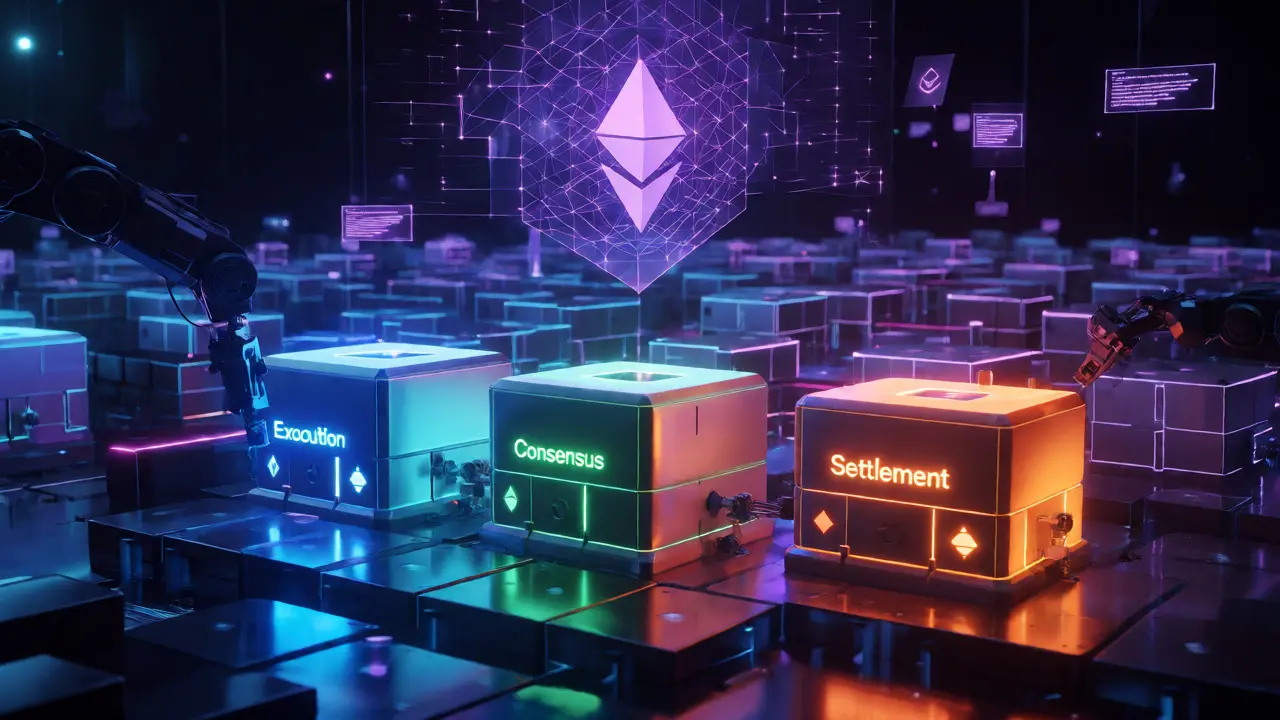
Every chain built on the OP Stack uses three main modules:
- Execution Layer: This processes transactions and manages state. It’s essentially the engine room where your smart contracts run.
- Consensus Layer: This handles block production and validation, ensuring everyone agrees on the order of transactions.
- Settlement Layer: This finalizes state commitments back on Ethereum Mainnet (L1). This is crucial because it ties the L2’s security directly to Ethereum.
Because these modules are standardized, any developer can fork the code, tweak parameters, and launch their own chain. You don’t need to invent a new consensus mechanism or build a bridge from scratch. You just configure the existing blocks. This drastically lowers the barrier to entry for launching a dedicated blockchain for gaming, DeFi, or enterprise use.
The Superchain Concept: Why Interoperability Matters
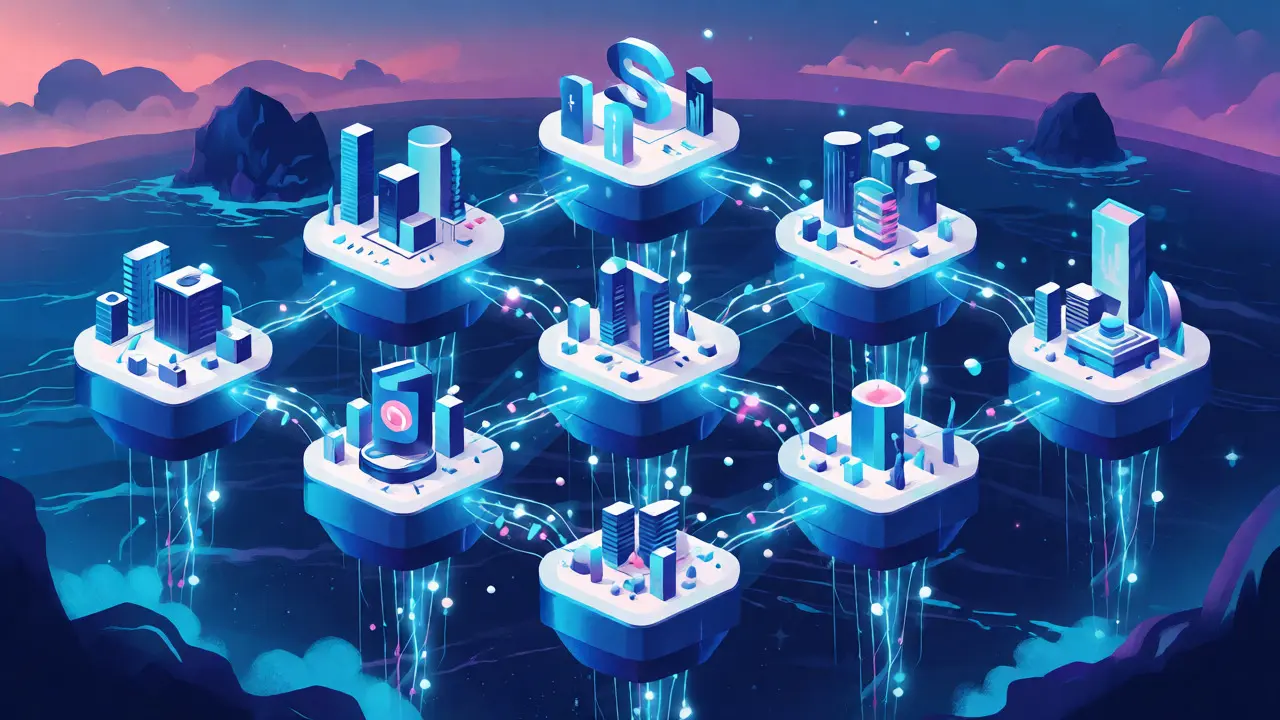
If you only care about speed, you might ask, "Why bother with a shared standard?" The answer lies in the Superchain. Unlike traditional L2s that operate in silos, the Superchain enforces a set of rules called the Blockspace Charter. These rules ensure that every chain in the ecosystem adheres to specific technical and governance standards.
This shared foundation allows for seamless communication between chains. Imagine sending assets from a gaming L2 to a DeFi L2 without needing complex bridges or waiting days for confirmations. The Superchain aims to make cross-chain interactions feel native. As of late August 2026, this model has attracted major brands. Kraken launched Ink, Sony launched Soneium, and OKX launched Xlayer-all using the OP Stack. They aren’t just competitors; they are participants in a shared economic zone.
However, it’s worth noting that this isn’t perfect yet. In February 2026, Base, originally a flagship Superchain member, announced plans to pivot toward a more vertically controlled stack. This shows that while the vision is strong, big players sometimes prefer tighter control over shared governance. Still, the momentum remains undeniable, with over 50 active chains proving the model works at scale.
Technical Performance and Security Model
Let’s look at the numbers. How fast is an OP Stack chain? According to Optimism’s fact sheet, a standard configuration targets throughput of 32.5 million gas per second with block times of just 200 milliseconds. For context, Ethereum Mainnet operates at roughly 15 million gas per block with 12-second block times. That means an OP Stack chain can theoretically handle orders of magnitude more transactions than L1.
But speed comes with trade-offs, specifically regarding security. OP Stack chains are optimistic rollups. Here’s how that works:
- Transactions happen off-chain on the L2.
- Data batches and state roots are posted to Ethereum.
- A "fault proof" mechanism allows challengers to dispute incorrect state transitions during a seven-day window.
This seven-day withdrawal period is the cost of optimism. You trust that no one cheated unless proven otherwise within that week. While ZK-rollups offer faster finality, they require complex cryptographic proofs that are expensive to generate. OP Stack chooses simplicity and EVM equivalence over instant finality. For most applications, waiting a few days for a large withdrawal is acceptable if it means lower costs and easier development.
Comparing OP Stack to Alternatives
You might wonder how OP Stack stacks up against other popular frameworks like Arbitrum Orbit or Polygon CDK. Each has its own philosophy.
| Feature | OP Stack | Arbitrum Orbit | Polygon CDK |
|---|---|---|---|
| Proof System | Optimistic (Fault Proofs) | Optimistic (Nitro/BOLD) | ZK Validity Proofs |
| Withdrawal Finality | ~7 Days | ~7 Days | Near Instant |
| EVM Compatibility | Equivalent | Equivalent | zkEVM Compatible |
| Interoperability | Superchain (Shared Standards) | Arbitrum Ecosystem | AggLayer |
| Deployment Model | Open-Source SDK | Chain-as-a-Service / Custom | Managed Service / Custom |
The key differentiator for OP Stack is the Superchain coordination story. Arbitrum Orbit is great if you want to stay deep within the Arbitrum ecosystem. Polygon CDK is ideal if you prioritize near-instant finality and are comfortable with ZK technology. But if you want to plug into a growing network of interoperable optimistic rollups with a clear path to shared liquidity, OP Stack currently leads in ecosystem momentum.
Who Should Use the OP Stack?
Not every project needs its own L2. So when does it make sense to deploy an OP Stack chain?
- Gaming Studios: Games need low latency and cheap transactions. A dedicated L2 prevents game traffic from clogging general-purpose networks. Sony’s Soneium is a prime example of this strategy.
- Exchange-Led Chains: Centralized exchanges like Kraken (Ink) and OKX (Xlayer) use OP Stack to keep user activity on-chain while maintaining brand identity. It gives them control over the user experience without sacrificing Ethereum security.
- Enterprise Solutions: Companies wanting private or semi-private execution environments can customize the OP Stack modules to fit compliance needs while still settling on public Ethereum.
Conversely, if you’re building a high-frequency trading app that requires instant settlement, the seven-day withdrawal window might be too slow. In those cases, a ZK-based solution might be better despite higher prover costs.

Implementation Challenges and Governance
Launching a chain is easy; running it securely is hard. The OP Stack documentation emphasizes that "standard" chains must adhere to strict governance parameters. If you deviate too much, you risk falling out of sync with the Superchain’s upgrade paths.
Developers face two main hurdles:
- Fault Proof Configuration: You need to ensure your sequencer correctly posts data and that challengers can effectively monitor it. Misconfiguration here can weaken security.
- Upgrade Governance: Who decides when to update the protocol? The Optimism Collective maintains the core code, but individual chains have some autonomy. Balancing centralization with decentralization is an ongoing tension.
Despite these challenges, the developer experience is surprisingly smooth. Because the OP Stack is EVM-equivalent, you can port existing Solidity contracts almost unchanged. Wallets, RPC providers, and tools like MetaMask work out of the box. This reduces the learning curve significantly compared to non-EVM chains like Solana or Aptos.
The Future of Composable Scaling
We are moving away from the era of "winner takes all" Layer 2s. The future looks like a web of interconnected chains, each optimized for specific tasks but sharing a common backbone. The OP Stack is currently the strongest candidate for this backbone due to its maturity and adoption rate.
With continuous updates to the GitHub repository through mid-September 2026, the framework is evolving rapidly. Expect improvements in cross-chain messaging and shared sequencing in the coming years. The departure of Base highlights that competition drives innovation-Optimism must keep delivering value to retain partners. For now, if you’re betting on composable Layer 2 ecosystems, OP Stack is the infrastructure to watch.
Is the OP Stack free to use?
Yes, the OP Stack is open-source and licensed under MIT. There are no licensing fees to use the framework. Costs are primarily associated with running infrastructure (sequencers, nodes) and paying Ethereum L1 data availability fees.
How long does it take to withdraw funds from an OP Stack chain?
Standard withdrawals typically take about seven days. This delay allows time for fault proofs to challenge any invalid state transitions before funds are finalized on Ethereum Mainnet.
Can I build a private chain with OP Stack?
Yes, the modular nature of OP Stack allows for customization. While most deployments are public, enterprises can configure permissions and visibility settings to create private or consortium-style chains that still settle on Ethereum.
What is the difference between OP Mainnet and the OP Stack?
OP Mainnet is a specific Layer 2 blockchain built using the OP Stack. The OP Stack is the underlying software framework used to build OP Mainnet and many other chains like Base, Ink, and Soneium.
Does OP Stack support smart contracts written for Ethereum?
Yes, OP Stack chains are EVM-equivalent. This means smart contracts written for Ethereum usually work without modification, and developers can use standard tools like Hardhat, Foundry, and MetaMask.

Comments (13)
Chris Neal September 17 2026
Technically, calling them "isolated islands" is a bit of an oversimplification if you understand the current state of bridging infrastructure, but I’ll give credit where it’s due: OP Stack does standardize the tech stack in a way that Arbitrum Orbit and Polygon CDK struggle to match on the governance side. The real value prop isn't just speed; it's the shared security model via Ethereum L1 settlement which reduces the trust assumptions for cross-chain interactions significantly compared to external bridges. That said, the seven-day withdrawal window remains a massive UX bottleneck for retail users who don't care about cryptographic finality proofs-they just want their money back instantly.
Brannen Hall September 17 2026
Base leaving the Superchain? Yeah, that kills the whole "interoperability" narrative. Why would big players stick around when they can vertical integrate and keep all the MEV and fees for themselves? This article reads like Optimism PR fluff ignoring the fact that everyone wants to be their own sovereign chain now.
Vishnu Vardhan Reddy M S September 18 2026
Oh, come on, Brannen. You're missing the forest for the trees again. Base pivoting doesn't mean the architecture failed; it means the market is testing boundaries. If anything, it proves the OP Stack is robust enough that even a competitor can fork it and build something huge (like Base did) without needing Optimism's permission. That's open source working as intended, not a failure of the Superchain vision. Keep up with the nuance, friend!
Jeff Falcon September 18 2026
I think Vishnu makes a great point here, and honestly, looking at the long-term trajectory, we need to remember that interoperability isn't just about technical compatibility-it's about economic alignment too. When chains share a common language and standards, it lowers the friction for developers to deploy across multiple environments, which ultimately benefits the entire ecosystem by creating more liquidity and user activity in places that might otherwise remain siloed. It’s like how USB-C standardized charging; initially, people complained about losing proprietary advantages, but eventually, the convenience and universality won out because it made life easier for everyone involved. So while yes, some big players might drift away to optimize their specific business models, the core value proposition of a composable, modular framework remains incredibly strong for the majority of builders who don't have the resources to maintain bespoke infrastructure from scratch. We should focus less on the churn of major brands and more on the steady growth of smaller, specialized chains that are actually leveraging these tools to create unique experiences that wouldn't exist on a monolithic L1 or a rigid L2. This kind of organic growth is usually a healthier sign of sustainability than top-down mandates anyway, so let's stay optimistic about the potential here rather than getting bogged down in corporate maneuvering drama.
michelle veluz September 20 2026
It’s all a conspiracy! They want us trapped in this "Superchain" web so they can control the narrative!! Why do you think Sony and Kraken are jumping in?? They aren’t building for US, they are building for CONTROL!!! Don’t let them fool you with fancy words like "composable"-it’s just centralized points of failure disguised as decentralization!!! Wake up!!!
Deb Kortyna, MBA September 20 2026
While Ms. Veluz’s passion is noted, her assertion lacks empirical grounding. The OP Stack’s MIT license explicitly permits private deployment, meaning entities like Sony retain full sovereignty over their execution environment. To claim this is a "trap" ignores the fundamental architectural choice that allows customization. One must distinguish between shared standards and centralized control; they are not mutually exclusive concepts.
Alyson Karson September 21 2026
omg yes!! finally someone explains this without making my brain hurt lol. i tried deploying on a random l2 last month and the docs were trash but op stack stuff just works?? like meta mask connects instantly and no weird rpc errors. super happy rn 🚀🔥
Kyle Ware September 22 2026
Glad to hear the DX was smooth Alyson. For those diving deeper, remember that EVM equivalence is the key driver there. It means your existing tooling works. Just watch out for gas estimation differences though, sometimes RPCs lag slightly on new forks.
Chandan Singh September 22 2026
The comparison table is useful but incomplete. It fails to mention that ZK-rollups are rapidly reducing proof generation costs, which could erode the optimistic rollup advantage within 2-3 years. Also, the "7-day" withdrawal is often bypassed via third-party liquidity providers, so the actual UX delay is much lower for most users. Context matters.
alex kobri September 23 2026
context does matter but maybe we’re asking the wrong question entirely... why are we obsessed with layer 2s when layer 1 scaling is coming online? sharding, proto-danksharding... are we building temporary solutions for permanent problems? feels like we’re optimizing for a world that might not exist in 5 years
Iva Grekova September 25 2026
i think temporary solutions are still valuable if they solve immediate pain points. waiting for perfect l1 scaling feels like waiting for utopia while fees eat our lunch today. chill vibes only though, both paths lead to adoption eventually imo ✨
Onyinyechi Nwosu September 26 2026
the part about gaming studios resonates most. latency is everything for gameplay. eth mainnet is too slow for real time action. dedicated l2s make sense for that niche. good read.
tiffany King September 28 2026
Love seeing more enterprise adoption like Sony and Kraken! It really validates the technology beyond just crypto natives. Exciting times ahead for the ecosystem!