
Why do people pay £500 for a weekend workshop but balk at a £20 online course? It’s rarely about the content quality. It’s about how you frame the price. In the education sector, pricing psychology is the invisible lever that turns skepticism into enrollment. When you get it right, your students feel they are making a smart investment. When you get it wrong, even the best curriculum sits empty.
We often think of pricing as a math problem-add up costs, add a margin, set the price. But in education, pricing is a communication tool. It signals value, status, and risk. By understanding the cognitive biases that drive purchasing decisions, you can structure your offers so they align with how your potential students actually think. This isn’t about tricking anyone; it’s about removing friction and highlighting the transformation your product delivers.
The Anchoring Effect in Course Pricing
Anchoring is one of the most powerful tools in your arsenal. Humans rely heavily on the first piece of information offered-the "anchor"-when making decisions. If you show a high-priced option first, subsequent options seem cheaper by comparison.
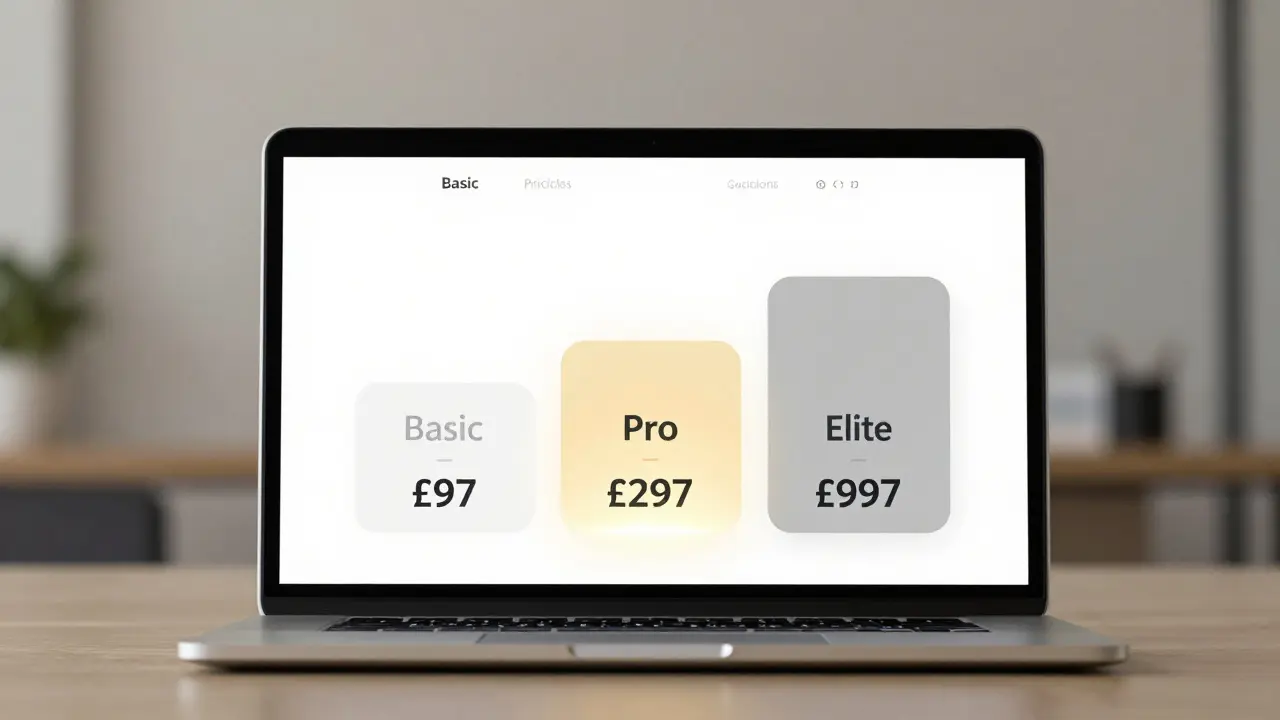
Consider a typical three-tier pricing page. You have a Basic plan for £97, a Pro plan for £297, and an Elite plan for £997. Most buyers will land in the middle. The £997 Elite plan isn’t necessarily there to sell; it’s there to make the £297 Pro plan look like a bargain. Without that high anchor, £297 might feel expensive. With it, £297 feels reasonable.
To use anchoring effectively:
- Show the highest price first. Even if it’s not your target volume driver, it sets the ceiling for perceived value.
- Use strikethrough prices carefully. Showing "Was £497, Now £297" works, but only if the original price was genuine. Fake discounts erode trust quickly in the education space.
- Anchor against alternatives. Compare your course price to the cost of a university degree or a private tutor. A £500 coding bootcamp looks tiny next to a £15,000 university tuition fee.
Decoy Pricing: Guiding Choices
Closely related to anchoring is decoy pricing. This involves introducing a third option that is deliberately less attractive than another, steering customers toward your preferred choice. Think of it as the "Goldilocks" effect-you want them to pick the one that’s "just right," which is usually your most profitable tier.
Imagine you sell a video course. Option A is just the videos for £100. Option B is the videos plus community access for £150. Most people hesitate between these two. Now add Option C: Just the videos for £140. Suddenly, Option B looks like a no-brainer because you get the same thing as C plus community access for only £10 more. Option C is the decoy. It exists solely to make Option B look superior.
In education products, this often plays out with support levels. A self-paced course (low price), a cohort-based course with weekly calls (medium price), and a 1-on-1 mentorship package (high price). The self-paced option acts as a low anchor, while the mentorship acts as a high anchor, making the cohort-based model appear as the balanced, high-value choice.

The Power of Charm Pricing and Round Numbers
You’ve seen it everywhere: £9.99 instead of £10. This is charm pricing, or left-digit effect. Our brains process numbers from left to right. We see the "9" in £9.99 and categorize it mentally as "nine-something" rather than "ten." For low-ticket items under £100, this small psychological nudge can significantly increase conversion rates.
However, charm pricing has a limit. As prices rise, precision becomes a signal of quality. A luxury watch priced at £1,000 sounds more premium than one priced at £999. In the education sector, this rule applies similarly. If you’re selling a high-end certification or executive coaching program, round numbers (£500, £1,000) convey confidence and prestige. If you’re selling a quick tip sheet or a mini-workshop, charm pricing (£47, £97) suggests a deal and lowers the barrier to entry.
Here is a quick guide to choosing between the two:
| Price Point | Strategy | Psychological Signal | Best For |
|---|---|---|---|
| Under £100 | Charm Pricing (£47) | Deal, Low Risk | E-books, Webinars, Mini-courses |
| £100 - £500 | Mixed (£297 or £300) | Value, Professionalism | Standard Online Courses |
| Above £500 | Round Numbers (£1,000) | Premium, Status | Certifications, Coaching, Bootcamps |
Framing and Payment Plans
How you present the payment method changes the pain of paying. Research shows that breaking a large sum into smaller chunks reduces the immediate financial stress. Instead of asking for £600 upfront, offer six payments of £100. The total is the same, but the monthly impact feels manageable.
This is particularly effective in education because outcomes take time. Students are investing in future skills. Aligning the payment schedule with the learning journey makes sense. If your course lasts three months, a three-payment plan mirrors the effort required. It also reduces churn; if a student drops out after month one, you’ve still secured some revenue, and they haven’t felt burned by a massive sunk cost.
Be transparent about interest-free installments. Hidden fees destroy trust instantly. Use language like "Split into 3 easy payments" rather than just showing the monthly amount. Clarity builds confidence.

Social Proof and Price Justification
People hate regretting purchases. They look for validation that others have made the same choice successfully. Social proof doesn’t just build trust in your brand; it justifies the price tag. If 500 other people paid £300 for this course and got jobs, then £300 must be worth it.
Integrate testimonials directly near the price button. Don’t bury them on a separate page. Show specific results tied to the investment. "I paid £297 for this SEO course and landed a client worth £2,000 in my first week." This creates a clear return on investment (ROI) narrative. The price stops being a cost and starts being an investment with a calculable payoff.
Also, leverage scarcity ethically. Limited seats or early-bird deadlines create urgency. But ensure the scarcity is real. Fake countdown timers are easily spotted and damage credibility. Real scarcity, like a capped cohort size for better interaction, adds genuine value while driving action.
Avoiding Common Pricing Pitfalls
Even with solid psychology, mistakes happen. One common error is underpricing. Setting prices too low can signal low quality. In education, students often equate price with expertise. If you charge £10 for a masterclass, they’ll assume it’s beginner-level fluff. Charge what reflects your experience and the transformation you provide.
Another pitfall is complexity. Don’t make students work to understand what they’re buying. Clear, simple pricing structures win. Avoid hidden upsells during checkout. If the price jumps unexpectedly, cart abandonment spikes. Keep the path from interest to purchase smooth and predictable.
Finally, test everything. What works for a coding bootcamp might fail for a yoga certification. Run A/B tests on your landing pages. Try different anchors, different payment plans, and different wording. Data beats guesswork every time.
What is the best pricing strategy for online courses?
The best strategy depends on your audience and product type. For most educators, a tiered pricing model using anchoring works well. Offer a basic self-paced version, a standard version with community access, and a premium version with coaching. This allows you to capture different budget levels while guiding most users toward your mid-tier option through decoy pricing.
Should I use charm pricing (£97) or round numbers (£100)?
Use charm pricing for lower-ticket items under £100 to signal a deal and reduce perceived risk. Use round numbers for higher-ticket items above £500 to convey premium quality and professionalism. For mid-range products (£100-£500), either can work, but round numbers often feel more modern and trustworthy in today's market.
How does payment frequency affect sales?
Offering installment plans significantly increases conversions for higher-priced courses. Breaking a large sum into smaller monthly payments reduces the "pain of paying." Ensure the installments are interest-free and clearly labeled. This approach aligns the financial commitment with the learning timeline, making the investment feel more manageable.
Is it ethical to use pricing psychology?
Yes, as long as you remain transparent. Pricing psychology is about framing value, not deceiving customers. Avoid fake discounts, misleading scarcity, or hidden fees. When used ethically, these techniques help customers understand the true value of your education product and make confident purchasing decisions without regret.
How often should I change my prices?
Review your prices annually or when you add significant new content. Frequent changes confuse customers and erode trust. However, don't be afraid to raise prices if your reputation grows and demand remains strong. Existing students should honor their original rate, while new enrollments reflect your current market value.
