

Most business schools still teach product development like it’s a linear assembly line: research, design, build, sell. Repeat. But if you’ve ever tried to launch a real product in the last five years, you know that’s nonsense. Markets shift overnight, user expectations evolve faster than your roadmap, and "innovation" often just means surviving long enough to iterate. If you’re designing a product development and innovation curriculum for business students or professionals, you need to ditch the old textbook models. The goal isn’t just to teach them how to manage a project; it’s to teach them how to navigate uncertainty.
Here is the reality: employers don’t want graduates who can recite SWOT analyses. They want people who can spot a problem, prototype a solution, test it cheaply, and pivot when they’re wrong. A modern curriculum needs to reflect that messiness. It needs to bridge the gap between abstract strategy and gritty execution. Let’s break down what actually works in teaching this stuff today, based on what’s happening in the industry right now.
The Shift from Linear Processes to Adaptive Loops
Traditional curricula love waterfall methods. You spend three months planning, six months building, and then pray users like it. This approach fails because it assumes stability. In 2026, stability is a myth. Your curriculum must introduce Agile Product Development as the baseline, not an elective. Students need to understand that a product roadmap is a hypothesis, not a contract.
Teach them the Build-Measure-Learn loop from Lean Startup methodology. But go deeper. Don’t just define MVP (Minimum Viable Product). Show them the difference between an MVP that tests value and an MVP that tests usability. Use case studies where companies failed because they built the wrong thing perfectly, rather than the right thing roughly. For example, look at how Slack pivoted from a gaming company called Tiny Speck. They didn’t follow a rigid plan; they followed user behavior. That story teaches more about innovation than any theoretical model.
Core Modules: What Needs to Be in the Syllabus
If you are building this course, you need specific modules that tackle distinct parts of the innovation lifecycle. Here is a breakdown of the essential components that current industry standards demand.
| Module Name | Key Learning Outcome | Practical Tool/Method |
|---|---|---|
| Customer Discovery & Empathy | Moving beyond demographics to psychographics and pain points. | Jobs-to-be-Done Framework, User Interviews |
| Rapid Prototyping | Creating low-fidelity solutions to test assumptions quickly. | Figma, Paper Prototyping, Wizard of Oz Tests |
| Data-Driven Decision Making | Distinguishing vanity metrics from actionable insights. | A/B Testing, Cohort Analysis, North Star Metrics |
| Cross-Functional Leadership | Managing engineers, designers, and marketers without authority. | RACI Matrix, Stakeholder Mapping |
| Innovation Strategy | Balancing incremental improvements with disruptive bets. | Three Horizons Model, Blue Ocean Strategy |
Notice that none of these are purely theoretical. Each one requires a tool. Teaching Design Thinking without having students use Figma or Miro is like teaching swimming without getting wet. They need to feel the friction of collaboration.
Integrating Design Thinking with Business Rigor
There’s a common trap in business education: separating creativity from commerce. One professor teaches art, another teaches finance. In product development, these are inseparable. A beautiful app that burns cash without a path to profitability is a hobby, not a business. A profitable feature that no one wants to use is a dead end.
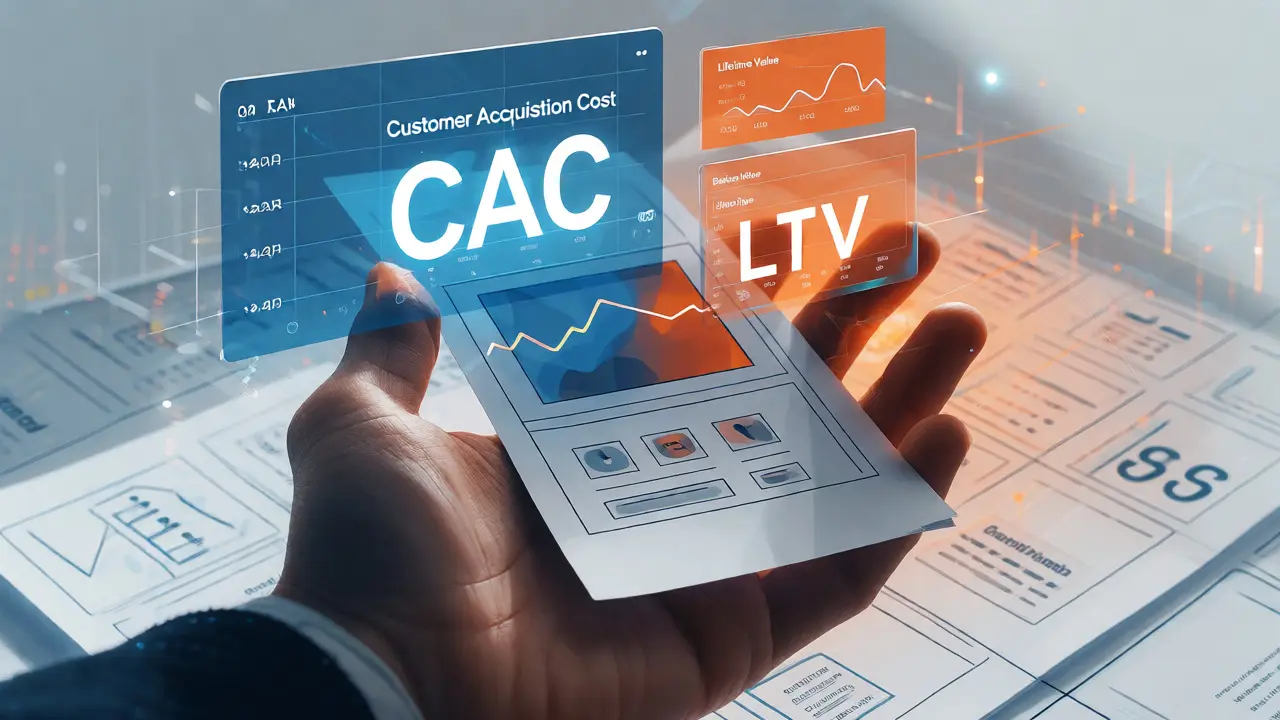
Your curriculum should force students to defend their creative ideas with financial logic. Introduce unit economics early. If a student designs a subscription service, ask them: What is the Customer Acquisition Cost (CAC)? What is the Lifetime Value (LTV)? How does churn impact the bottom line? When they have to justify a design choice with numbers, they learn to think like product managers, not just designers.
Use the Business Model Canvas as a central artifact. Have students fill it out weekly. Week 1: Hypothesis. Week 5: Reality check after user testing. Week 10: Pivot or persevere decision. This iterative documentation shows how business models evolve alongside the product.
The Human Side of Innovation: Team Dynamics
Product development is rarely done by lone wolves. It’s a team sport. And teams are messy. Your course needs to address the soft skills that make or break product launches. Conflict resolution, negotiation, and communication styles matter immensely.
Assign group projects where roles rotate. Let the engineer try being the marketer. Let the designer handle the budget. This builds empathy across functions. Also, teach them how to run effective meetings. Most product meetings are time-wasters. Teach them the concept of "disagree and commit," popularized by Amazon. It’s crucial for moving fast when data is incomplete.
Consider bringing in guest speakers who have failed publicly. Hearing about a botched launch is more instructive than hearing about a unicorn success. Ask them: What did you miss? Who did you ignore? How did you recover? These stories humanize the process and reduce the fear of failure among students.
Assessment Methods That Mirror Real Work
Stop grading on multiple-choice exams. No product manager takes a quiz to decide whether to ship a feature. Assessments should mimic real-world deliverables.
- Pitch Decks: Require students to pitch their product concept to a panel of local investors or industry experts. Feedback should be brutal and practical.
- Prototype Demos: Grade the functionality and user experience of a clickable prototype, not just the code behind it.
- Post-Mortem Reports: After a simulated launch, have students write a post-mortem analyzing what went wrong and why. Did they misjudge the market? Did the tech stack fail?
- Portfolio Building: Encourage students to maintain a public portfolio of their case studies. This becomes their job search asset.
This approach shifts the focus from memorization to application. Students leave with tangible evidence of their skills, which is far more valuable to employers than a transcript full of A’s.

Leveraging Local Ecosystems for Experiential Learning
Don’t keep learning inside the classroom. Connect with the local business ecosystem. If you’re in Edinburgh, tap into the vibrant tech scene here. Partner with local startups or scale-ups for live briefs. Give students a real problem to solve for a real client. The stakes are higher, and the feedback is immediate.
For instance, a local fintech company might need help improving their onboarding flow. Student teams can audit the process, propose changes, and even implement a small pilot. This kind of experiential learning bridges the academic-industry gap. It also helps students build networks before they graduate. Many hires happen through these project-based connections.
Additionally, encourage participation in hackathons and innovation challenges. These events compress the product development cycle into days, forcing rapid decision-making and teamwork under pressure. It’s exhausting, but it’s excellent training.
Future-Proofing the Curriculum
Technology moves fast. AI tools are changing how we design and build products. Your curriculum shouldn’t chase every new trend, but it should teach adaptability. Include a module on AI-assisted development. Show students how to use generative AI for brainstorming, copywriting, and basic coding tasks. But also teach them the limitations. AI can generate options, but humans must choose the direction.
Also, consider sustainability. Consumers increasingly care about ethical production and environmental impact. Integrate sustainable design principles into the core syllabus. How does the product’s lifecycle affect its viability? This isn’t just a nice-to-have; it’s becoming a regulatory and market requirement.
Finally, keep the curriculum modular. Allow for easy updates. If a new platform dominates social media, swap out the marketing module. If a new programming language gains traction, adjust the technical requirements. Rigidity kills relevance.
Why is Agile important in product development courses?
Agile is crucial because it teaches students to work in iterative cycles, allowing them to respond to change rather than following a rigid plan. This mirrors the reality of modern markets, where user feedback and competitive pressures require constant adjustment. Without Agile frameworks, graduates struggle to manage uncertainty and slow feedback loops.
How do you assess product development skills effectively?
Effective assessment uses real-world deliverables like pitch decks, functional prototypes, and post-mortem reports instead of traditional exams. Grading focuses on the quality of problem-solving, user validation, and strategic justification. This method ensures students can demonstrate their ability to apply concepts in practical scenarios.
What role does Design Thinking play in business curricula?
Design Thinking provides a human-centered framework for identifying problems and creating solutions. It complements analytical business skills by focusing on empathy and experimentation. Integrating it ensures that products are not only financially viable but also desirable and usable for customers.
Should product development courses include technical coding skills?
Deep coding expertise isn't always necessary for general business students, but technical literacy is vital. Courses should cover how technology impacts feasibility and cost. Familiarity with no-code tools and basic understanding of APIs or databases allows non-engineers to communicate effectively with development teams.
How can universities connect with local businesses for this curriculum?
Universities can partner with local startups and SMEs for live briefs, mentorship programs, and internship pipelines. Inviting industry practitioners as guest lecturers or judges for capstone projects creates direct links between academic theory and market practice. This networking enhances employability and keeps course content relevant.
