
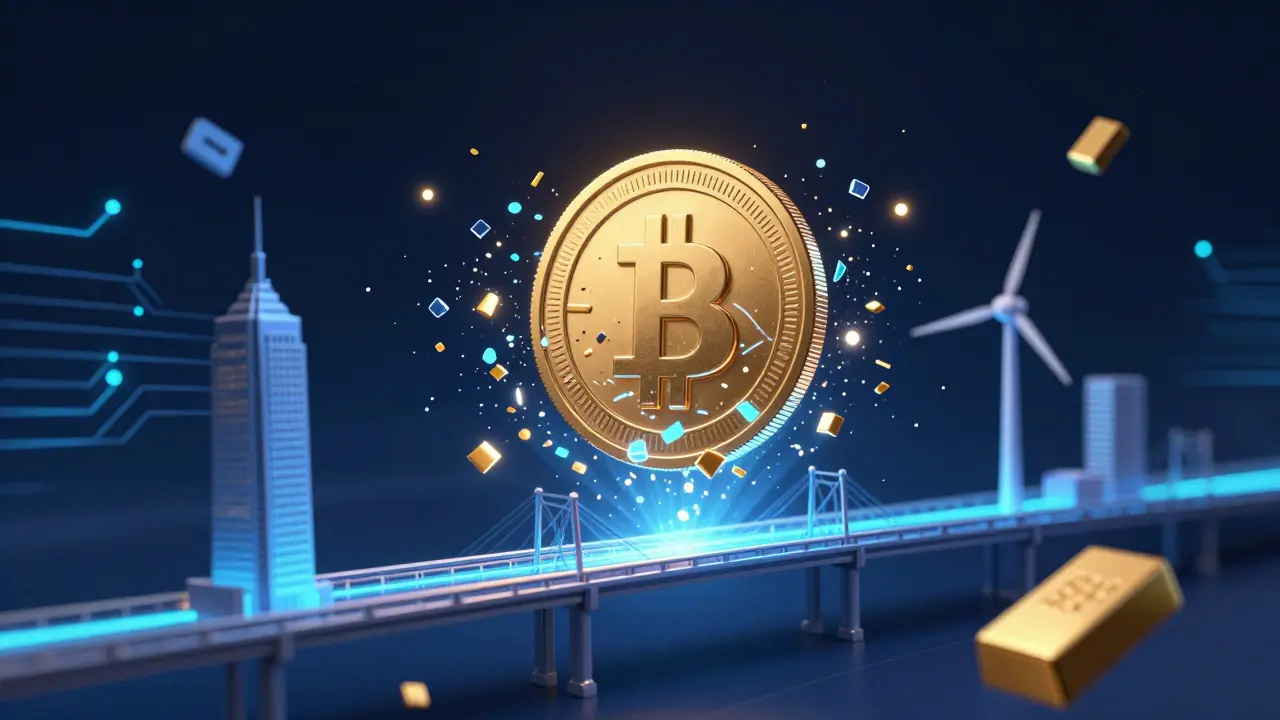
For years, the world of decentralized finance felt like a closed loop-crypto tokens being lent to buy other crypto tokens, all floating in a digital void. But a massive shift is happening. We are moving away from pure speculation and toward Real-World Asset DAOs, which bring tangible, physical value onto the blockchain. Imagine owning a fraction of a luxury apartment in Tokyo, a slice of a renewable energy farm in Germany, or a piece of a gold reserve, all managed by a community-led organization. This isn't just a tech experiment; it's the financialization of the physical world.
The core problem this solves is access. Traditionally, high-yield assets like private equity, commercial real estate, or institutional bonds were reserved for the "ultra-high-net-worth" crowd. If you didn't have seven figures in the bank, you were locked out. By using Tokenization is the process of converting ownership rights of a physical asset into digital tokens on a blockchain , these assets are broken down into tiny, affordable pieces. A DAO then acts as the governance layer, allowing a global group of investors to decide how these assets are managed, traded, and grown.
How RWA DAOs Actually Work
To understand these organizations, you have to look at the two-step process they use: digitalization and financialization. First, a physical asset-let's say a warehouse-is legally tied to a digital token. This requires a legal bridge, often involving a trust or a special purpose vehicle (SPV) to ensure that the token holder actually has a legal claim to the property. This is where entities like Swiss Asset DAO is a legal DAO based in Switzerland designed to bring institutional real-world asset opportunities to the decentralized ecosystem come in, providing the regulatory framework needed to make the ownership legitimate.
Once the asset is digital, the "financialization" part kicks in. This means the token isn't just a digital receipt; it becomes a tool. You can use your tokenized real estate as collateral to take out a loan in a DeFi protocol, or you can trade it instantly on a secondary market without waiting months for a traditional real estate closing. The DAO manages the treasury, voting on whether to acquire more assets or sell existing ones to lock in profits.
The Most Popular Asset Classes Moving Onchain
It's not just about property. The scope of what can be tokenized is expanding rapidly. We are seeing a diverse range of "off-chain" value entering the ecosystem:
- Commodities: Gold and silver are the easiest to grasp, but we're seeing a rise in tokenized industrial metals and agricultural products.
- Government Bonds: US T-bills are becoming a favorite for DAO treasuries because they provide a stable, low-risk yield that balances out the volatility of crypto.
- Carbon Credits: Environmental impact investors are using DAOs to buy and retire carbon offsets, making the process transparent and audit-able.
- Private Credit: Platforms like Maple Finance is an institutional lending protocol that provides capital to real-world borrowers in sectors like fintech and renewable energy allow investors to lend directly to verified companies, moving away from the anonymous lending pools of early DeFi.
| Feature | Traditional Investment | RWA DAO Investment |
|---|---|---|
| Entry Barrier | High (Minimums often $10k+) | Low (Fractional ownership) |
| Liquidity | Low (Weeks/Months to sell) | High (Instant token swaps) |
| Governance | Centralized (Board of Directors) | Decentralized (Token voting) |
| Transparency | Quarterly/Annual reports | Real-time onchain auditing |

Why DAO Treasuries are Diversifying
If you've followed the crypto markets, you know that holding 100% of a treasury in a single volatile token is a recipe for disaster. Many DAOs are now treating their treasuries like professional hedge funds. By shifting a portion of their holdings into RWAs, they create a "safety floor." If the crypto market crashes, the DAO still earns rental income from a tokenized apartment complex or interest from a government bond.
However, this introduces a new set of challenges. You can't just "vote" a building into existence. The Cosmos Network is a decentralized ecosystem of independent blockchains that often hosts discussions and pilots for RWA integration forums have highlighted the operational complexity here. You need blockchain-gated entrance technology, local legal experts in the region where the asset sits, and a way to handle pre-construction requirements. It's a hybrid of software engineering and old-school project management.
The Institutional Bridge: From ETFs to Onchain Economy
Big money is finally arriving, but they aren't all jumping straight into DAO governance. Some are taking a "measured" approach. A great example is the VanEck Onchain Economy ETF (NODE) which is a diversified equity fund providing exposure to companies building the infrastructure of the digital asset economy . Instead of buying raw tokens, these investors buy shares in data centers, energy companies, and fintech firms that enable the RWA ecosystem to function.
This creates a ladder of conviction. A traditional investor might start with an ETF (like NODE), move into tokenized T-bills, and eventually participate in a full-scale RWA DAO. The goal is to reduce the "crypto-risk" while keeping the "technology-reward." The focus has shifted from "Will this token go to the moon?" to "Does this token represent a cash-flowing asset with a fair risk premium?"
The Risks and Roadblocks
It's not all smooth sailing. The biggest hurdle isn't the code-it's the law. Regulatory fragmentation means a DAO might be legal in Switzerland but questionable in the US or Asia. If a tokenized property is foreclosed on in the real world, how does the blockchain handle the liquidation? These are the questions that keep risk managers awake at night.
Furthermore, there is a massive gap in risk assessment. Traditional investors are used to credit ratings and audited financial statements. In the RWA DAO world, we are still developing the tools to quantify risk. Onchain indexing tools are emerging, but we aren't yet at a point where a retail investor can easily determine the "risk premium" of a tokenized invoice financing pool without significant expertise.
What exactly is a Real-World Asset (RWA) DAO?
An RWA DAO is a decentralized organization that uses blockchain technology to manage and invest in physical assets. Instead of focusing on digital-native assets like meme coins, these DAOs tokenize things like real estate, gold, or carbon credits, allowing members to own fractions of these assets and vote on how to manage them.
Is investing in RWA DAOs safer than regular crypto?
Generally, yes, because the value is backed by a physical asset that exists in the real world. However, you exchange "market volatility risk" for "regulatory and legal risk." If the legal structure connecting the token to the asset is weak, the token could lose its value regardless of the asset's worth.
How do I actually earn money from an RWA DAO?
You typically earn through two ways: yield and appreciation. For example, if the DAO owns a tokenized rental property, you receive a portion of the rent (yield). If the property increases in value over time, the price of your tokens should also rise (appreciation).
What is "fractional ownership" in this context?
Fractional ownership means a high-value asset is split into millions of digital tokens. Instead of needing $500,000 to buy a commercial building, you can buy $100 worth of tokens that represent a tiny percentage of that building's ownership and income.
Do I need a special wallet to invest in these?
Most RWA DAOs operate on standard blockchain networks (like Ethereum or Cosmos), so a typical Web3 wallet will work. However, because these are financial assets, many RWA DAOs require a KYC (Know Your Customer) process to verify your identity before you can purchase tokens.
Next Steps for Investors
If you're looking to move beyond pure crypto, start small. Don't jump into a complex real estate DAO on day one. Instead, look for "onramp" instruments-like tokenized government bonds or diversified ETFs that track the onchain economy. These provide a way to get comfortable with the tech without risking your entire portfolio on a single physical property.
For those already running a DAO, now is the time to audit your treasury. If you are 100% exposed to your own governance token, you are essentially betting everything on your own success. Integrating a few RWA-backed instruments can provide the stability needed to survive a bear market and ensure your community has a sustainable future.

Comments (8)
Frank Piccolo April 4 2026
Typical globalist nonsense trying to push Swiss legal frameworks on us. Why would any red-blooded American want their assets tied to some nebulous DAO when our own legal system is the gold standard for property rights? This whole tokenization gimmick just sounds like a way for elites to launder money while pretending to "democratize" finance. Absolute joke.
James Boggs April 6 2026
The potential for increased liquidity is quite impressive.
David Smith April 7 2026
Wow, just wow. People are actually talking about this as a "solution" while ignoring the absolute ethical disaster of letting a bunch of anonymous token holders decide the fate of actual physical buildings. It is honestly offensive that we are treating the housing crisis as some kind of exciting DeFi experiment. This is peak late-stage capitalism and it is honestly disgusting how some of you are just nodding along to it without a single thought about the moral implications of fractionalizing homes like they are trading cards.
Michael Jones April 9 2026
this is the spark we needed to finally bridge the gap between the digital mind and physical reality man keep pushing this energy because the shift toward tangible value is exactly how we evolve the whole ecosystem and move past the meme era into something that actually sustains the human spirit and our collective wealth lets goooo
Lissa Veldhuis April 9 2026
honey please the legal bridge part is a total fairy tale if you actually knew how SPVs worked youd see the holes in this logic immediately it is just a glittery wrap on a very old and dusty financial trick and frankly the idea that a retail investor can just "vote" on a warehouse in tokyo is pure delusional fanfiction
Addison Smart April 10 2026
While I certainly understand the skepticism surrounding the legal complexities, I believe it is important to recognize that the bridge between traditional finance and decentralized systems requires a period of mutual adjustment and patience from both sides. We must foster a space where the ambition of blockchain technology can coexist with the stability of established law without one attempting to completely erase the other, as the true value lies in the synthesis of these two worlds rather than a victory for one over the other, and if we can maintain that balance we might actually achieve the inclusivity promised here.
allison berroteran April 10 2026
It is quite fascinating to consider how the psychological perception of ownership changes when a physical asset is broken down into a thousand digital pieces, as it transforms the nature of the investment from a tangible connection to a piece of earth into a more abstract stream of yield and data, yet I find myself hopeful that this could eventually lead to a more equitable distribution of wealth if the barriers to entry are truly lowered for those who have been historically marginalized by the banking sector's rigid requirements.
Gabby Love April 10 2026
The section on T-bills is a good point. Most people forget that stability is the most underrated part of a portfolio during a bear market.