
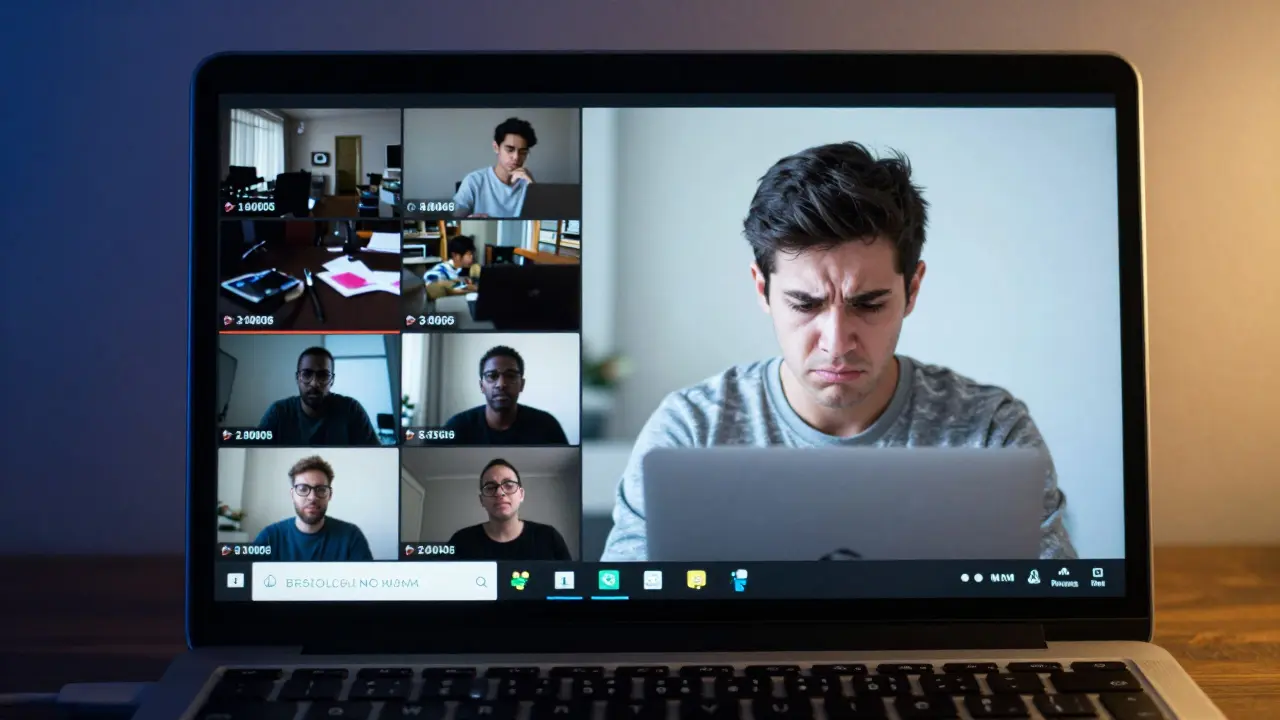
When learners start a video-based course seriesa sequence of educational videos designed to teach a topic, they expect a smooth, professional experience. If each video feels different-like the lighting changes or the host's tone shifts-they lose focus. A 2025 study by the University of California showed that inconsistent video series have 32% lower completion rates. Maintaining video course consistency is essential for engagement and professionalism.
Why consistency matters for your video courses
Think about it: when you watch a TV show, the lighting, sound, and editing stay the same. You don't notice it because it's consistent. But if one episode looks like a home video and the next looks like a Hollywood production, you'd notice. The same applies to your course. Inconsistency makes your content feel unprofessional, which hurts credibility. Worse, learners may quit halfway through. Consistency builds trust and keeps them coming back for more.
For example, a coding course where episode 1 uses a dark theme and episode 2 switches to a bright one confuses learners. They waste time adjusting to the new setup instead of focusing on the lesson. A 2024 survey by EdTech Magazine found that 68% of students stopped watching a course when visual elements changed unexpectedly. Keeping things uniform removes these distractions.
Production checklist: script, visuals, and audio
Start with your script. Use a script template that includes key sections: introduction, main content, and summary. This keeps each episode structured the same way. For instance, in a cooking course, each episode might begin with "Today, we'll make X", then explain the steps, and end with "Try this recipe and share your results!" This predictability helps learners follow along without confusion.
For visuals, maintain consistent background elements. Maybe a branded desk or a specific room setup. Avoid changing backgrounds between videos. Lighting should be even and match across all recordings. For audio, record in the same space every time. Use the same microphone and check levels before each session. This prevents sudden volume changes. A simple rule: if a change isn't intentional, it's a problem.
When scripting your videos, include a clear structure. Start with a 30-second intro that states the episode's goal. Then spend 2-3 minutes explaining the core concept. Follow with a 1-minute summary and a call to action. This structure works for every episode. For instance, in a cooking course, each episode might begin with 'Today, we'll make X', then explain the steps, and end with 'Try this recipe and share your results!' This predictability helps learners follow along without confusion.

Branding consistency
Your brand elements need to stay the same. Use the same color palette for backgrounds, text overlays, and graphics. Stick to one or two fonts throughout. For example, use Arial for titles and Helvetica for body text. Always place your logo in the same corner. If you have a watermark, keep it in the same spot. Inconsistency here confuses viewers. They might think it's a different course. A tip: create a brand guidelines document and keep it open while editing. This is your reference point.
If your brand colors are #003366 and #FFD700, use them for every background and text. Don't switch to #CC0000 just because you like it. Inconsistency in colors makes your course look unprofessional. Use a tool like Adobe Color to maintain the exact shades. For example, a digital marketing course where episode 1 uses #003366 for headers and episode 2 uses #0066CC will look disjointed. Stick to the palette.
Technical specifications
Technical consistency matters too. All videos should have the same resolution. 1080p is standard, but 4K works if your audience has the bandwidth. Frame rate should be consistent-usually 24 or 30 fps. If you mix frame rates, playback can look choppy. File formats should also match. Use MP4 with H.264 codec. This ensures smooth playback across devices. For example, if one video is 1080p 30fps and another is 4K 60fps, learners might notice the difference. Keep it simple: pick one standard and stick to it.
When exporting videos, always select the same preset. For example, in Adobe Premiere Pro, create a preset named 'Course Standard' with 1080p resolution, 30fps, and H.264 encoding. This ensures every export matches. If you accidentally use a different setting, the file size and quality will vary, causing playback issues on some devices. Check your frame rate settings before exporting. This avoids choppy playback on mobile devices.

Post-production checklist
Editing style should be uniform. Use the same transitions between scenes. If you use a fade-in for one episode, do it for all. Cut times should be similar-no sudden jumps in pace. Captions need to be accurate and styled the same. Use the same font size and color for subtitles. Thumbnail images should follow a template. Include the course title, episode number, and a consistent image style. For example, use a photo of the host with a branded background. This helps viewers recognize the course when browsing.
For captions, use tools like captioning tools such as Descript or YouTube's auto-captioning. But always review them for accuracy. Inconsistent captions can confuse learners, especially those with hearing impairments. A consistent style makes your course accessible to everyone. For instance, if episode 1 uses white text with a black outline and episode 2 uses yellow text, it feels messy. Stick to one style.
Common pitfalls to avoid
One mistake is changing your setup between episodes. Maybe you move the camera or change the lighting. This makes the course look amateurish. Another issue is inconsistent audio levels. Always check volume before recording. Also, avoid using different music tracks. Use the same intro/outro music for every video. If you change it, viewers lose the sense of continuity. Finally, don't skip quality checks. Review each video for consistency before publishing. It takes time, but it pays off in engagement.
For example, if you use a different background in episode 2, learners might think it's a different course. Or if your voice volume drops in the middle of a video, it feels jarring. These small inconsistencies add up. The fix? Create a checklist and stick to it. Check each element before finalizing. A 5-minute review can prevent major consistency issues.
Why is consistency important in video courses?
Consistency builds trust and keeps learners engaged. A 2025 University of California study found inconsistent video series have 32% lower completion rates. Viewers expect a professional experience, and mixed elements like changing backgrounds or audio levels disrupt their focus.
What's the easiest way to maintain branding across videos?
Create a brand style guide with exact colors, fonts, and logo placement. Use this as a reference for every video. For example, if your logo is always in the top-right corner, never move it. Tools like Canva can help apply templates consistently.
How do I ensure technical consistency in video files?
Set your export settings once and apply them to all videos. Use the same resolution (like 1080p), frame rate (e.g., 30fps), and file format (MP4/H.264). Tools like Adobe Premiere Pro let you save these settings as a preset, making it easy to stay consistent.
What should I check before publishing each video?
Review the video for consistent branding, audio levels, and visual elements. Check that the logo placement is the same, the background hasn't changed, and the captions are accurate. Also, ensure the intro music and transitions match previous episodes. A quick 5-minute review can prevent major consistency issues.
Can I use different backgrounds for different topics in my course?
No, changing backgrounds between videos breaks consistency. Even if the topic changes, the background should stay the same. If you need to differentiate topics, use on-screen graphics or text overlays instead. This keeps the course visually unified while still highlighting key points.

Comments (13)
Sheila Alston February 6 2026
Consistency isn't just important-it's everything. I've watched way too many courses where the lighting shifts from one episode to the next, making it look like a amateur production. Every time the background changes or the audio levels fluctuate, learners get distracted and lose focus. That 32% lower completion rate from the UC study? That's a direct result of poor consistency. You can't just wing it-use a checklist for every single aspect: lighting, audio, branding, everything. If you don't, you're wasting everyone's time. Seriously, how hard is it to keep the same desk setup and microphone? It's not rocket science, but so many creators skip this step. Stop being lazy and do it right.
sampa Karjee February 7 2026
Anyone who doesn't follow a strict consistency checklist is clearly unqualified to produce educational content. The idea that "it's okay to change things up" is a sign of amateurism. Properly structured courses require rigid adherence to standards-no exceptions. If you can't maintain uniform lighting, audio levels, and branding, you shouldn't be in this field at all. It's basic professionalism. The fact that this even needs to be explained shows how low standards have become.
Patrick Sieber February 7 2026
Good point about the lighting changes. I've noticed that even small inconsistencies like a slightly different microphone setup can throw off the whole feel of a course. It's not just about looks-audio consistency matters just as much. Using the same mic and checking levels before each recording prevents those jarring volume shifts. Also, sticking to a script template helps maintain structure across episodes. A simple checklist for each element makes the process way easier. No need to overcomplicate it-just follow the basics.
Kieran Danagher February 8 2026
Oh sure, let's just ignore the fact that inconsistent branding makes your course look like a DIY project. The UC study says 32% lower completion rates? Yeah, that's because people can't take seriously a course that looks like it was made in someone's garage. Use the same background, same lighting, same everything. It's not hard. Just follow the damn checklist and stop making excuses.
OONAGH Ffrench February 9 2026
Consistency is a reflection of discipline. Without it the course becomes a disjointed experience. Technical specs like resolution and frame rate must be uniform. A single inconsistent element can undermine the entire learning process. The solution is simple: create a standard and adhere to it. No exceptions. This is the foundation of professional content.
poonam upadhyay February 10 2026
oh my goodness this is such a critical issue! i've noticed that so many creators just... don't care! they change backgrounds, lighting, audio levels-everything! it's like they're trying to sabotage their own course! the uc study says 32% lower completion rates-but that's probably even higher in reality! you need to have a checklist for EVERYTHING: script structure, branding colors, fonts, logo placement, transitions, captions-everything! if you skip one thing, it's a disaster! i've seen courses where the intro music changes every episode-absolutely ridiculous! how can anyone take it seriously? it's not hard to keep it consistent! just follow the guidelines! stop being lazy! also, the font size on captions-sometimes it's huge, sometimes tiny-this is so unprofessional! and the logo placement? one episode top-left, next episode top-right-what is this, a game of hide-and-seek? consistency isn't optional-it's mandatory for any serious course. if you can't do this, you shouldn't be creating educational content. it's basic professionalism. stop making excuses and follow the checklist properly!
Shivam Mogha February 12 2026
Consistency is key. Done.
mani kandan February 14 2026
Consistency in video courses is like a well-oiled machine-every piece needs to fit perfectly.
From lighting to audio to branding, small details make a huge difference.
I've found that using a checklist for each element keeps everything smooth and professional.
It's not about being rigid; it's about creating a seamless experience for learners.
When everything aligns, people stay engaged and actually learn.
Simple, effective, and totally doable with a little planning.
Rahul Borole February 15 2026
Consistency in video course production is paramount for maintaining professional standards and ensuring optimal learner engagement. A systematic approach, adhering strictly to established guidelines for lighting, audio, branding, and technical specifications, is essential. The 32% reduction in completion rates due to inconsistency underscores the critical importance of this factor. Implementing a comprehensive checklist for each episode will not only enhance the learning experience but also reinforce credibility and trust. It is imperative that all creators prioritize uniformity in every aspect of their content delivery.
Sheetal Srivastava February 17 2026
While I appreciate the emphasis on systematic approaches, the reality is that consistency is not merely about checkboxes-it's about the underlying epistemological framework of pedagogical coherence. The 32% completion rate statistic is merely symptomatic of a deeper systemic issue in educational content production. Without a robust ontological foundation for consistency, even the most meticulous checklist becomes a superficial exercise in performative professionalism. We must address the root causes rather than symptomatically applying band-aid solutions.
Bhavishya Kumar February 17 2026
Consistency in video courses is essential. Poor consistency leads to lower completion rates. The UC study confirms this. Adherence to technical specifications like resolution frame rate and file format is critical. Using a standardized checklist ensures uniformity. It is not complicated. Just follow the guidelines. No need for excessive explanations. The key is to maintain uniformity across all elements.
ujjwal fouzdar February 19 2026
Oh wow. You're absolutely right about consistency being essential. But let's dig deeper. What does consistency really mean? Is it just about the same lighting and audio levels? Or is it about the soul of the course itself? The human experience of learning is shaped by every tiny detail. When you change a background or a font, it's not just a visual change-it's a disruption of the entire learning journey. Think about it: every episode is a chapter in a story. If the story jumps between different worlds, the learner gets lost. So yes, the checklist is important-but it's not just about the checklist. It's about the philosophy behind consistency. What's the deeper meaning? That's what we need to explore. Consistency isn't just a technical requirement-it's a moral imperative for educators. We must ask ourselves: what does consistency truly mean?
Anand Pandit February 21 2026
Consistency in video courses makes a huge difference in learner engagement. I've used similar checklists for my own courses and saw a real improvement in retention. Just take it one step at a time-don't try to overhaul everything at once. Start with the basics like lighting and script structure, then build from there. You've got this! Keep it simple and stay consistent. The learners will thank you.