
You see the ticker symbol, you check the price, and maybe you glance at the market cap. But if you stop there, you’re missing half the story. Tokenomics is the economic design and rule set governing how a digital token is created, distributed, used, and valued within a blockchain network. It’s not just about scarcity; it’s about behavior. Think of it as the operating system for value transfer in a decentralized world. If the code determines what the software *can* do, tokenomics determines what people *will* do with it.
Why does this matter? Because bad tokenomics kills projects faster than bad code. We’ve seen billions evaporate because teams forgot to align incentives or hid massive supply unlocks behind confusing jargon. Whether you are an investor trying to spot a rug pull, a developer designing a new protocol, or just someone curious why Bitcoin behaves differently than Ethereum, understanding these mechanics gives you clarity. Let’s break down the machinery under the hood without the academic fluff.
The Core Components: Supply and Demand Mechanics
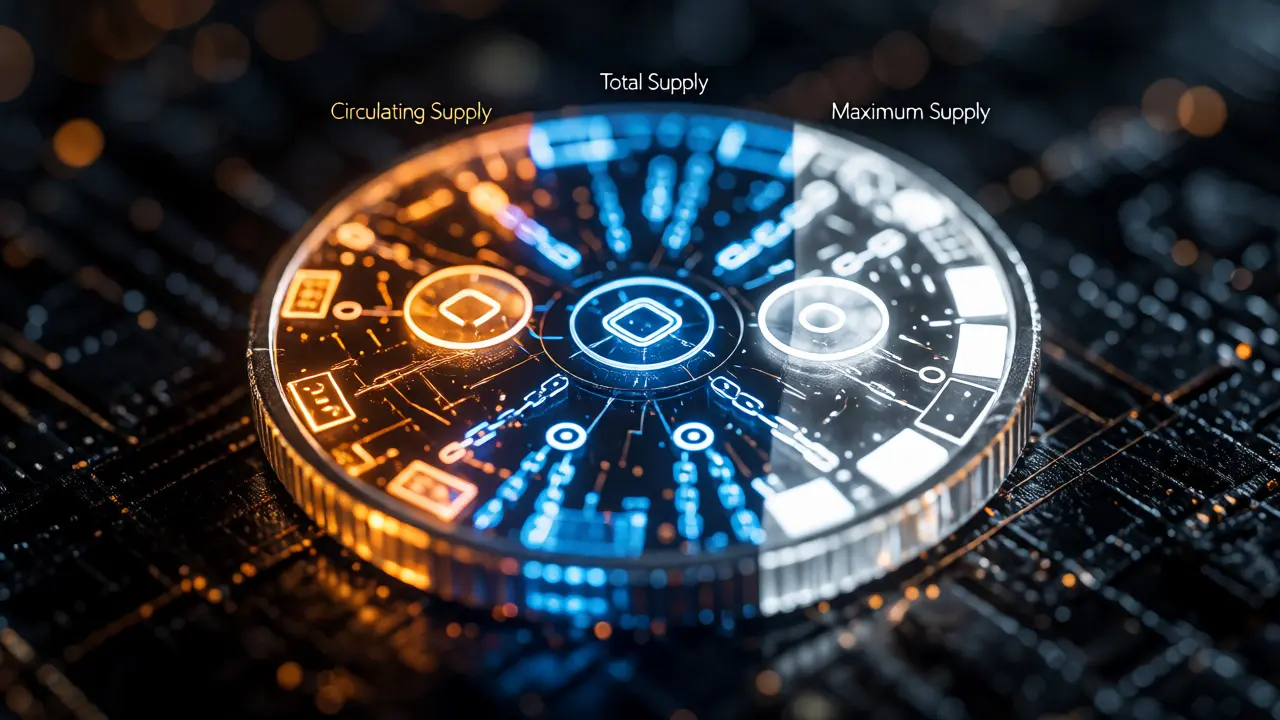
At its heart, tokenomics is a study of supply and demand, but with specific blockchain constraints. You need to distinguish between three types of supply immediately, because mixing them up leads to terrible investment decisions.
- Circulating Supply: The number of tokens currently available on the open market. This is what affects the immediate price pressure.
- Total Supply: The amount of tokens that exist right now, including those locked in smart contracts or held by the foundation.
- Maximum Supply: The hard cap of tokens that can ever exist. Some tokens have no max supply (like Ethereum), while others are capped forever (like Bitcoin).
Market capitalization is usually calculated as Price × Circulating Supply. However, smart money looks at Fully Diluted Valuation (FDV), which is Price × Maximum Supply. If a project has a low circulating supply but a massive maximum supply waiting to be unlocked, the FDV will tell you the true potential dilution risk. For example, if a token trades at $10 with only 1 million tokens circulating but a max supply of 1 billion, the current valuation ignores 99% of future selling pressure.
| Model Type | Example | Mechanism | Risk Profile |
|---|---|---|---|
| Fixed Supply | Bitcoin (BTC) | Hard cap of 21 million; issuance halves every 4 years. | Low inflation risk; high security budget dependency. |
| Adaptive/Dynamic | Ethereum (ETH) | Issuance to validators minus burned fees (EIP-1559). | Complex; depends on network activity levels. |
| Inflationary | Solana (SOL) | Continuous emission to reward stakers/security. | Dilution pressure; requires constant demand growth. |
| Stablecoin | USDC | Minted/burned based on collateral reserves. | Peg risk; relies on trust in issuer/reserves. |
How Tokens Are Created: Issuance and Emission
Tokens don’t just appear out of thin air; they enter circulation through specific rules called emission schedules. In Proof-of-Work networks like Bitcoin, miners receive block rewards. This is predictable: the reward cuts in half roughly every four years until the cap is reached around 2140. Every node checks this math, so no one can cheat the system.
Proof-of-Stake networks, like Ethereum post-Merge, work differently. Validators stake their ETH to secure the network and earn rewards. Here, the issuance rate isn't fixed; it fluctuates based on how much ETH is staked. More stakers mean lower individual rewards, but higher overall security expenditure. Crucially, Ethereum also burns a portion of transaction fees. If network activity is high, more ETH gets destroyed than issued, making the asset deflationary. If activity drops, it becomes inflationary again. This dynamic balance is a key feature of modern tokenomics.
Other projects might use different methods. Liquidity mining programs issue tokens to users who provide liquidity to exchanges. While this bootstraps trading volume, it often creates "mercenary capital"-users who dump the token as soon as the rewards stop. Always ask: Who is getting paid, and why?
Distribution and Vesting: The Unlock Trap
This is where many retail investors get hurt. When a project launches, only a fraction of the total supply is actually floating. The rest is locked for team members, early investors, advisors, and foundations. These locks are governed by vesting schedules.
A typical schedule includes a cliff (a period where no tokens unlock) followed by linear unlocking over several years. For instance, Uniswap minted 1 billion UNI tokens in 2020. About 60% went to the community treasury, team, and investors. The team and investors had a four-year vesting period. This means that even if the price skyrockets in year one, insiders can’t sell everything immediately. They must wait. If they did sell all at once, the price would crash due to oversupply.
Watch out for "low float, high FDV" projects. If a token has a tiny circulating supply but huge upcoming unlocks, you are effectively buying into a future dilution event. Tools like Messari’s Token Unlocks allow you to see exactly when these cliffs hit. If a massive unlock coincides with a bear market, expect downward pressure.

Utility and Value Accrual: Why Hold the Token?
A token needs a job. If it doesn’t serve a functional purpose beyond speculation, its long-term viability is questionable. Utility refers to the practical uses of the token within the ecosystem.
- Payment: Used to pay for services or transaction fees (e.g., ETH for gas).
- Governance: Grants voting rights on protocol upgrades or treasury spending (e.g., UNI for Uniswap proposals).
- Collateral: Locked up to borrow other assets in DeFi protocols.
- Access: Required to interact with specific dApps or games.
Value accrual is trickier. Just because a protocol generates revenue doesn’t mean the token captures that value. Many governance tokens give voting power but no claim on cash flow. Unless the protocol explicitly burns tokens using revenue or distributes dividends, holding the token might not benefit you financially from the protocol's success. Look for mechanisms that link usage to token demand, such as fee burns or buybacks.
Governance and Centralization Risks
Decentralization is often marketed heavily, but token-weighted voting can create plutocracies. If a few whales hold 50% of the supply, they control the outcome of every vote regardless of community sentiment. This is known as the "whale problem."
Furthermore, many projects start with centralized admin keys. The developers might retain the ability to pause contracts, upgrade logic, or mint new tokens. Check the smart contract source code. Does the team have a multi-sig wallet that can change the rules? If yes, you aren’t fully decentralized yet. True decentralization takes time and gradual handover of control, often spanning years.
Case Studies: Bitcoin vs. Terra-Luna
To understand what works and what fails, look at extremes.
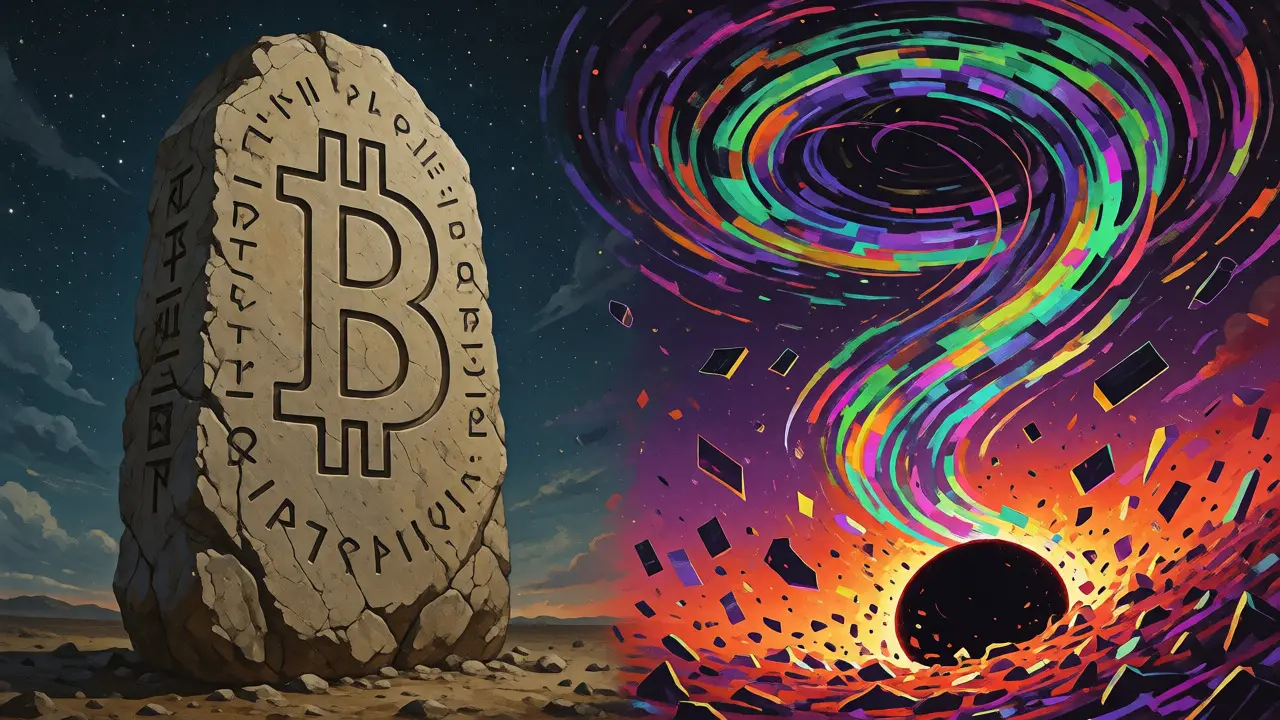
Bitcoin is the gold standard of simple, robust tokenomics. Its rules are rigid: 21 million cap, predictable halving, no pre-mine for founders. This simplicity builds trust. There are no hidden unlocks, no admin keys, and no complex emissions. It prioritizes security and scarcity above all else.
Terra-Luna represents the danger of complex, reflexive models. TerraUSD (UST) was an algorithmic stablecoin pegged to the dollar, backed by LUNA. To maintain the peg, users could burn UST for $1 worth of LUNA, or burn $1 worth of LUNA for 1 UST. In May 2022, confidence broke. As UST depegged, panic sellers dumped UST for LUNA, flooding the market with new LUNA. This caused LUNA’s price to collapse, which made burning UST cheaper, leading to more dumping. LUNA’s supply exploded from under 1 billion to 5.89 trillion in days. The mechanism designed to stabilize the coin became a death spiral.
How to Evaluate a Project’s Tokenomics
Don’t rely on whitepaper promises. Verify the data on-chain.
- Check the Contract: Use block explorers (like Etherscan) to verify the token address. Ensure it matches the official documentation.
- Analyze Supply Metrics: Compare Market Cap vs. Fully Diluted Valuation. A high ratio indicates significant future dilution.
- Review Vesting Schedules: Identify the next major unlock date. How large is the unlock relative to daily trading volume?
- Assess Holder Concentration: Do top 10 wallets hold >50% of the supply? If so, centralization risk is high.
- Verify Utility: Can you actually use the token today? Or is it purely speculative?
- Read Governance Proposals: Are active discussions happening? Or is the community silent?
Ask yourself stress-test questions: What happens if user growth stops? If the price drops 80%, do emissions become unsustainable? If insiders sell at the first unlock, can the market absorb it?
Regulatory and Legal Considerations
Tokenomics intersects with law. In the US, the SEC applies the Howey Test to determine if a token is a security. If investors expect profits primarily from the efforts of others, it might be classified as a security. This impacts compliance and listing availability. A token marketed as a passive income vehicle with guaranteed returns raises red flags. Always consult jurisdiction-specific advice, as regulations vary globally.
Is tokenomics the same as market cap?
No. Market cap is a snapshot metric calculated as price times circulating supply. Tokenomics is the broader economic framework including supply caps, issuance rates, distribution plans, utility, and governance rules. Two tokens can have the same market cap but vastly different tokenomic health.
Why do vesting schedules matter for investors?
Vesting schedules prevent insiders and early investors from dumping their tokens immediately after launch. If a large percentage of supply unlocks suddenly, it increases selling pressure, potentially crashing the price. Understanding these dates helps you anticipate volatility and avoid buying right before a major unlock.
Can a token be both inflationary and deflationary?
Yes, depending on network conditions. Ethereum is a prime example. It issues new ETH to validators (inflationary) but burns a portion of transaction fees (deflationary). During periods of high network activity, the burn rate can exceed issuance, making the net supply decrease. During quiet periods, issuance outweighs burns, making it inflationary.
What is Fully Diluted Valuation (FDV)?
FDV calculates the total value of a project if all possible tokens were in circulation. It is computed as the current token price multiplied by the maximum supply. FDV provides a more realistic view of long-term valuation and dilution risk compared to standard market cap, especially for projects with low circulating supply.
Do token burns always increase price?
Not necessarily. Burns reduce supply, which can support price if demand remains constant or grows. However, if demand collapses, burns alone cannot save the price. Additionally, some burns are marketing gimmicks rather than economically meaningful reductions in supply. The impact depends on the magnitude of the burn relative to total supply and market sentiment.
Final Thoughts
Tokenomics isn't magic. It's engineering. Good tokenomics aligns the interests of developers, investors, and users. Bad tokenomics creates misalignment, leading to exit scams or stagnant ecosystems. By looking past the hype and analyzing supply curves, unlock schedules, and actual utility, you can separate durable projects from fleeting trends. The best protocols make the token essential, not just optional.
