
You see the announcement. The project is launching soon. But there’s a catch: you need to be on the allowlist (often still called a whitelist) to mint at the discounted price before the public sale begins. If you aren’t on that list, you’re stuck waiting for the general public launch, where prices are higher and network fees-known as gas-can skyrocket into a chaotic bidding war.
This isn't just about getting a discount. It’s about securing your spot in a digital asset drop without losing money to exorbitant transaction fees or missing out entirely due to server crashes. Whether you're a seasoned collector or new to the space, understanding how these curated lists work is the difference between securing a valuable NFT and watching from the sidelines.
What Is an NFT Allowlist?
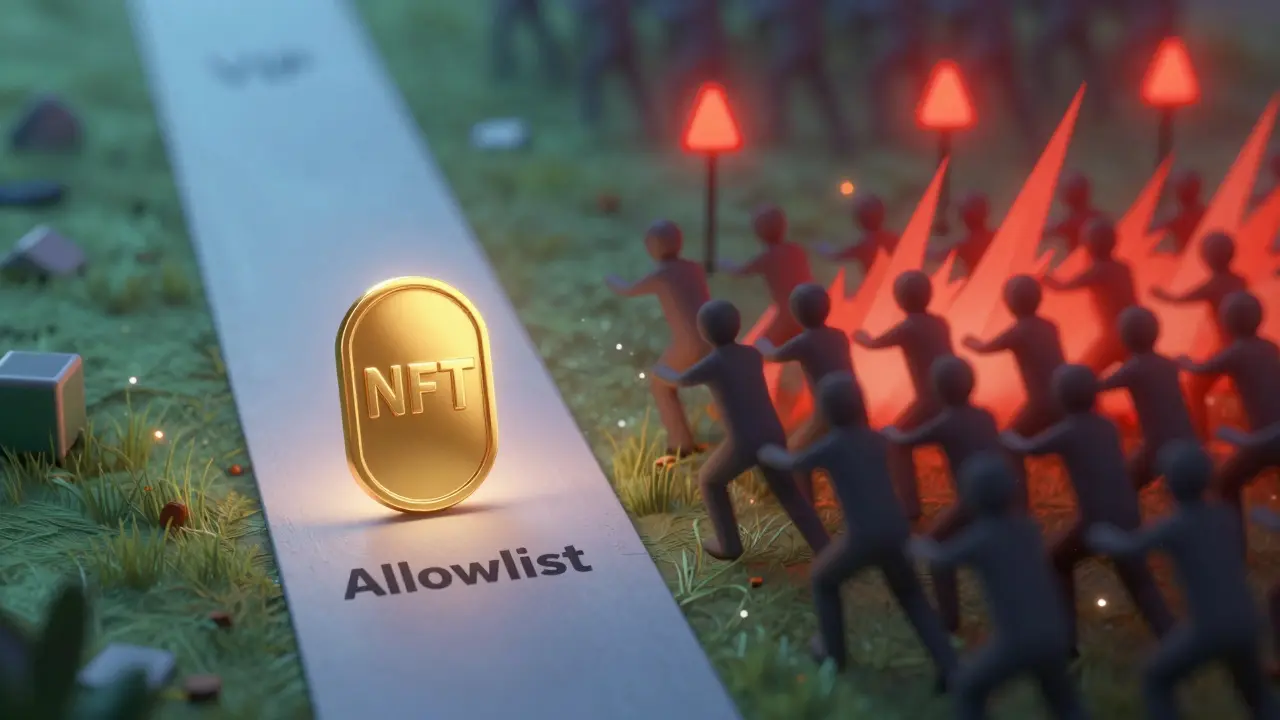
An NFT allowlist is a curated list of blockchain wallet addresses granted priority or exclusive rights to mint NFTs during a presale window. Think of it like having VIP tickets to a concert while everyone else is standing in line outside. The smart contract behind the NFT collection checks this list before allowing anyone to mint. If your wallet address is on it, you get in early, often at a lower price, and with less competition.
The term "whitelist" has largely been replaced by "allowlist" in recent years for inclusive language reasons, but they mean the exact same thing. As noted by industry platforms like OpenSea and GoldRush, the core function remains unchanged: it’s a technical gatekeeper stored directly in the smart contract’s code. When you attempt to mint, the contract asks one simple question: "Is this wallet address approved?" If yes, the transaction proceeds. If no, it rejects you until the public sale opens.
Why do projects use them? Two main reasons:
- Reward Loyalty: Creators want to give back to community members who have been active in Discord servers, Twitter spaces, or previous projects.
- Avoid Gas Wars: By limiting initial demand, projects prevent thousands of people from hammering the blockchain simultaneously, which causes fees to spike wildly.
Why You Want to Be on the List
Getting on an allowlist isn't just a badge of honor; it offers tangible financial and strategic advantages. Let’s break down what you actually gain.
| Feature | Allowlist / Whitelist | Public Sale |
|---|---|---|
| Mint Price | Often 30-50% lower than public price | Standard full price |
| Gas Fees | Predictable and low (less congestion) | Unpredictable; can spike during high demand |
| Competition | Limited to approved wallets only | Open to anyone globally |
| Allocation | Guaranteed right to mint within time slot | First-come, first-served; may sell out instantly |
For example, if a public mint costs 0.5 ETH, the allowlist price might be 0.18 ETH. That’s a massive savings. More importantly, during public sales, bots and whales often bid up gas fees to ensure their transactions go through first. This is called a "gas war." As analyzed by a16z crypto and Harvard Business School, allowlists mitigate this by capping participation. You don’t have to fight for blockspace because you already have a reserved seat.
How to Get on an NFT Whitelist
There is no magic button to add yourself to every allowlist. Projects curate these lists manually or via semi-automated tools based on engagement. Here is the step-by-step process most successful collectors follow.
- Find Projects Early: Don’t wait for the mint date. Look for projects in pre-launch phases. Follow NFT news aggregators, join large Discord communities, and monitor X (formerly Twitter) for announcements from artists you respect.
- Join Official Channels: Almost every serious project uses Discord and Telegram. Join their servers immediately. Read the #rules and #announcements channels carefully. Missing a deadline here means missing the mint.
- Engage Authentically: This is the hardest part. You cannot just spam emojis. Project teams look for genuine interest. Participate in discussions, provide feedback on art drops, and help answer questions for newer members. As Fonero and iMintify note, loyalty is rewarded. Teams want holders who will support the project long-term, not flippers who dump assets instantly.
- Complete Tasks: Many projects use bots (like Collab.Land or Guild.xyz) to verify activity. You might need to hold another specific NFT, follow their Twitter account, or invite friends. Complete these tasks exactly as instructed.
- Submit Your Wallet Address: Once you qualify, you’ll usually submit your Ethereum wallet address (e.g., MetaMask) through a form or bot. Double-check the address. There are no refunds for typos.
Remember, criteria vary wildly. Some projects use raffles where anyone can enter, while others require you to hold a rare NFT from a partner project. Always read the specific rules for each drop.
Types of Allowlists and Configurations
Not all allowlists are created equal. Understanding the configuration helps you manage expectations.
- Fixed Allocation: Each whitelisted wallet gets a set number of mints (e.g., 2 per wallet). This is straightforward and common.
- Tiered Access: Projects may have VIP, Standard, and Partner tiers. VIPs might mint earlier or at a lower price. This is often determined by how early you joined the community or your holding status in related collections.
- Raffle-Based: To avoid overwhelming the system, some projects let thousands apply but only select a few hundred winners randomly. You apply, wait for the draw, and if you win, you get a time slot.
- Dynamic Allowlists: Advanced contracts allow different prices or quantities for different addresses. For instance, a long-time supporter might get 3 mints at 0.1 ETH, while a newer member gets 1 mint at 0.2 ETH.
Pay attention to the time window. Being on the list doesn’t mean you can mint whenever. Most allowlists open for a specific period (e.g., 48 hours). If you miss your slot, your spot expires, and you lose the privilege.
Avoiding Gas Wars and Pitfalls
Even with an allowlist, things can go wrong. While allowlists reduce gas wars, they don’t eliminate them if too many people are added. If a project admits 10,000 wallets but only has 5,000 NFTs, competition will still drive up fees during the presale window.
To protect yourself:
- Check the Supply vs. Allowlist Size: If the allowlist is larger than the total supply, expect competition. Try to mint as soon as the window opens.
- Use Layer 2 Networks: Many modern NFTs launch on Polygon, Arbitrum, or Optimism instead of Ethereum Mainnet. These networks have near-zero gas fees, making gas wars irrelevant. Always check which chain the project is using.
- Beware of Scams: Never send your private key or seed phrase to anyone claiming to add you to a whitelist. Legitimate allowlists only require your public wallet address. Verify links through official social media channels only.

Tools for Managing Access
Projects use specialized infrastructure to manage these lists. You might encounter tools like:
- Guild.xyz: Verifies if you hold certain NFTs or meet other on-chain criteria to grant access.
- Collab.Land: A popular Discord bot that restricts access to channels or roles based on NFT holdings.
- iMintify / QuickNode Tools: Backend solutions that help creators upload batch lists and integrate with smart contracts.
As a user, you don’t need to know how these tools work under the hood. You just need to understand that when a bot asks you to connect your wallet or prove ownership, it’s verifying your eligibility against the allowlist database.
The Future of NFT Minting
The concept of the allowlist is evolving. Beyond just presales, developers are now using allowlist logic for royalty enforcement. For example, a smart contract might only allow transfers through marketplaces that guarantee royalties are paid, blocking non-compliant platforms. This shows that allowlists are becoming a broader tool for governance and fairness in the NFT ecosystem.
While the hype cycles change, the fundamental value remains: curated access rewards community and reduces chaos. By engaging authentically and staying informed, you position yourself to take advantage of these opportunities as they arise.
What is the difference between an allowlist and a whitelist?
There is no functional difference. They are synonymous terms. The industry shifted from "whitelist" to "allowlist" primarily for inclusive language reasons, but both refer to a list of approved wallet addresses granted early access to an NFT mint.
Can I buy my way onto an NFT allowlist?
Generally, no. Legitimate projects award allowlist spots based on community engagement, holding partner NFTs, or random raffles. Buying spots undermines the purpose of rewarding loyal supporters. However, secondary markets sometimes emerge where people trade "mint passes" or NFTs that grant whitelist eligibility, but this carries significant risk and cost.
Do I need a lot of ETH to mint from an allowlist?
You need enough ETH to cover the mint price plus gas fees. Because allowlist mints happen before the public sale, gas fees are typically much lower. On Ethereum Mainnet, you might need 0.01-0.05 ETH for gas, whereas public sales can spike much higher. On Layer 2 networks like Polygon, gas fees are negligible.
What happens if I miss my allowlist time slot?
If you fail to mint within your assigned time window, your allowlist privilege usually expires. You will then have to wait for the public sale, where you must pay the higher standard price and compete with everyone else for remaining supply.
Are allowlists fair?
They aim to be fairer than first-come-first-served public mints by reducing gas wars and rewarding community involvement. However, critics argue they can favor those with more free time to engage in social media "grinds" or those who already hold expensive partner NFTs. Transparency in selection criteria is key to fairness.
