

Running an online course and selling it to students around the world sounds simple-until you try to get paid. A student in Brazil buys your course in USD, but your bank account is in GBP. The payment fails. The student gets confused. You lose the sale. This isn’t a rare glitch-it’s the norm for creators who ignore how global payments actually work.
Why Your Course Sales Are Losing Money
Most course creators assume that if they accept credit cards, they’re covered. But credit cards alone won’t cut it. Over 60% of international buyers abandon purchases when they see unexpected currency conversion fees or unfamiliar payment methods. A student in India might prefer UPI. Someone in Germany wants SEPA direct debit. A learner in Mexico might only trust PayPal. If you’re only offering Stripe or PayPal without local options, you’re turning away half your potential audience.
And then there’s the currency issue. If you price your course at $99 and a student in Nigeria sees that as ₦150,000, they’ll think it’s a scam. But if you show them ₦12,000 (converted at a fair rate), the purchase feels real. The problem isn’t just exchange rates-it’s perception. People don’t trust prices that feel arbitrary.
How Global Payment Gateways Actually Work
You don’t need to set up 20 different bank accounts. Modern payment processors handle this for you. Platforms like Paddle is a global SaaS payment platform that handles taxes, currency conversion, and compliance automatically. Also known as Paddle Payment Platform, it was launched in 2015 and has since processed over $2 billion in course sales for creators. They take your USD price, convert it in real time to the buyer’s local currency, and deposit the net amount into your bank account in GBP, EUR, or USD-no manual work.
Here’s how it breaks down:
- You set one price in USD (or EUR).
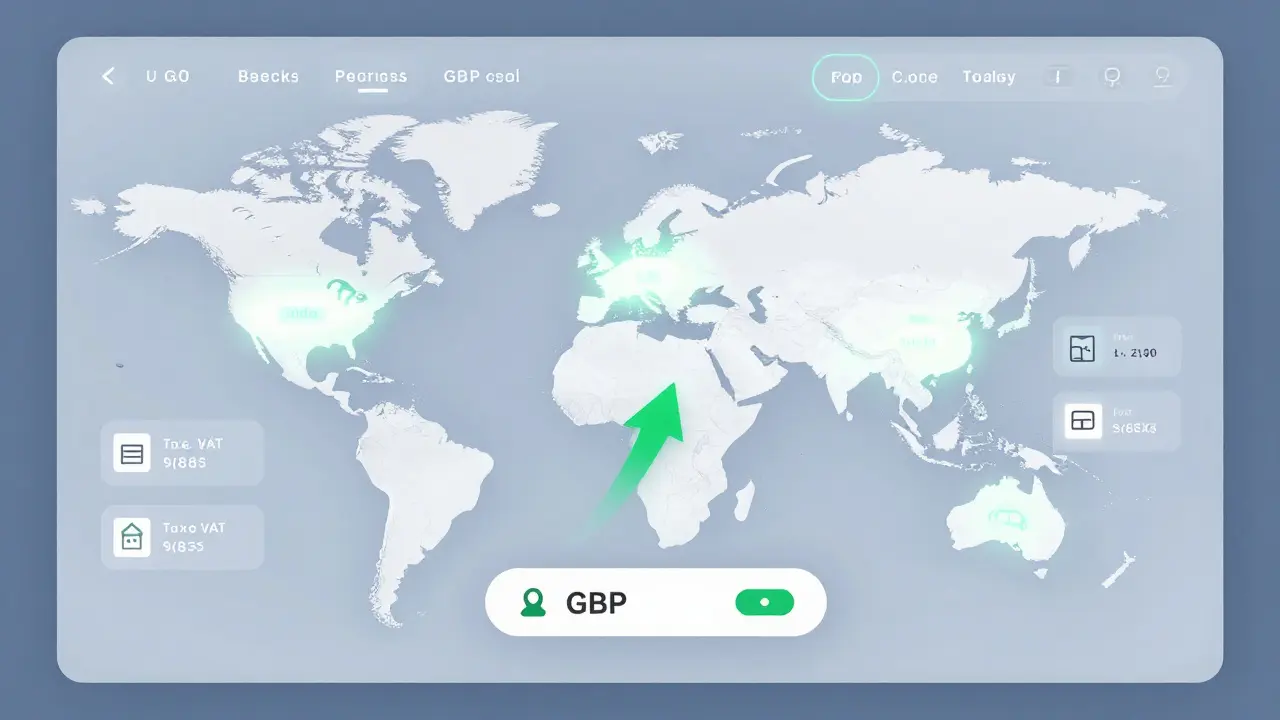
- The platform shows local prices using real-time exchange rates (updated hourly).
- Buyers pay in their local currency using local methods: iDEAL (Netherlands), Sofort (Germany), Alipay (China), etc.
- The platform collects the payment, handles VAT/GST, and sends you the net amount.
This isn’t magic-it’s infrastructure. Companies like Paddle, Stripe, and Gumroad have spent millions building this. You just need to turn it on.
What Happens When You Don’t Localize Prices
Let’s say your course costs $199. A student in Argentina sees that as roughly 180,000 ARS. That’s over three months’ average salary. They click away.
Now imagine you use a platform that shows them 45,000 ARS. That’s still expensive, but it’s not absurd. You’ve made the price feel reasonable-even if the actual value hasn’t changed.
But here’s the trick: you can’t just slap on a currency converter. You need pricing psychology. In countries with weaker currencies, people expect lower prices. In wealthier nations, they expect premium positioning. A $199 course might work in the U.S., but in Indonesia, $49 is the sweet spot. You need to test. You need to adjust.
One course creator in Edinburgh saw 87% of sales come from just five countries. She started offering tiered pricing: $49 for Brazil, $79 for India, $149 for Canada, $199 for the U.S. and UK. Within three months, her revenue jumped 210%. She didn’t change the course. She changed how she priced it.
Hidden Costs You Can’t Ignore
Payment processors charge fees. But not all fees are equal.
- Stripe charges 2.9% + $0.30 per transaction in the U.S., but 4.5% + $0.30 for international cards.
- Paddle takes 5% + $0.50, but includes tax collection and fraud protection.
- PayPal charges 4.4% + fixed fee, and currency conversion adds another 3%.
That 3% conversion fee? It’s not hidden-it’s baked into the exchange rate. And it’s often worse than the processor’s fee. If you’re doing $50,000 in sales a year and your platform takes 3% on conversion, you’re losing $1,500. That’s a full-time freelancer’s salary.
Worse, some platforms auto-convert your payout. If you’re paid in USD but your bank is in GBP, they’ll convert it using their own rate-which is usually 2-3% worse than the real market rate. Always choose to receive payouts in your home currency and let your bank handle the conversion. Banks like Revolut or Wise offer far better rates.
What You Need to Set Up
Here’s what you actually need to do, step by step:
- Choose a payment platform that supports multi-currency pricing (Paddle, Stripe, Gumroad, or SendOwl).
- Set your base price in USD or EUR.
- Enable automatic local pricing in at least 10 key markets (U.S., U.K., Germany, India, Brazil, Japan, Australia, Canada, France, Mexico).
- Turn on local payment methods: UPI for India, Boleto for Brazil, iDEAL for the Netherlands.
- Connect your bank account to receive payouts in your home currency (GBP, EUR, or USD).
- Turn on automatic VAT/GST collection if selling to the EU, UK, or Australia.
- Test the flow with a friend in another country. Can they pay without confusion?
That’s it. No coding. No legal paperwork. Just settings in a dashboard.
What Not to Do
Don’t try to handle currency conversion yourself. Don’t manually change prices every time the exchange rate moves. Don’t assume your PayPal account is enough. Don’t ignore tax compliance. Don’t charge in USD to customers in countries where USD isn’t used. You’re not saving time-you’re losing sales.
And don’t think you need to be “global” to make this work. You don’t need to sell in 150 countries. Start with the top 5. The top 5 account for 80% of international sales. Once you’re comfortable, expand.
Real-World Example: A Course Creator in Edinburgh
A Scottish instructor built a $297 course on sustainable architecture. She sold 12 copies in the first month-all from the UK. She added Paddle, enabled local pricing for the U.S., Germany, India, Brazil, and Australia. Within six weeks, she sold 47 more copies. 18 from the U.S., 9 from Germany, 12 from India, 5 from Brazil, 3 from Australia. Revenue jumped from $3,564 to $14,200. She didn’t change the course. She didn’t run ads. She just fixed how she got paid.
What’s Next
If you’re selling courses internationally, you’re already in the global market. The question isn’t whether you should handle currency and payments-it’s whether you’re doing it well enough to keep the money.
Start with one change: switch to a platform that auto-converts prices and accepts local payments. Test it. Track the sales. Watch how many students who used to disappear now complete the purchase. That’s the moment you realize: this wasn’t a technical problem. It was a trust problem. And fixing it is easier than you think.
Do I need to register a business in every country I sell to?
No. Platforms like Paddle and Stripe handle VAT/GST collection and reporting for you in over 30 countries. You only need to register your business in your home country. The platform acts as the merchant of record, so you’re not legally responsible for foreign tax compliance.
Can I use PayPal alone for international course sales?
You can, but you’ll lose money. PayPal charges 4.4% + fixed fees, adds a 3% currency conversion fee, and doesn’t support local payment methods like UPI or Boleto. Many buyers abandon checkout when they see PayPal’s fees. For serious international sales, use a platform built for digital products, not general payments.
What’s the best currency to price my course in?
USD or EUR. These are the most widely accepted and stable currencies for digital products. Pricing in USD gives you the broadest appeal. Pricing in EUR works well if most of your audience is in Europe. Avoid pricing in GBP, CAD, or AUD unless your audience is almost entirely local.
How often should I update my course prices for different countries?
Most platforms update exchange rates hourly, so you don’t need to do anything. But if you notice a currency has dropped 10% or more over a month (like the Brazilian real or Turkish lira), consider adjusting your base price slightly to stay competitive. Don’t react to daily swings-wait for sustained trends.
Do I need to collect taxes if I’m selling online courses?
Yes, if you sell to customers in the EU, UK, Australia, Canada, or Japan. These regions require you to collect VAT, GST, or HST. But if you use a platform like Paddle or Stripe, they collect and file these taxes for you. You just need to enable the feature in your dashboard.

Comments (14)
Addison Smart March 18 2026
What this post nails is that global sales aren't about tech-they're about trust. I used to think if I priced everything in USD, people would just deal with it. But no. A student in Lagos seeing $199 as 150,000 NGN doesn't just think it's expensive-they think you're exploiting them. When I switched to Paddle and let the system auto-convert to local prices with local payment options, my conversion rate jumped from 1.2% to 6.8% in three months. It wasn't the course. It wasn't the marketing. It was the fact that a Nigerian buyer could pay via bank transfer in Naira without seeing a single dollar sign. That’s psychological safety. That’s trust. And platforms like Paddle and Stripe don’t just handle currency-they handle dignity.
And yes, you don’t need to be in 50 countries. Start with the top five: US, UK, Germany, India, Brazil. They account for 80% of international revenue. The rest is noise until you’ve cracked the basics.
Also, never auto-convert payouts in your payment processor. Let your bank do it. Revolut and Wise give you mid-market rates. Stripe and PayPal? They’ll eat 2-3% on every withdrawal. That’s not a fee-that’s theft by algorithm.
Gabby Love March 20 2026
Small but crucial note: if you're using Gumroad or SendOwl, make sure you've enabled VAT collection for EU customers. I forgot to turn it on for six months and got a letter from HMRC. Not fun. The platforms auto-handle it once you toggle it, but it’s easy to miss in the dashboard. Also, test with a friend abroad. I had a student in Poland try to pay with BLIK and got a generic error-turned out I hadn’t enabled it. Five minutes in settings fixed it. No coding needed.
Lissa Veldhuis March 21 2026
Ugh I hate when people act like this is some groundbreaking insight. I’ve been using Paddle since 2019. It’s not magic. It’s just basic business. If you’re still charging USD to Brazilians and wondering why they ghost you-maybe you’re the problem. Also why is everyone acting like this is a new trend? People have been doing this for a decade. Stop acting like you discovered fire.
selma souza March 23 2026
Proper punctuation is non-negotiable in professional contexts. The phrase "Paddle is a global SaaS payment platform that handles taxes, currency conversion, and compliance automatically" contains a subject-verb agreement error. "Paddle" is singular; therefore, "are" should not be used. This is not a minor oversight-it reflects a systemic lack of attention to detail that undermines credibility. If you can’t write correctly, how can you expect customers to trust your pricing logic?
Michael Thomas March 23 2026
USA still rules. Why are we catering to every country? Just charge USD. People who can’t afford it shouldn’t buy. End of story. This global nonsense is just virtue signaling. We don’t need to lower prices for Brazil. They need to fix their economy, not us fix our checkout page.
Abert Canada March 24 2026
As a Canadian, I’ve seen this firsthand. We get hit with 4.5% international card fees on Stripe, then another 3% on currency conversion. I switched to Paddle last year and my net revenue went up 22% overnight. No extra work. Just clicked "enable local payments" and turned on UPI for India, Boleto for Brazil. The real win? My students stopped emailing me asking "why is this so expensive?" because now it just... made sense. No more explaining exchange rates. Just price in pesos, in rupees, in reais. Magic.
Jen Kay March 25 2026
Let me be clear: this isn’t about payment processors. It’s about respect. When you force someone to pay in a currency they don’t use, with a method they don’t trust, you’re saying their economy doesn’t matter. That’s not a business decision. That’s arrogance. The fact that a creator in Edinburgh saw 210% growth just by adjusting pricing tiers? That’s not luck. That’s empathy in action. And if you’re still charging $199 to someone in Jakarta while showing them a USD symbol? You’re not selling a course-you’re selling exclusion.
James Boggs March 26 2026
Excellent breakdown. One addition: always verify your bank’s payout currency. I was receiving USD from Stripe but my bank was CAD. The conversion fee was 4.2%. Switched to receiving CAD directly from Stripe and saved $1,800/year. Simple setting. Huge impact.
allison berroteran March 26 2026
I’ve been teaching online for seven years and this is the first time I’ve actually seen someone articulate the emotional barrier behind payment failures. It’s not just about fees or conversion rates. It’s about identity. When someone in Cairo sees $199 as 9,000 EGP, they don’t just see a price-they see a cultural dismissal. That’s why the local pricing feature on Paddle doesn’t just change numbers-it changes perception. I started using it last year. My refund rate dropped from 18% to 3%. Not because the course improved. Because the students felt seen. That’s the real upgrade.
Michael Jones March 27 2026
What if the real problem isn’t the payment system but our belief that every human should pay the same amount for the same thing? We live in a world of inequality and we pretend pricing in USD fixes that. But it doesn’t. It just hides it. The fact that a student in Lagos can now pay 12,000 Naira instead of 150,000? That’s not a business hack. That’s justice. And if you’re not doing this, you’re not selling-you’re profiting from someone else’s poverty without even realizing it.
Frank Piccolo March 29 2026
Look, I get it. You want to be woke and global. But let’s be real. Most of these "local payment methods" are used by 0.3% of your audience. UPI? Boleto? Sofort? These are niche. You’re adding complexity for marginal gain. Stick with Stripe. Charge USD. Let the market sort it out. If they can’t afford it, they shouldn’t buy. End of story. Stop over-engineering. Just sell.
David Smith March 31 2026
THIS IS WHY WE CAN’T HAVE NICE THINGS. I tried to sell my course last year and got hit with $2,000 in tax penalties because I didn’t know about VAT. And now you’re telling me I need to enable 12 different payment systems? I’m one person. I don’t have a team. I don’t have a CFO. I just want to teach. Why does everything have to be this complicated? I’m tired. I’m done. I’m going back to YouTube.
Thabo mangena April 1 2026
As someone from South Africa, I can confirm: when I saw my course priced in ZAR instead of USD, I felt respected. Not just financially, but culturally. I’ve bought courses from US creators before and always felt like an afterthought. Now, with Paddle, I see my local currency, I pay with my bank, I get my receipt in ZAR. It’s not about the money-it’s about being treated like a real customer. This isn’t just good business. It’s good humanity.
Addison Smart April 1 2026
Re: the comment above about "over-engineering." You’re right that it feels overwhelming. But here’s the truth: you don’t have to do all 10 countries at once. Start with one. Pick the country where you already get 3-5 sales a month. Enable their local payment method. Watch what happens. You’ll see a spike. Then do the next. It’s not about complexity-it’s about momentum. The first win changes everything. I started with Brazil. One month later, I added India. Six months in, I’m at 17 countries. No one forced me. I just kept seeing the same pattern: local currency + local method = fewer cart abandonments. That’s not magic. That’s math.