
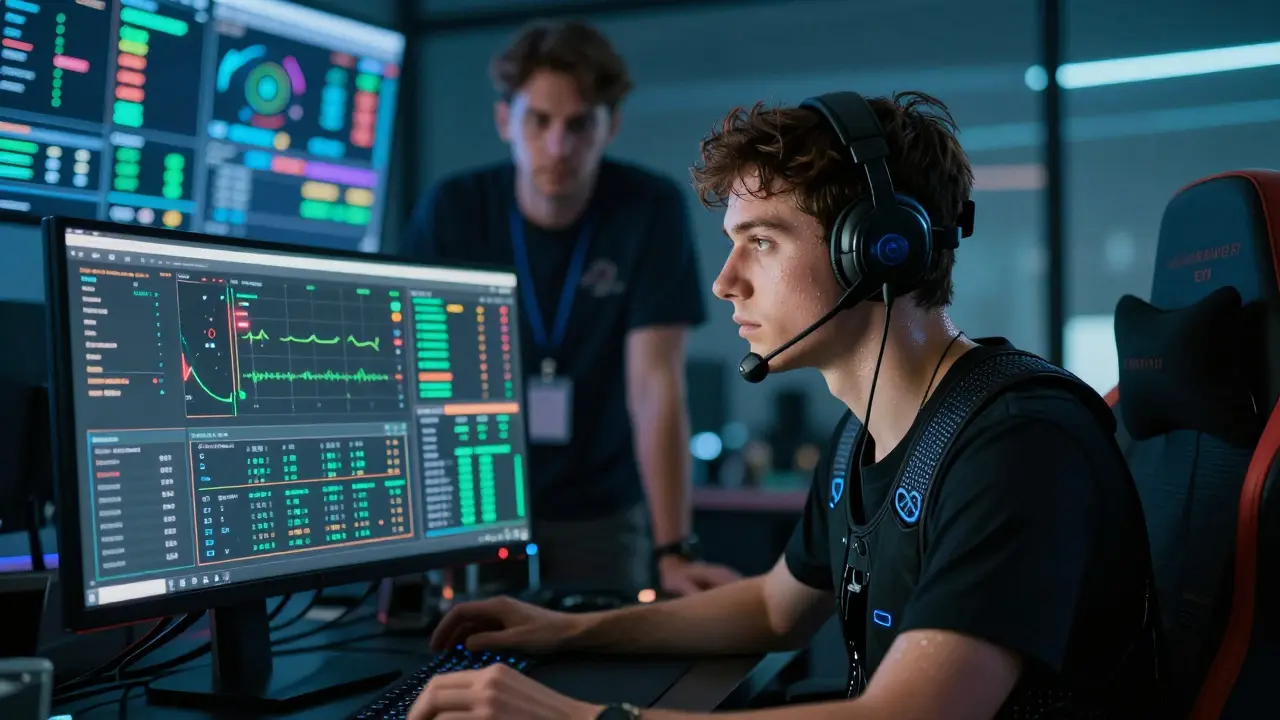
Most people think esports training is just about playing more games. If you’ve ever watched a pro player crush a match and thought, ‘I could do that’, you’re not alone. But here’s the truth: the best players in the world don’t win because they have lightning reflexes alone. They win because they’ve trained like athletes-with structure, feedback, and science behind every hour they spend on the keyboard.
Esports training programs today aren’t just boot camps with a Twitch stream. They’re full-blown educational tracks, often run by universities, dedicated academies, or pro teams themselves. These courses don’t just teach you how to aim better. They teach you how to think better, recover faster, and perform under pressure-exactly like Olympic athletes.
What’s in a Typical Esports Training Course?
Let’s break down what you’ll actually find in a serious esports training program in 2026. Forget the hype. This isn’t about flashy gear or coaching with catchphrases. It’s about measurable skills and repeatable systems.
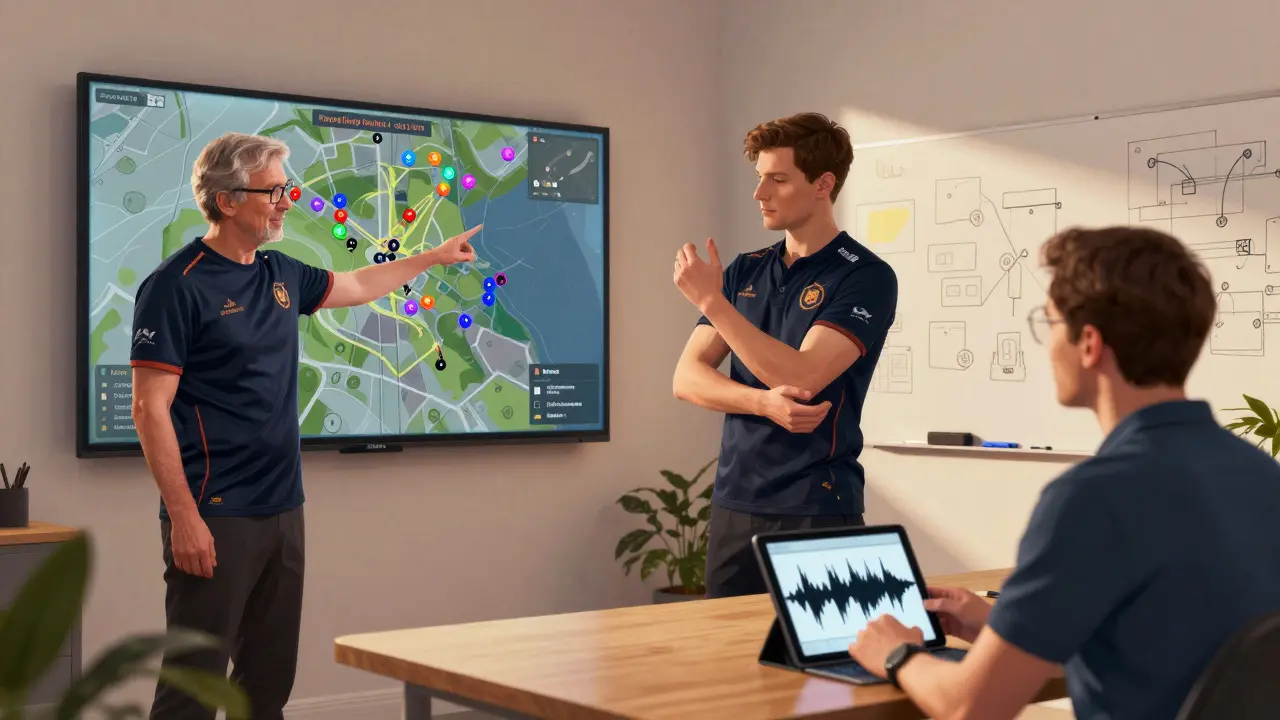
- Game-specific mechanics: You don’t just play Valorant. You learn crosshair placement patterns, recoil control curves, and optimal utility usage based on map geometry. Top programs use heatmaps and replay analysis tools to show you exactly where you lose time.
- Strategic decision-making: It’s not about knowing every meta. It’s about reading the game state in real time. Training includes scenario drills-like how to rotate when your team is down 3v4 in a 24-hour round of League of Legends-with time pressure and simulated distractions.
- Physical conditioning: Hand-eye coordination isn’t enough. Pro gamers train grip strength, wrist mobility, and posture. Many programs include daily 15-minute mobility routines to prevent carpal tunnel and neck strain. One study from the University of Edinburgh found that players who did daily stretches reduced injury-related downtime by 68% over six months.
- Mental resilience training: This is where most amateurs crash. Programs use biofeedback tools to monitor heart rate variability during matches. You learn breathing techniques to drop your stress response from panic mode to focus mode in under 12 seconds.
- Team communication protocols: Saying ‘I’m going flank’ isn’t enough. You learn structured callouts, timing cues, and how to give feedback without breaking team morale. Coaches record and analyze voice comms, flagging filler words, delays, and emotional spikes.
- Content and brand management: If you’re aiming for sponsorship or streaming, you learn how to build a personal brand. This includes editing clips, writing bios, managing social media schedules, and understanding sponsorship contracts.
These aren’t optional extras. They’re required modules. The top programs, like those run by the University of Glasgow’s Esports Performance Lab or the UK Esports Academy, treat these as seriously as a football team trains for set pieces.
Who Teaches These Courses?
Don’t expect a 19-year-old streamer with 50K followers to be your coach. The best programs hire retired pro players with 5+ years of competitive experience-plus certified sports psychologists, performance analysts, and physiotherapists who’ve worked with Olympic athletes.
At the London Esports Institute, the head coach used to play for Team Liquid in CS2. His assistant is a former physio for the Scottish national rugby team. The mental performance coach holds a PhD in cognitive load theory. This isn’t a side hustle. It’s a multidisciplinary team.
Some programs even partner with universities. The University of Edinburgh now offers a 12-week Esports Performance Certificate, co-taught by the School of Informatics and the Sports Science department. Students get access to motion-capture labs and EEG headsets to track neural response during gameplay.
How Do You Measure Progress?
There’s no leaderboard that tells you if you’re ready for pro play. That’s why serious programs use detailed performance dashboards.
Here’s what they track:
| Metric | What It Measures | Target Range (Pro Level) |
|---|---|---|
| Reaction Time (ms) | Time from visual cue to input | 180-220 |
| Accuracy per 100 shots | Hit rate under pressure | 75-85% |
| Decision Speed (s) | Time to act in complex situations | 1.2-1.8 |
| Communication Efficiency | Clear, timely calls per minute | 3-5 |
| Stress Recovery Time | Time to return to baseline heart rate after a loss | <45 seconds |
These aren’t guesses. They’re tracked using proprietary software like Esports Analytics Pro and PlayViz, which log every mouse movement, voice command, and physiological signal. Progress is shown weekly. If your reaction time drops below 200ms for three sessions, your coach adjusts your drills. If your stress recovery takes longer than a minute, you’re sent to the mental resilience lab.
What These Programs Don’t Teach
Let’s clear up the myths.
They don’t teach you how to ‘get good fast.’ There’s no shortcut. Even the most gifted players spend 4-6 hours a day in structured training-not just playing.
They don’t promise you a pro contract. Only 1-2% of students ever make it to a top-tier team. The goal isn’t fame. It’s competence.
They don’t focus on one game. Top programs teach transferable skills. If you train in Valorant, you’ll still learn decision-making models that apply to Apex Legends or Counter-Strike. The game changes. The training doesn’t.
And they never tell you to grind 12 hours a day. Burnout is the #1 reason players quit. Programs enforce mandatory rest, sleep tracking, and screen-time limits. One academy in Manchester uses a ‘no play after 11 PM’ rule-and monitors compliance with smart wearables.
Who Should Enroll?
These programs aren’t for casual players. They’re for people who:
- Are already ranked in the top 5% of their game’s competitive ladder
- Can commit to 15-20 hours a week for 3-6 months
- Are willing to accept brutal, data-driven feedback
- Want to turn gaming into a career-not just a hobby
If you’re just looking to climb the ranked ladder faster, you don’t need this. You need better aim trainers and YouTube tutorials.
If you want to compete at the highest level-whether as a player, coach, or analyst-this is the only path that works.
What Comes After the Course?
Graduates don’t just get a certificate. They get access to a network.
Many programs have partnerships with pro teams, casting organizations, and gaming brands. Top performers are invited to tryouts. Others go into coaching, content creation, or esports operations.
One graduate from the Glasgow Academy now runs the performance department for a European CS2 team. Another became a lead analyst for ESL UK. A third started a mental health nonprofit for young gamers.
The course doesn’t end when you finish the last module. It becomes your launchpad.
Do I need to be a pro player to join an esports training program?
No. Most programs accept players ranked in the top 10% of their game’s competitive ladder. You don’t need to be pro-level yet, but you do need to be consistent, coachable, and willing to improve. The goal is to build the skills that get you there.
Are these courses expensive?
They range from £300 for a 6-week online course to £4,500 for a 6-month in-person program with full access to labs and coaching staff. Some universities offer scholarships for underrepresented groups. Always check if the program includes equipment or software access-some charge extra.
Can I do this while working or studying?
Yes, but it’s hard. Most serious programs require 15+ hours a week of structured training, review, and recovery. If you’re working 40 hours a week or studying full-time, you’ll need excellent time management. Many opt for part-time online versions, but progress will be slower.
Do these programs guarantee a pro contract?
No. Less than 2% of graduates join a top-tier team. The real value is in building transferable skills that open doors in coaching, analysis, content creation, or team management. Treat it like a trade school-not a lottery ticket.
What games are covered in these courses?
Most focus on the top five competitive titles: Valorant, League of Legends, Counter-Strike 2, Apex Legends, and Overwatch 2. Some newer programs include Rocket League and Rainbow Six Siege. Always check the curriculum-some programs specialize in one game, others teach universal skills across multiple titles.
Final Thought: It’s Not About Gaming Anymore
Esports training isn’t about mastering a game. It’s about mastering yourself.
The best players aren’t the ones who click fastest. They’re the ones who stay calm when everything falls apart. They’re the ones who recover from a loss faster than anyone else. They’re the ones who know when to rest, when to push, and how to communicate without burning out their team.
If you’re serious about competing at the highest level, you need more than talent. You need a system. And that system? It’s built in these courses.

Comments (14)
deepak srinivasa January 27 2026
Really interesting breakdown. I never realized how much science goes into this. The part about heart rate variability and biofeedback? Mind blown. I thought it was all about aim trainers and Twitch streams.
pk Pk January 27 2026
This is exactly what the scene needs. So many kids think grinding 12 hours a day will make them pro. Nah. It’s about smart work, recovery, and mental control. I wish I had this when I was 16.
NIKHIL TRIPATHI January 28 2026
Love how they include team comms and brand management. Most people forget esports isn’t just about playing - it’s a whole ecosystem. Also, the 68% injury reduction stat? That’s huge. Should be mandatory in schools.
My cousin’s in a similar program in Bangalore. He’s not even top 1% yet but his reaction time dropped from 260ms to 205ms in 3 months. Crazy progress.
Shivani Vaidya January 29 2026
The idea that gaming is just about reflexes is outdated and harmful.Rubina Jadhav January 30 2026
I’m just happy they don’t make you play all night. My brother used to do that and now he can’t even hold a mouse without pain. Glad someone’s finally fixing this.
sumraa hussain January 31 2026
Okay so imagine this - you’re not just some guy in a hoodie screaming into a mic… you’re a scientist with a headset, tracking your brainwaves while you clutch a 5v5 clutch in CS2. That’s not gaming. That’s like… futuristic warrior training. I’m not even mad anymore. I’m inspired.
Raji viji February 1 2026
Lmao this is peak woke gaming nonsense. You spent 1000 words saying ‘pro gamers are athletes’? Newsflash - they’re not. They’re guys who got lucky with a mouse. Stretching won’t make you better than a 15-year-old with 20k hours in Valorant. This is just corporate trying to monetize kids’ dreams.
And don’t even get me started on ‘brand management.’ You want to be a streamer? Go make memes. Don’t pay £4500 to learn how to write a bio.
Rajashree Iyer February 2 2026
What if the real game isn’t Valorant or League… but the quiet war inside you? The battle between the urge to quit and the whisper that says ‘one more hour.’ These programs don’t train hands - they train souls. You’re not learning to win. You’re learning to become.
When the screen goes black and your heart still races… that’s when you know. This isn’t a hobby. It’s a rite of passage.
Parth Haz February 4 2026
Excellent summary. I appreciate the emphasis on transferable skills. This isn’t just about one game - it’s about discipline, resilience, and structured improvement. These are life skills disguised as esports training. Well done.
Vishal Bharadwaj February 5 2026
Wait… you’re telling me there’s no magic button to get good? That you actually need to sleep and stretch? What kind of scam is this? I thought this was the internet. I thought you just watched a YouTube video and became top 100 overnight. This is fake news.
Also… ‘EEG headsets’? Bro I can’t even afford a decent mouse. You’re telling me I need a lab to play a game? I’m out.
anoushka singh February 7 2026
Wait so you’re saying I can’t just play while eating chips and watching TikTok and still be pro? That’s so unfair. I thought that was the whole point of gaming. Why do I have to be ‘coachable’? Can’t I just be me?
Jitendra Singh February 8 2026
Been in a similar program for 4 months. The mental resilience part changed everything. Used to tilt after one bad round. Now I breathe, reset, and move on. Still not pro, but I’m not quitting either.
Madhuri Pujari February 8 2026
Oh wow. So now we’re giving PhDs to people who teach kids how to say ‘flanking left’ without saying ‘like’? And you charge £4500 for this? I could’ve just recorded my own voice and told myself to shut up. This is a scam. You’re selling hope. Not skills.
Also… ‘smart wearables to monitor bedtime’? Next they’ll be tracking my dreams. What’s next? Mandatory yoga before a ranked match? I’m done.
Sandeepan Gupta February 10 2026
Great post. Just a quick note - if anyone’s looking to start, don’t skip the communication drills. I used to be the guy who yelled ‘I’m going flank’ and then died 3 seconds later. After 2 weeks of structured callouts, my K/D went up 40%. No magic, just clarity.
Also - if your coach doesn’t use PlayViz or Esports Analytics Pro, walk away. Those tools are non-negotiable. Everything else is fluff.